Helicopter collision risk higher after D.C. airspace changes, Coast Guard leaders say
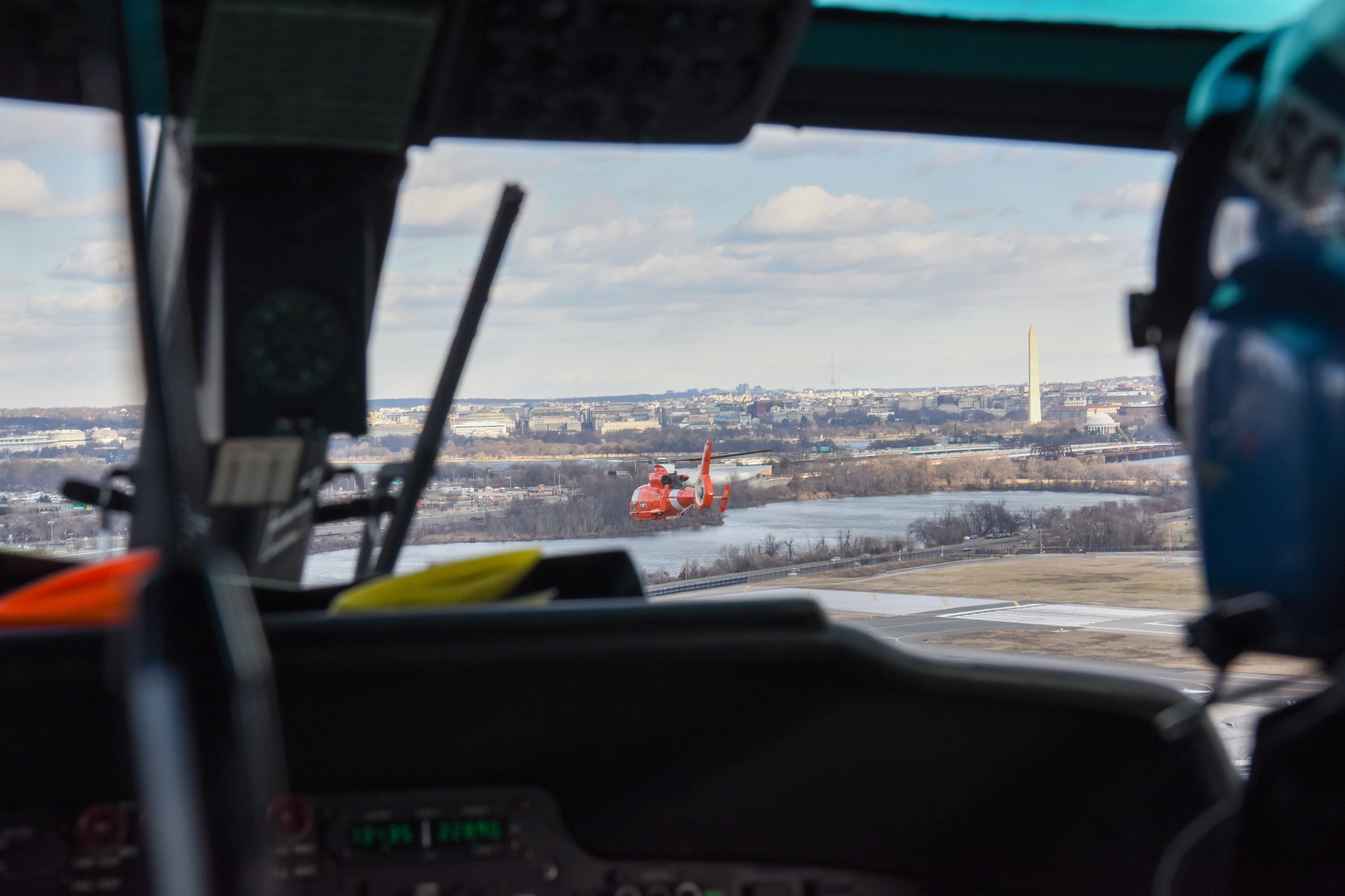
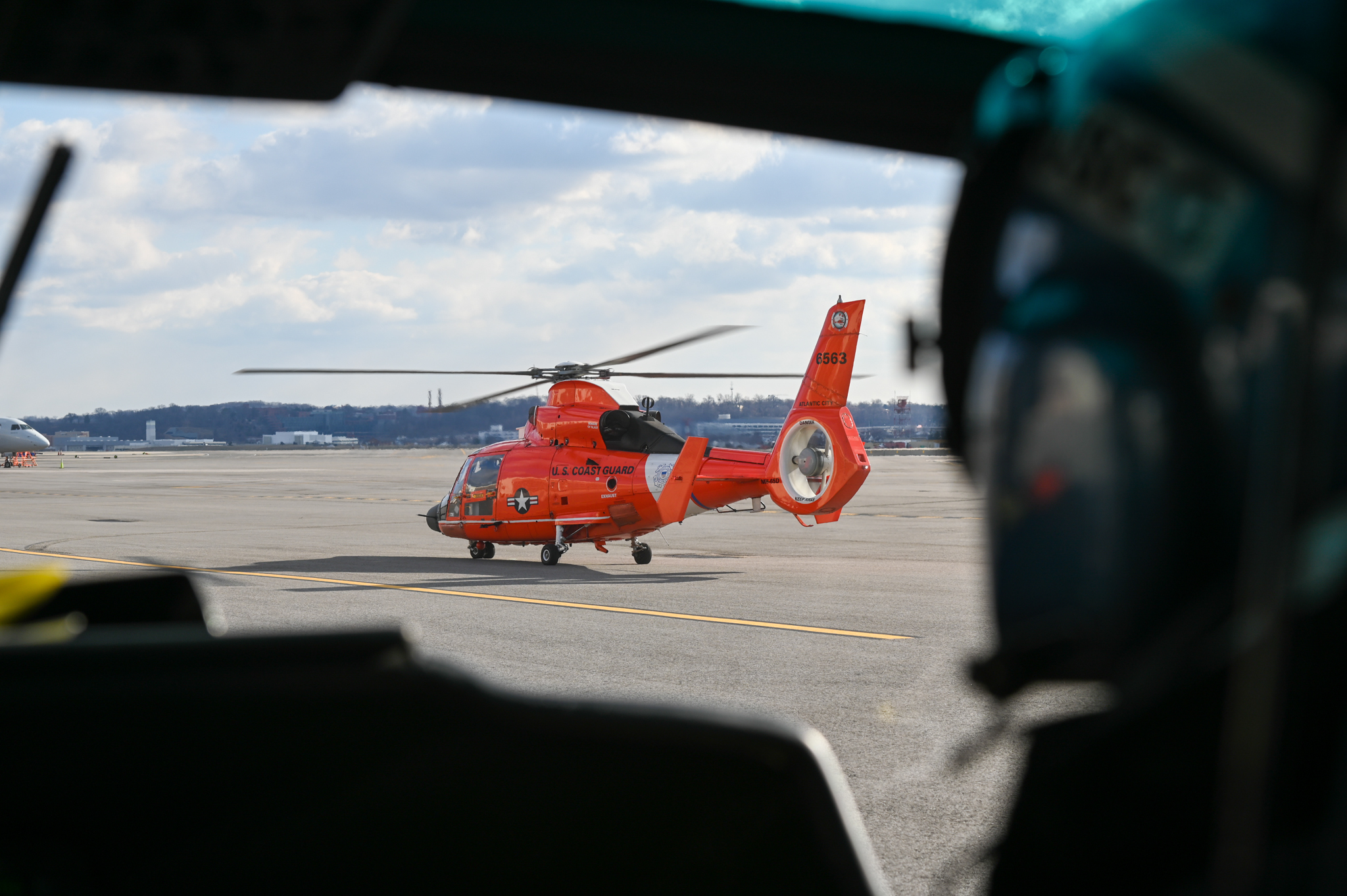
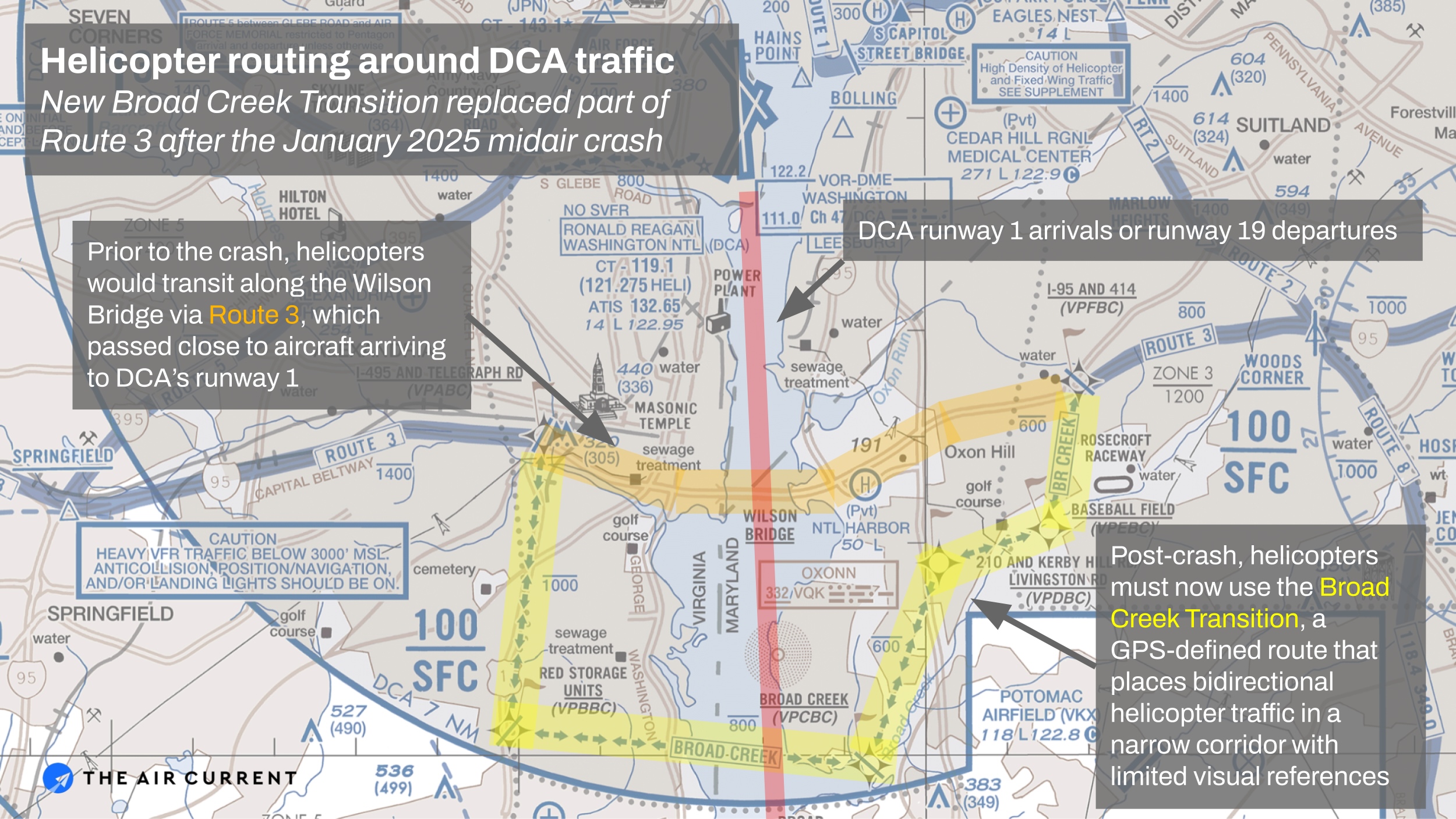
U.S. Coast Guard aviation leadership has publicly challenged the FAA's post-collision airspace restructuring around Reagan National Airport, arguing that measures designed to reduce helicopter-airliner conflicts have created a more dangerous operating environment for rotorcraft crews. At a June 17 Transportation Research Board meeting, Commander Nate Rhodes — who leads the Coast Guard helicopter unit based at DCA — warned that consolidating helicopter traffic into a smaller, more congested geographic area has elevated the risk of helicopter-on-helicopter collisions and increased exposure to controlled flight into terrain. The Coast Guard's position represents one of the most direct institutional challenges yet to the FAA's post-accident response, and it comes from an operator with a uniquely non-negotiable presence at DCA: the USCG's National Capital Region Air Defense Facility must remain airport-based to execute intercept missions in the restricted airspace surrounding the capital.
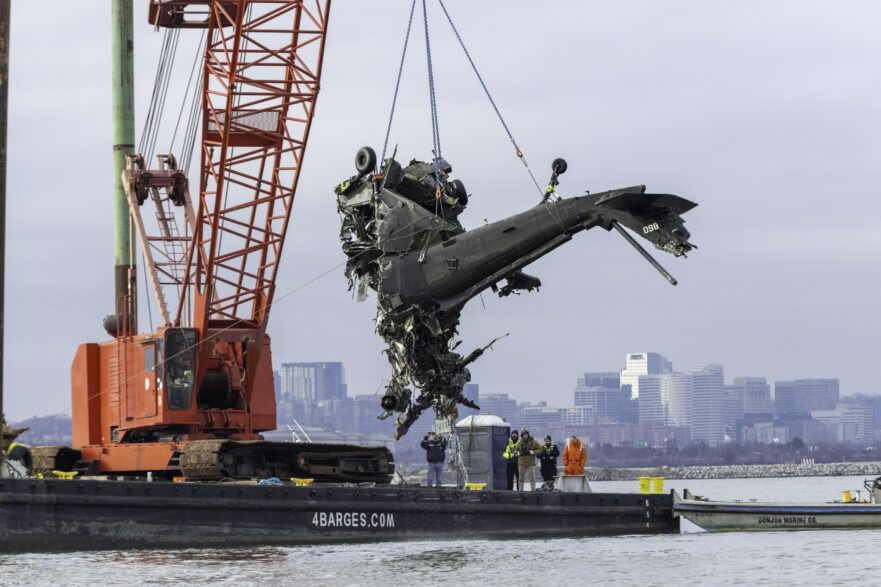
The core tension in the dispute centers on how risk is distributed rather than eliminated. Rhodes articulated a systems-level concern that the FAA's revisions addressed the specific threat profile revealed by the January 2025 Black Hawk/CRJ700 collision — rotorcraft transiting near fixed-wing approach and departure corridors — without adequately accounting for second-order effects on the broader helicopter operating environment. His argument that helicopters are harder to visually acquire than airliners is operationally grounded: low-altitude rotorcraft blend into cultural lighting, lack the predictable lateral and vertical track discipline of airline traffic, and do not present the same radar and lighting signatures. The FAA responded by noting that helicopter-on-helicopter conflicts were actually more frequent when rotorcraft had greater DCA airspace access, and that the affected operators retain access to the broader national airspace system. An FAA official's statement that operators who "can't separate themselves from the whole rest of the national airspace system" need to reexamine how their system is functioning reflects a notably pointed institutional posture toward the critics.
For professional helicopter crews and operators, the dispute highlights a regulatory dynamic that frequently accompanies post-accident rulemaking: expedited changes driven by a specific accident sequence may resolve the identified hazard while displacing risk onto adjacent operations. The FAA's interim final rule to permanently codify the DCA changes drew only two public comments, and notably no formal military agency submissions — a gap the FAA itself underscored. Vertical Aviation International was among the only organized voices in the docket. That absence is significant because military and law enforcement operators often face the highest operational tempo in affected airspace and have mission constraints that commercial operators do not. The Coast Guard's inability to conduct routine low-level proficiency training in its primary operating area is a readiness concern that goes beyond airspace efficiency and touches directly on crew currency and mission capability.
The broader implication for business aviation and Part 91/135 operators flying in and around the DCA area is that the airspace architecture continues to evolve, and the published changes represent an interim rather than settled configuration. The FAA's commitment to review public comments before issuing a final rule leaves open the possibility of further revisions, particularly as the TRB's expert committee — convened under the National Academy of Sciences — develops its own recommendations. Operators who regularly file into or transition through the DCA Special Flight Rules Area should anticipate continued procedural updates, closely monitor NOTAM activity, and ensure their crews are briefed on the compressed helicopter operating zones that now concentrate rotorcraft traffic in corridors where visual acquisition is already a significant challenge. The Coast Guard-FAA disagreement, playing out in a public forum, signals that the final regulatory shape of post-collision DCA airspace is still being contested at an authoritative level.