E-Jet Archives - Leeham News and Analysis
Embraer has emerged as a significant force in commercial aviation manufacturing, with its E-Jet and E2 product lines increasingly reshaping the regional and narrow-body markets. The Brazilian manufacturer, which began as a regional turboprop producer in the 1980s, now claims the title of the world's third-largest airliner manufacturer with over 2,500 civil aircraft in service globally. A key driver of its competitive positioning has been a sustained push toward production efficiency, benchmarked against Boeing's 737 line in Renton and subsequently improved by nearly another third through adoption of Kaizen — Toyota's continuous improvement methodology borrowed from the automotive sector. This cross-industry application of lean manufacturing principles signals that Embraer is not simply competing on airframe design but is systematically attacking cost-of-production metrics that affect pricing, delivery reliability, and ultimately operator economics.
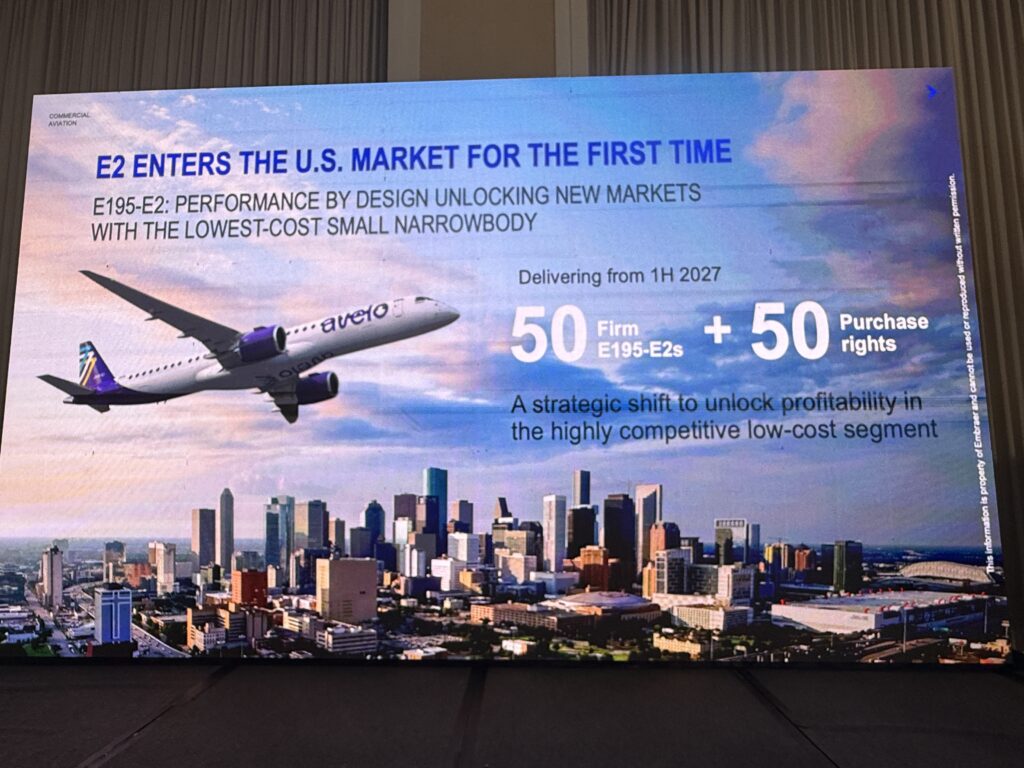
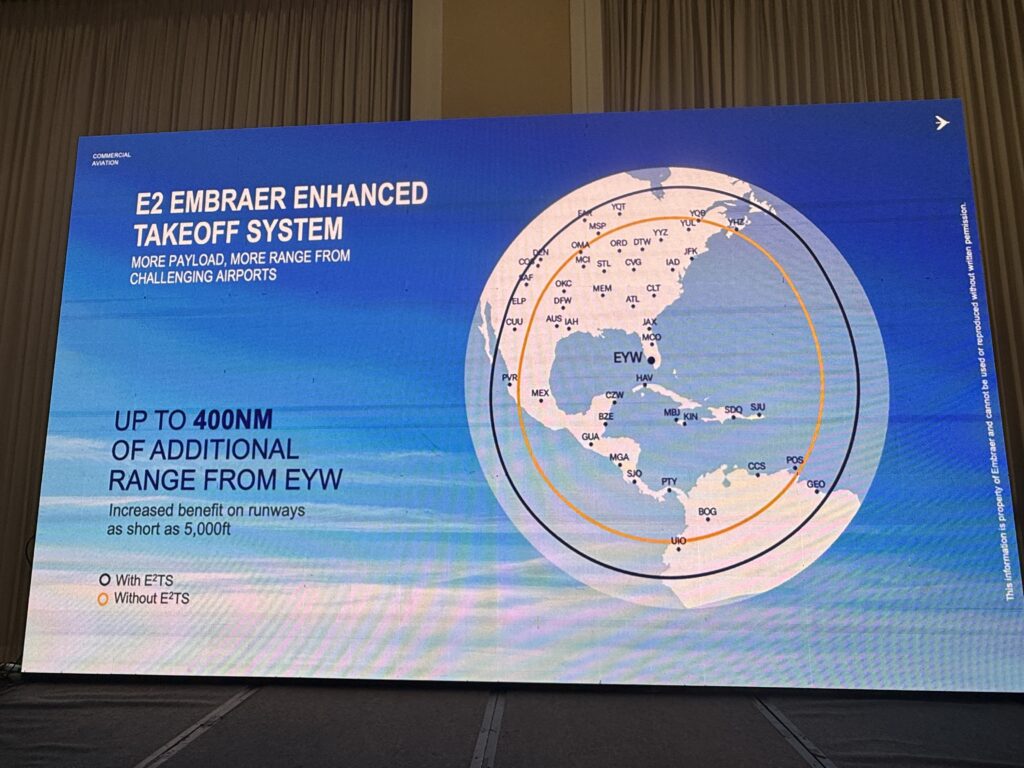
The E2's long-awaited entry into the U.S. market represents a meaningful strategic inflection point. Avelo Airlines, a ULCC operating primarily 737NGs, placed a firm order for 50 E195-E2s with 50 purchase rights — a deal valued at $4.4 billion at list price — with service entry targeted for mid-2027. The aircraft's Enhanced Takeoff System (E2TS) is the enabling technology here, extending range by up to 400 nautical miles on runways shorter than 5,000 feet. This capability is operationally significant for pilots and dispatchers working constrained airport environments — Key West being the cited example — where runway length, obstacle clearance, and hot-and-high performance margins typically limit or exclude mainline narrowbody operations. For fleet planners at Part 121 carriers evaluating thin-market route development, the E2TS effectively expands the addressable network beyond what 737 or A320-family aircraft can serve without penalty.
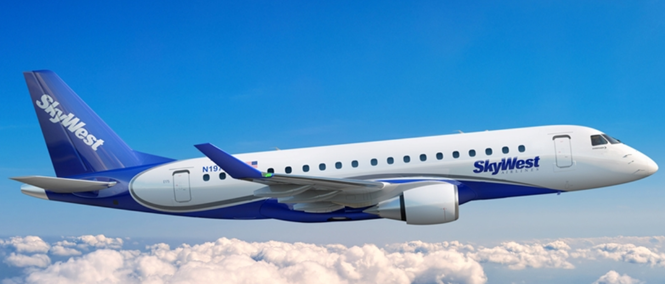
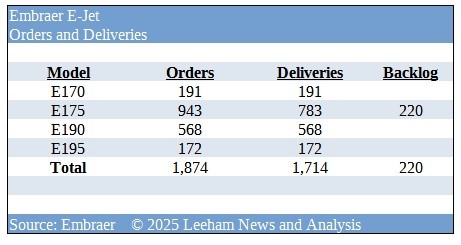
The U.S. market's structural resistance to the E2 has been defined for years by scope clause restrictions embedded in major airline pilot contracts, capping regional jet maximum takeoff weight at 86,000 pounds and seat count at 76. The E175-E2, the smallest member of the E2 family, exceeds that weight threshold due to its Pratt & Whitney GTF engines, placing it outside the reach of the code-share regional operators — SkyWest, Envoy, and others — who would otherwise be natural customers. SkyWest, which had a conditional order for 100 E175-E2s contingent on scope relief that never materialized, subsequently ordered 60 additional E175-E1s at the 2025 Paris Air Show, bringing its total E1 backlog to 220 aircraft — 211 of which are for U.S. carriers. Embraer has placed the E175-E2 on hold until 2027–2028, effectively conceding the U.S. regional feed market to the legacy E1 platform while pivoting E2 commercial momentum toward ULCC and independent operators like Avelo, who operate outside scope constraints entirely.
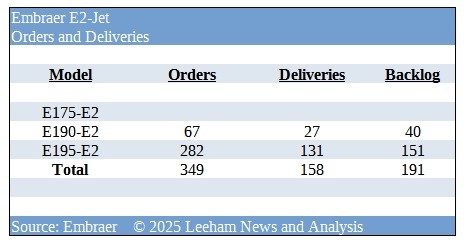
Broader market data from Leeham reinforces a structural shift toward larger variants within aircraft families. The E195-E2 now accounts for 81 percent of all E2 orders, compared to 9 percent historically, mirroring Airbus's own demand migration from A320neo to A321neo. The E170 has exited production entirely. For professional pilots managing type-specific career trajectories and for fleet managers at regional and ULCC operators, this consolidation trend carries practical implications: aircraft diversity within fleets is narrowing, training footprints are concentrating on a smaller number of dominant variants, and aircraft with superior short-field and fuel-burn performance characteristics are becoming the primary instruments of network expansion. The parallel discussion around a potential A220-500 — which Leeham analysis suggests could challenge the A320neo directly if equipped with a new wing and LEAP-1B engines — underscores that the competitive dynamics between Embraer's E2 and the Airbus CSeries derivative are far from settled, with both manufacturers maneuvering to define the 100–160 seat segment for the next decade.








 Read original article