Full Circle: Airbus Beluga ST Retires To Toulouse Museum Beside The Super Guppy It Replaced
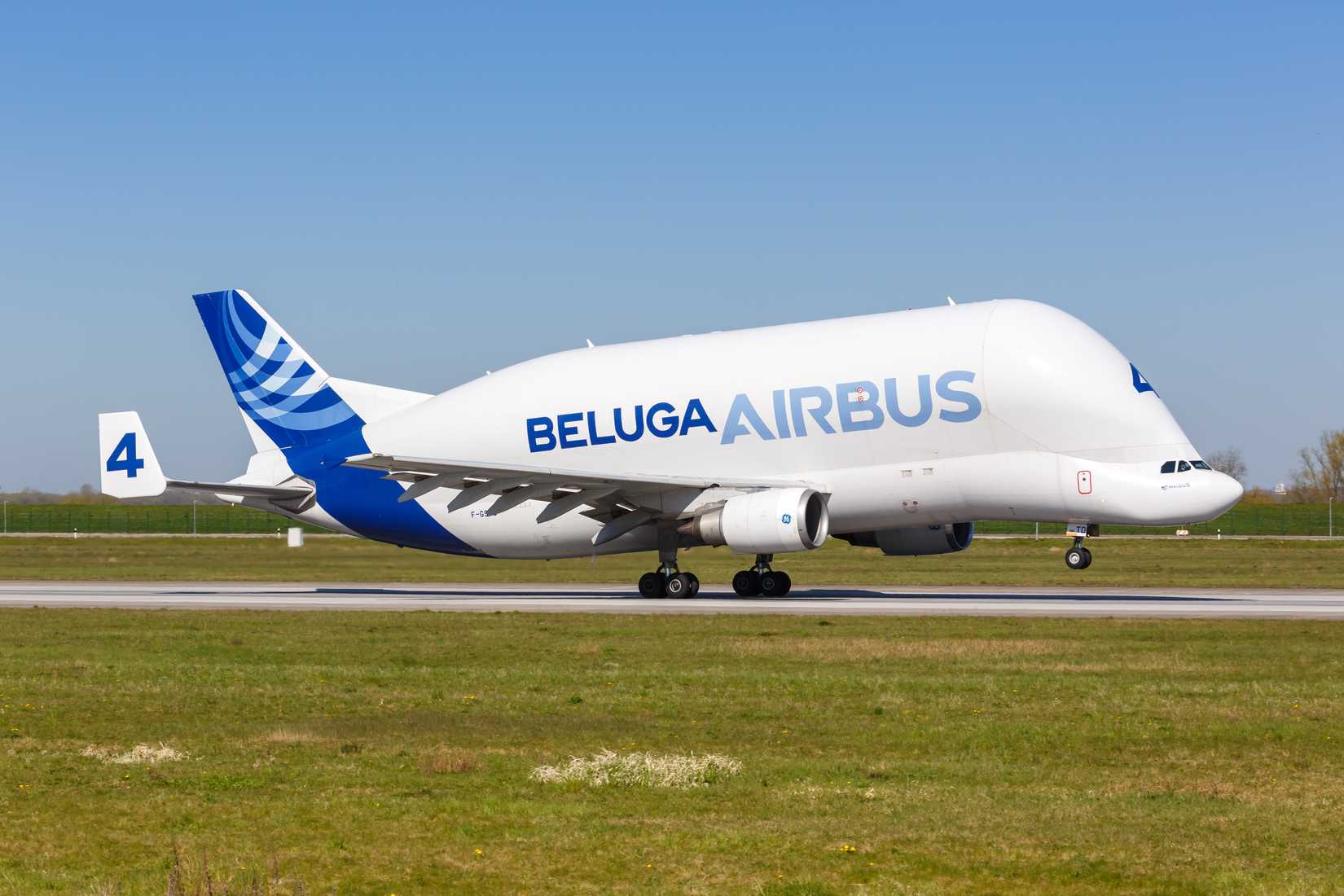
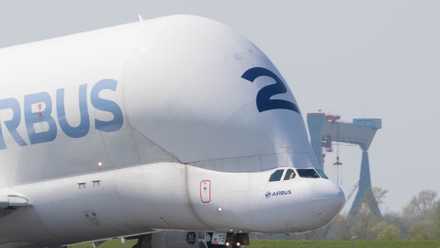
Airbus Beluga ST number 4, registered F-GSTD, has completed its final flight and been towed to a permanent display position at the Aero Scopia Museum in Blagnac, France, marking the end of a 28-year operational career that began with its first test flight on June 9, 1998. The aircraft performed a ceremonial low-level farewell flight over Toulouse alongside Beluga ST number 2 before being moved via public roads — which required special reinforcement to bear the aircraft's considerable weight — to its outdoor exhibition space. The retirement leaves the Beluga ST fleet reduced to its remaining airframes, while the larger and more capable BelugaXL variants continue active service supporting Airbus production lines across Europe.
The Beluga ST represents a critical and often underappreciated logistical pillar of commercial aviation manufacturing. Derived from the Airbus A300-600 airframe and powered by General Electric CF6-80C2A8 turbofans, the type was purpose-built to transport oversized aircraft components — primarily wings and fuselage sections — between geographically dispersed Airbus production facilities. Without this air-bridge capability, Airbus's distributed manufacturing model, which spans facilities in France, Germany, Spain, and the United Kingdom, would be operationally untenable at current production rates. The retirement of F-GSTD reflects a planned generational transition rather than any operational failure; the BelugaXL, which entered service in 2020, offers significantly greater volumetric capacity and is progressively assuming the fleet's workload as the older ST airframes age out.
The placement of F-GSTD at Aero Scopia alongside the Super Guppy it replaced creates a rare and historically coherent display. The Super Guppy — itself a derivative of the Boeing Stratocruiser modified by Aero Spacelines — served Airbus and its predecessor consortium through the 1970s and 1980s before becoming prohibitively maintenance-intensive. Airbus's decision in the early 1990s to develop its own outsized transport rather than continue relying on modified third-party airframes was a strategic shift toward supply-chain self-sufficiency. That lineage now sits intact at a single museum site, offering an unusually complete visual history of how European civil aircraft production solved the problem of moving large subassemblies before containerized overland logistics could meet the volume or dimensional requirements.
For working pilots and aviation operators, the Beluga program illustrates the degree to which high-frequency commercial aircraft production depends on a small, highly specialized fleet operating outside standard ATC and commercial frameworks. The Beluga flights operate under instrument flight rules out of Toulouse-Blagnac and the other Airbus sites, but their route structures, weight-and-balance profiles, and cargo-loading geometries are unlike anything in standard airline or cargo operations. Operators managing large-format charter or outsized cargo missions — including Part 135 operators handling industrial or humanitarian payloads — will recognize the niche the Beluga occupies: it exists precisely because no off-the-shelf freighter configuration can match its volumetric envelope. The BelugaXL expands that envelope further, accommodating A350 XWB wing sets that the ST could not carry.
The broader trend reflected in the Beluga ST's retirement is the accelerating replacement of first-generation purpose-built logistics aircraft with more capable successors as commercial aviation production scales upward. Boeing's comparable challenge — moving 777X and 787 components — relies on the Dreamlifter, itself a heavily modified 747-400. Both programs underscore that at the scale of modern widebody production, conventional freighters remain dimensionally inadequate, and dedicated outsize airlifters are not a niche luxury but a manufacturing prerequisite. As Airbus ramps BelugaXL operations to support A320 family and A350 production targets, the transition from ST to XL mirrors the earlier transition from Guppy to ST: driven by production volume growth, component size increases, and the economic penalty of fleet obsolescence.





 Read original article