The Engineers' Debate: Why The Boeing 787-10 & Airbus A350-900 Have 5 Key Landing Gear Differences
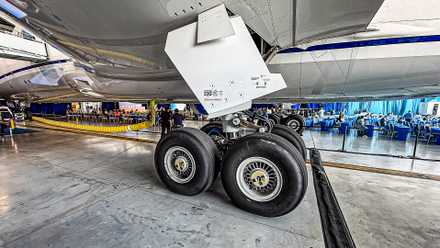
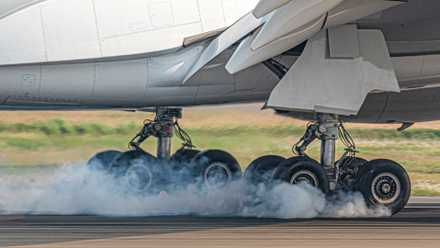
The Boeing 787-10 and Airbus A350-900 represent the two dominant next-generation composite widebodies in commercial aviation, and while their cabin experiences and performance envelopes appear broadly similar to passengers, their landing gear architectures reflect fundamentally divergent engineering philosophies rooted in how each aircraft came to exist. The 787-10, as a double-stretched derivative of the original Dreamliner family at 224 feet overall length, required Boeing engineers to solve a specific tail-strike problem that the baseline 787-8 and 787-9 never faced. Their solution was the semi-levered gear (SLG) system, which uses a hydraulic actuator during takeoff rotation to restrict the tilt of the main wheel bogie, effectively extending the main strut height and raising the fuselage away from the runway. Without this mechanism, the elongated rear fuselage would limit usable rotation angles and constrain takeoff performance. The A350-900, by contrast, was engineered as a clean-sheet design from the outset at 219 feet, giving Airbus the freedom to set strut heights precisely for the intended geometry without requiring any secondary locking or actuating systems during the rotation phase.
The shock absorption architecture of each aircraft further illustrates these divergent development paths. Airbus designed the A350-900 with a purpose-built, large-bore, high-pressure nitrogen-oil oleo-pneumatic strut capable of handling the aircraft's maximum landing weight of approximately 205 metric tons — a heavier load than the 787-10 carries. Boeing took a different approach with the 787-10, opting to repurpose the compact oleo-pneumatic cylinder already shared across the lighter 787-8 and 787-9 variants rather than develop a heavier, custom strut. This decision preserved weight savings consistent with Boeing's broader Dreamliner efficiency strategy, though it also reflects the 787-10's comparatively limited maximum range of 6,330 nautical miles versus the A350-900's 8,500 nautical miles — the Airbus aircraft simply carries more fuel and payload over longer distances, demanding greater structural load capacity at landing.
For flight crews operating either type, the landing gear differences carry practical implications that extend beyond the technical spec sheet. On the 787-10, the SLG system adds a layer of system awareness to rotation technique: the hydraulic actuator engagement during takeoff means the gear behaves differently than on shorter Dreamliner variants, and operators transitioning crews between 787 subtypes must account for this in type-specific training. Tail-strike awareness during high-pitch-attitude operations — particularly on short-field departures, heavy-weight rotations, or abnormal configurations — remains a heightened consideration on the -10 that does not carry the same weight on the A350. Additionally, both aircraft use fly-by-wire nose-wheel steering translating tiller and rudder pedal inputs into digital hydraulic commands, though Airbus implements direct sidestick feedback integration while Boeing routes inputs through a Liebherr Remote Electronic Unit — a distinction that subtly affects ground handling feel and system redundancy architecture that qualified crews should understand at the type level.
These design differences also speak to a broader debate in commercial aviation about derivative versus clean-sheet development. Boeing's approach with the 787-10 — stretching an existing platform and engineering around its constraints — allowed faster time-to-market and commonality advantages across the 787 family, which has contributed to the Dreamliner becoming the best-selling widebody in aviation history. Airbus's clean-sheet approach with the A350 allowed greater optimization for long-range, high-weight operations but came later to market and has not matched 787 order volumes. For airline operators evaluating fleet decisions, the engineering trade-offs embedded in the landing gear alone — weight, maintenance complexity, operational limits, and crew training burden — illustrate why aircraft selection involves far more than passenger capacity and range figures. The SLG system on the 787-10 requires additional maintenance attention and system checks not present on other 787 variants, while the A350's heavier custom struts introduce their own weight and servicing considerations, particularly for carriers operating high-frequency, high-cycle routes where landing gear wear rates are a meaningful cost factor.










 Read original article