5 Airlines With The World’s Newest Premium Economy Seats
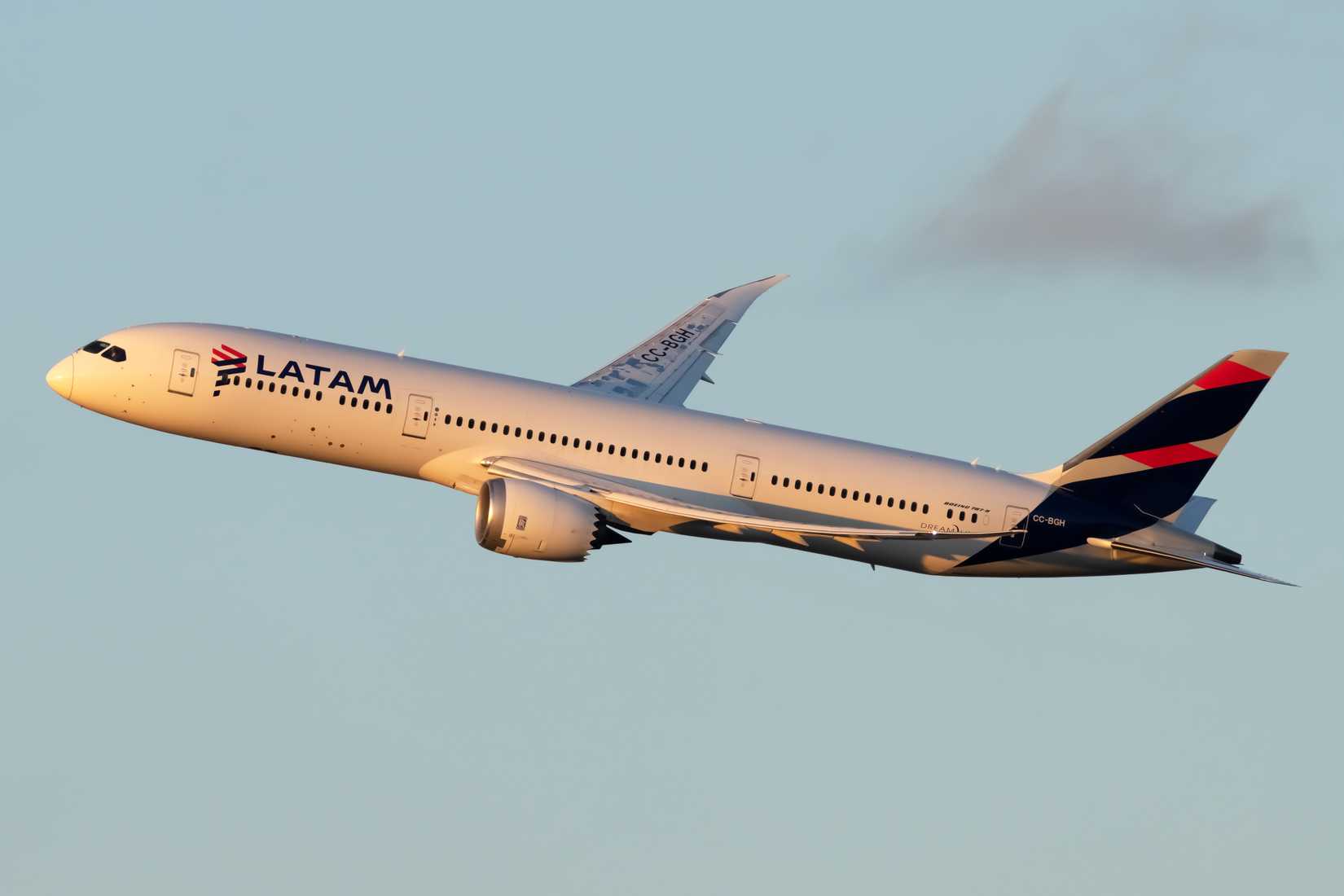
Premium economy has matured from a niche cabin experiment into one of commercial aviation's most strategically significant revenue categories, and the latest generation of products from carriers including LATAM Airlines, EVA Air, and Emirates illustrates how rapidly the segment is advancing. LATAM's forthcoming Premium Comfort product, slated for its Boeing 787 fleet on ultra-long-haul routes connecting Santiago to destinations such as Madrid, New York, Sydney, Auckland, and Los Angeles, represents one of the more consequential cabin launches in South American aviation. The carrier is targeting a product spec that includes 16-inch 4K screens, Bluetooth audio, USB-C charging, upgraded dining, and dedicated ground services — a configuration that puts it in direct competition with established North Atlantic and trans-Pacific premium economy benchmarks. For flight crews and dispatchers planning weight-and-balance and catering loads on these long-sector 787 operations, the addition of a distinct premium cabin tier will introduce new operational considerations around provisioning, boarding sequencing, and service delivery.
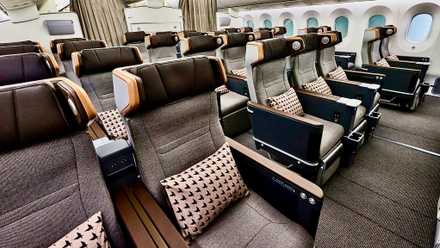
EVA Air's continued refinement of the product it pioneered in 1992 demonstrates that first-mover advantage in cabin innovation requires sustained reinvestment to remain competitive. The airline's current 787-9 premium economy configuration, featuring up to 42 inches of pitch and a cradle-style mechanism that slides the seat pan forward during recline, addresses one of the most persistent engineering challenges in the cabin class: delivering meaningful recline without impinging on the passenger behind. That ergonomic solution is increasingly influential across the industry, as seat manufacturers and airlines alike grapple with how to offer a rest-enabling product at a price point well below lie-flat business class. For operators evaluating competitive positioning on trans-Pacific routes through Taipei, EVA's hard product now represents a meaningful differentiator that affects passenger routing decisions and, consequently, cargo and charter demand patterns.
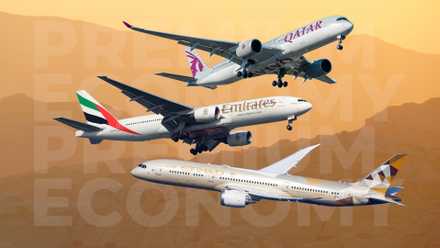
Emirates' entry into premium economy, long delayed relative to competitors, has become one of the largest cabin retrofit programs in modern aviation history, spanning its A380, 777-300ER, and A350-900 fleets. The scale of that rollout — affecting one of the world's highest-capacity long-haul networks — carries direct implications for airport planners, ground handlers, and corporate travel managers who route employee travel through Dubai. The 2-3-2 configuration on A350s and 2-4-2 on A380s and 777s signals that Emirates has engineered the product to maximize revenue density while preserving the differentiation necessary to justify a meaningful fare premium over economy. For Part 91K and Part 135 operators whose passengers may benchmark their expectations against airline premium cabins, the elevation of the premium economy standard by carriers of Emirates' global prominence sets an implicit reference point for cabin comfort, entertainment technology, and service quality that increasingly influences how high-net-worth travelers evaluate all cabin products.
The broader trend reflected across these new and updated products is the compression of the service and comfort gap between premium economy and the lower tier of business class, a dynamic that carries layered commercial implications across aviation. Corporate travel policies have long used business class as a default threshold for long-haul travel at or above a certain flight duration, but as premium economy products offer lie-flat-adjacent comfort at significantly lower fares, procurement teams at major companies are revisiting those policies and shifting more bookings into the cabin. Airlines are responding by investing heavily in premium economy differentiation precisely because the cabin now represents a high-margin revenue stream that requires minimal incremental cost relative to economy seating. For operators in the business aviation sector, the practical consequence is that the competitive landscape for capturing travelers on ultra-long-haul routes continues to intensify, as the gap between a well-appointed premium economy seat and a private cabin narrows on the comfort dimension even as it remains wide on privacy, scheduling flexibility, and ground-to-gate experience.











 Read original article