How United Airlines' New Airbus A321XLR Doubles Premium Seats Vs. The Boeing 757 It Replaces
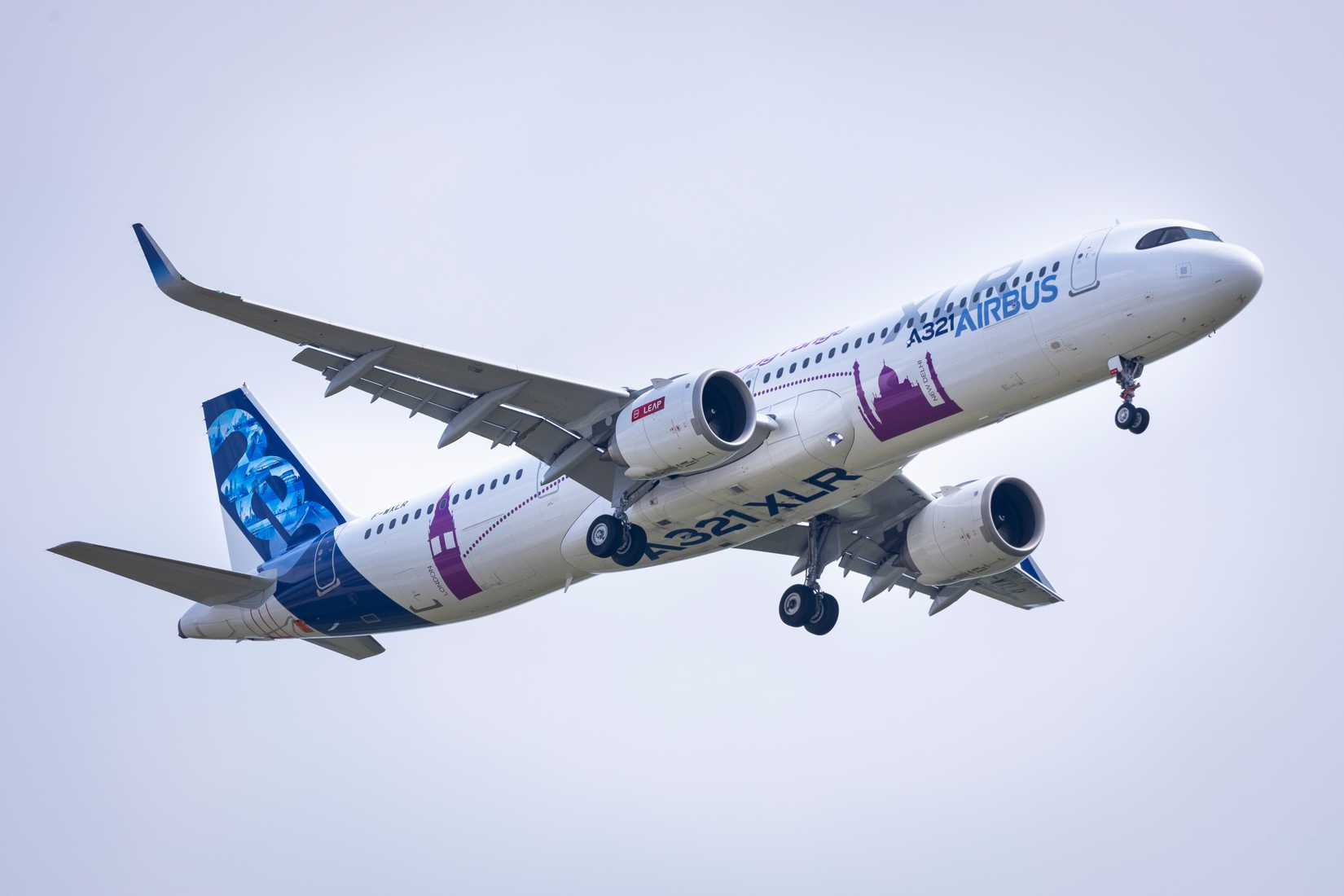
United Airlines' delivery of its first Airbus A321XLR, registered N64321, marks a significant inflection point in narrowbody operations for one of the world's largest carriers. The aircraft arrived at Tampa International Airport on June 3, 2026, following a ten-hour transatlantic ferry flight from Airbus's Hamburg Finkenwerder facility — itself a demonstration of the XLR's extended range capability. United has ordered 50 of the type, each configured identically in a 150-seat, four-class arrangement: 20 Polaris lie-flat suites, 12 Premium Plus seats, 36 Economy Plus, and 82 standard economy seats. By comparison, United's outgoing Boeing 757-200 carried 16 Polaris, 42 Economy Plus, and 118 economy seats with no premium economy product at all. The net result is a dramatic reweighting of the cabin toward revenue-generating premium inventory, with the XLR carrying roughly double the premium seats of its predecessor on a per-aircraft basis.
The operational rationale behind the transition is straightforward and was articulated directly by United SVP Patrick Quayle: the 757 has become increasingly uneconomic to operate, while the A321XLR offers superior fuel burn, lower maintenance costs, and meaningfully greater range. For flight crews, the XLR brings a modern fly-by-wire platform to routes previously served by a legacy narrowbody type that entered service in the early 1980s. The Airbus aircraft's LEAP-1A powerplants and aerodynamic refinements — including the semi-embedded auxiliary center tank that gives the XLR its extended reach — translate to tangible fuel savings per flight hour. Dispatch reliability on newer-generation Airbus narrowbodies has consistently outperformed aging 757 fleets across the industry, a factor that directly affects crew scheduling, irregular operations management, and on-time performance metrics that matter to both operators and contract customers.
From a route planning and operational standpoint, the XLR's extended range — approximately 4,700 nautical miles — unlocks what the industry calls "long and thin" transatlantic and transpacific routes: city pairs with insufficient demand to justify a widebody but enough traffic to support a premium narrowbody product. United's Chief Commercial Officer Andrew Nocella confirmed the airline intends to use the type to develop new destinations, suggesting future nonstop service to secondary European and potentially some Pacific Rim markets that have previously required connecting itineraries. For corporate flight departments and Part 91 operators who frequently compete with or connect through United's hubs, this expansion of nonstop options at non-gateway airports could meaningfully change passenger routing patterns and demand dynamics at mid-sized airports not currently served by widebody equipment.
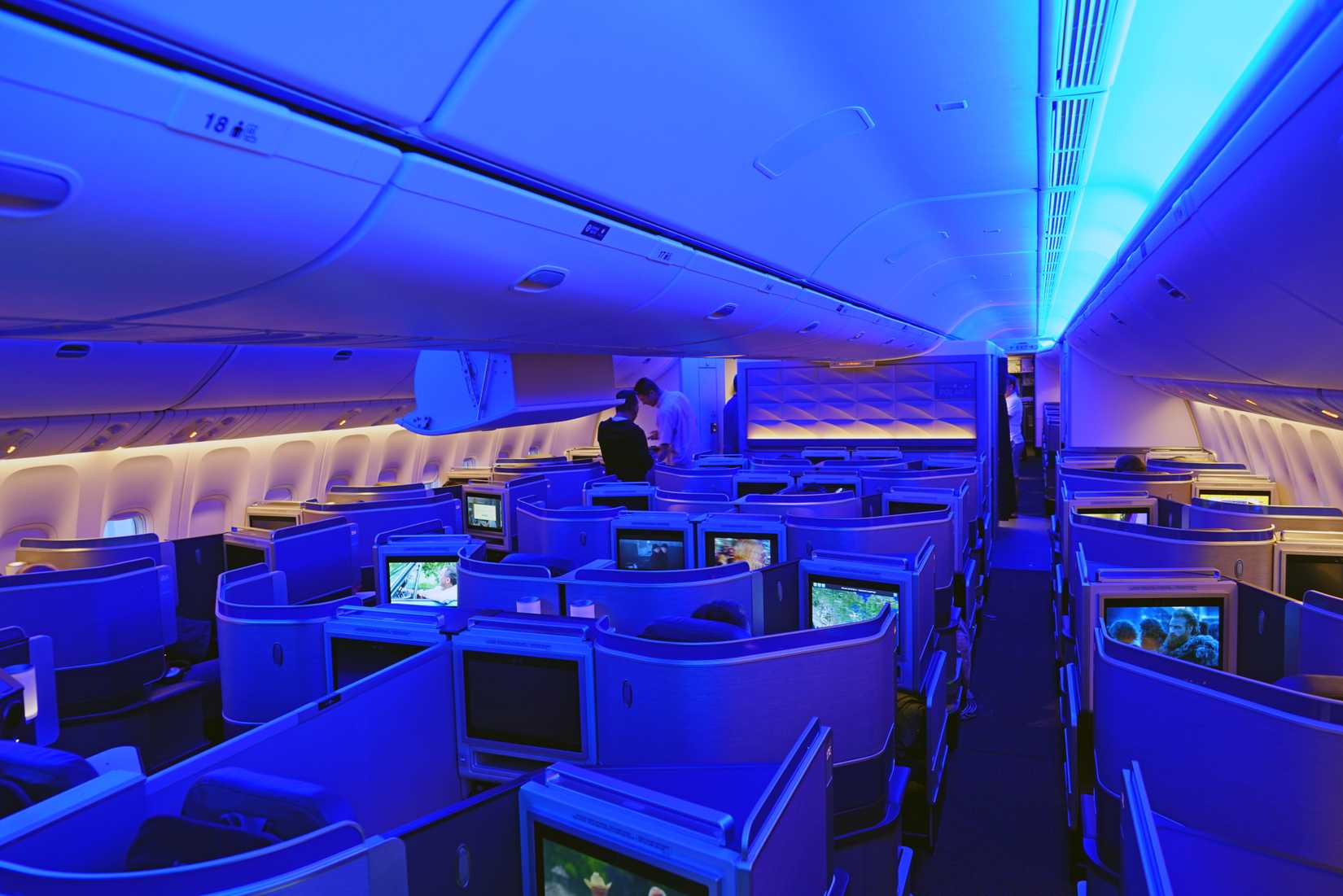
The cabin configuration itself reflects a broader industry conviction that premium revenue is the key economic lever on longer narrowbody routes. The decision to install Safran Optima-based Polaris suites in a herringbone 1-1 layout — with seats angled 49 degrees away from the windows and toward the aisle to accommodate lie-flat geometry within a narrowbody fuselage cross-section — represents a deliberate trade-off. Passengers receive a genuine lie-flat product; they sacrifice window proximity and the traditional face-forward orientation. The single forward lavatory shared between the flight deck and the Polaris cabin is a notable operational detail for crews, as it removes the traditional separation between cockpit crew facilities and premium passenger access. The inclusion of Starlink satellite Wi-Fi, provided at no charge, aligns with a growing expectation among business travelers that high-speed connectivity is a baseline cabin feature rather than a premium add-on.
The broader significance of United's A321XLR program extends well beyond a single carrier's fleet refresh. Airbus has secured substantial XLR orders from American, Air France, Iberia, and numerous other carriers, positioning the type as the de facto successor to the 757 for transatlantic thin-route operations — a role no other aircraft has convincingly filled since Boeing ceased 757 production in 2004. The premium-heavy configuration United has selected will likely become a reference point for how other operators structure their own XLR cabins. For aviation professionals tracking fleet evolution, the XLR's entry into revenue service signals that the era of the 757 as a long-range narrowbody workhorse is definitively closing, replaced by a platform that brings 21st-century economics, airworthiness standards, and passenger experience expectations to a market segment the industry has underserved for two decades.






 Read original article