Alaska Airlines Shifts Focus To Mainline After Completing Regional Starlink WiFi Rollout
Alaska Airlines has completed the installation of Starlink-powered WiFi across its entire regional fleet, marking a significant milestone in the carrier's connectivity strategy and positioning it ahead of its internal rollout schedule. The airline now operates more than 150 Starlink-equipped regional aircraft, including all Alaska-branded Embraer E175s, making it the first U.S. carrier to achieve full connectivity across a regional fleet. The service is provided through a T-Mobile partnership and delivered free of charge to members of the Atmos Rewards program, the shared frequent-flier platform spanning both Alaska and its subsidiary Hawaiian Airlines. Connection speeds are quoted at approximately 500 Mbps, roughly seven times faster than legacy in-flight internet systems, enabling streaming, browsing, and real-time communications at altitudes where traditional satellite and air-to-ground systems have historically struggled.
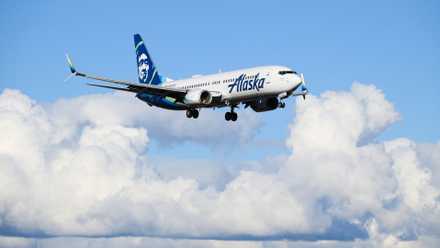
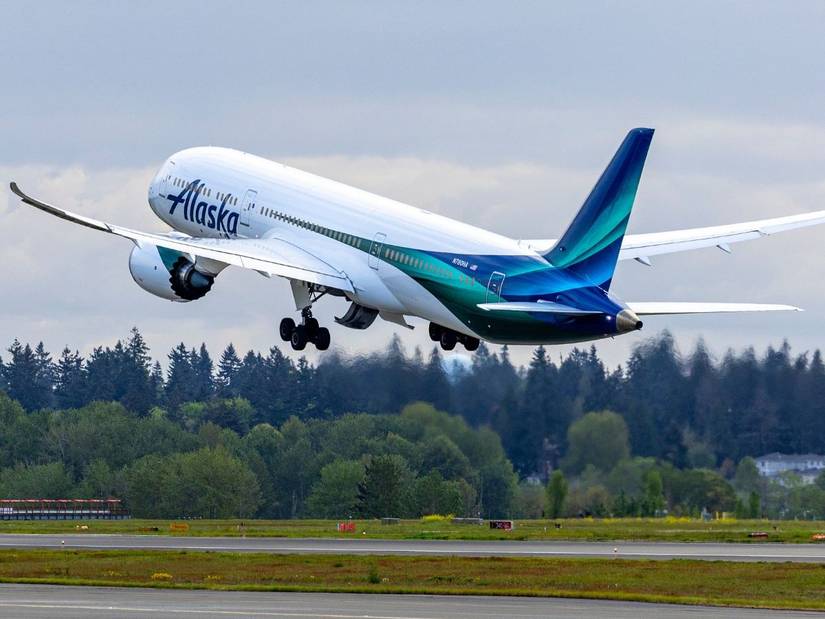
With the regional fleet fully equipped, Alaska is now directing installation resources toward its mainline and widebody operations. The Boeing 787-9 Dreamliner fleet—currently operating long-haul routes to Seoul Incheon, London Heathrow, Rome Fiumicino, and Tokyo Narita—is expected to complete its Starlink installation in the near term, while the broader mainline fleet, including the 737 family, is targeted for full connectivity by the end of 2027. The airline's entire widebody fleet is projected to be Starlink-equipped by fall of this year. High-frequency hubs including Seattle-Tacoma, Honolulu, Portland, and San Diego are expected to see more Starlink-equipped departures than any competing carrier once the mainline rollout matures, a competitive differentiator that reinforces Alaska's stated positioning as a premium carrier in the Pacific Northwest and transpacific markets.
For professional pilots and aviation operators, this development reflects a broader and accelerating industry shift toward low-earth orbit satellite connectivity as the dominant in-flight internet architecture. Starlink's LEO constellation operates at altitudes between approximately 340 and 1,200 kilometers, producing latency figures well below traditional geostationary systems and enabling throughput that legacy Ku- and Ka-band solutions cannot match at scale. Airlines that have committed to LEO-based systems early—Hawaiian was the first major U.S. carrier to bring Starlink airborne, with Alaska following closely—are building passenger loyalty and operational infrastructure that will be difficult for competitors to replicate quickly. For crews, high-bandwidth connectivity on mainline and long-haul aircraft also carries operational implications, including more reliable Electronic Flight Bag updates, real-time weather data streaming, and improved crew communication on extended overwater and transoceanic segments.
The rollout also signals a maturation of the business model surrounding in-flight connectivity. Rather than charging per-session or per-device fees, Alaska's free-for-loyalty-members approach monetizes connectivity indirectly through program enrollment and engagement, a strategy that reduces passenger friction and accelerates adoption. The Atmos Rewards integration functions as both an access gateway and a data-capture mechanism, tying connectivity access to identifiable passenger profiles across the Alaska and Hawaiian combined network. For corporate flight departments and Part 135 operators evaluating their own connectivity investments, the Alaska rollout illustrates how the economics of Starlink-based systems have shifted: the technology is no longer a premium add-on but increasingly a baseline expectation on scheduled commercial services, raising the competitive bar for operators at all levels of the market who must now reckon with passenger and client expectations shaped by this standard.





 Read original article