The surprising first U.S. deployment of a collaborative combat aircraft
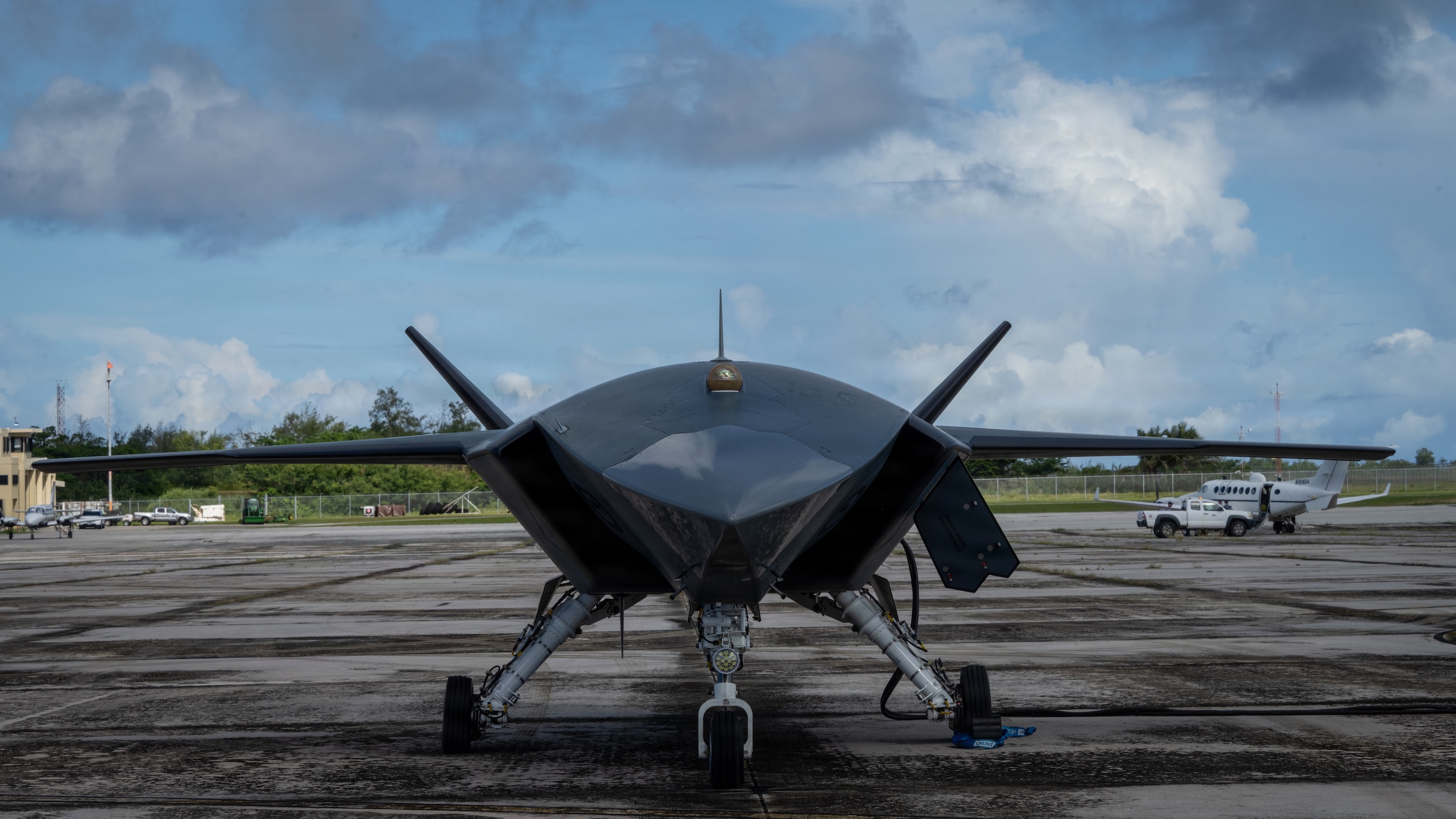
Boeing's MQ-28A Ghost Bat, an Australian-developed stealthy uncrewed fighter aircraft, is operating alongside piloted U.S. military jets for the first time on American soil — or rather, American territory — during Valiant Shield 2026, a multinational combat exercise running June 22 through July 1 in the Commonwealth of the Northern Mariana Islands. The deployment marks a significant milestone in the Pentagon's pursuit of Collaborative Combat Aircraft (CCA) capability: the Ghost Bat is being flown in a "loyal wingman" role, meaning it operates in coordination with crewed fighters as a semi-autonomous combat adjunct. Notably, the MQ-28A has not yet been formally selected by any branch of the U.S. military under the CCA program, making the deployment an explicit proof-of-concept evaluation rather than a fielding of an already-procured system. The exercise's location, deep in the northwestern Pacific and proximate to potential flashpoints with China, is itself a deliberate signal about the operational environment these platforms are being designed to dominate.
The Air Force's stated objective for the deployment is to develop and refine requirements for CCA procurement — a program with ambitions that could ultimately yield thousands of uncrewed combat aircraft. The Ghost Bat's participation provides real-world data on human-machine teaming, command-and-control integration, and how uncrewed platforms can extend the reach and lethality of existing crewed fleets without putting additional aircrew at risk. The exercise context — a high-fidelity simulation of peer-adversary conflict in a contested, over-water environment — mirrors exactly the scenarios in which CCAs are expected to perform. That the deployment was first exposed not through official channels but by civilians photographing an unfamiliar aircraft at a static display on Rota Island underscores how operationally embedded this evaluation has already become.
For professional pilots, particularly those flying military or government-affiliated missions, the Ghost Bat deployment represents a concrete acceleration of the crewed-uncrewed teaming (CUxT) doctrine that has been evolving in U.S. military aviation for over a decade. Fighter and strike aviators are increasingly expected to function not just as aircraft operators but as mission commanders overseeing autonomous wingmen — a fundamental shift in crew resource management, situational awareness, and airspace deconfliction. The cognitive workload implications are significant: a single pilot managing both their own aircraft and one or more autonomous assets in a dynamic threat environment demands new training paradigms, new human factors research, and new standards for crew qualification. The Ghost Bat evaluation is generating the empirical baseline for those standards.
The broader significance for civil and commercial aviation is less immediate but not negligible. The CCA program represents the leading edge of a regulatory, technological, and cultural reckoning with autonomous aircraft operating in shared or contested airspace. As FAA frameworks for remotely piloted and autonomous systems continue to evolve — driven in part by military operational experience feeding into civilian airspace policy — the lessons learned from Valiant Shield 2026 will inform how large, high-performance uncrewed platforms are eventually integrated into the National Airspace System. Business aviation operators and airlines with Pacific routes also have a practical interest in understanding how military exercises involving stealthy, fast-moving uncrewed aircraft affect NOTAMs, airspace reservations, and operational planning in the CNMI and broader Micronesian corridor, a region that has seen increasing military activity as U.S. Pacific posture intensifies.