The Problem Lockheed Ran Into After Designing The L-1011 TriStar
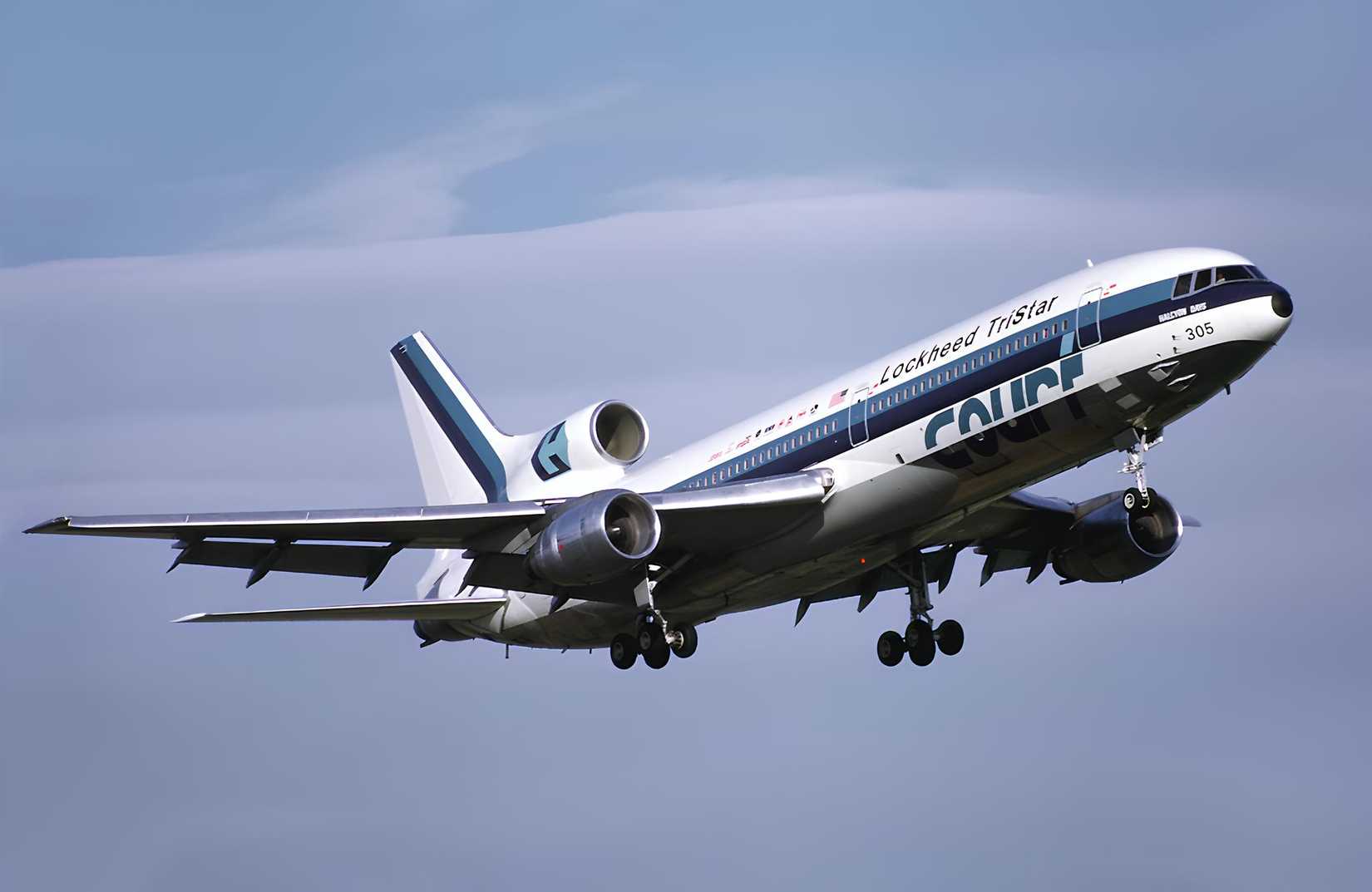
Lockheed's L-1011 TriStar emerged from a late-1960s commercial aviation landscape that presented a narrow window of opportunity for a manufacturer whose civil aviation ambitions had repeatedly collided with market realities. American Airlines' request for a mid-sized widebody capable of operating transatlantic routes more efficiently than the Boeing 747 set off a competition that would ultimately pit two fundamentally different engineering philosophies against each other. McDonnell Douglas responded with the DC-10, leveraging existing design experience and moving quickly to market. Lockheed, returning to commercial aviation after years of dependence on military contracts, bet heavily on a more technically sophisticated approach — choosing a three-engine configuration and routing the center engine through an S-duct that produced a cleaner fuselage profile and measurably lower cabin noise compared to the DC-10's more conventional tail-mounted arrangement. The TriStar also incorporated genuinely innovative passenger features for the era, including below-deck galleys served by elevators, polarized window shades, and downstairs lounges on some configurations — design choices that reflected ambitions well beyond the minimum requirement.
The central problem that defined the TriStar program, and ultimately ended Lockheed's commercial aviation ambitions permanently, was the company's exclusive commitment to the Rolls-Royce RB211 turbofan engine. Lockheed selected the RB211 as the sole powerplant option for the L-1011, a decision driven by the engine's exceptional fuel efficiency and low noise characteristics — both genuine engineering advantages. However, Rolls-Royce encountered catastrophic cost overruns developing the advanced composite fan blades at the heart of the RB211's design, and the British manufacturer declared bankruptcy in February 1971. Because Lockheed had no alternative engine option and could not easily re-engineer the airframe to accept competing powerplants, the entire TriStar program was effectively held hostage to the fate of a foreign supplier. The British government ultimately nationalized Rolls-Royce to prevent total program collapse, but the delays were severe. The DC-10 entered airline service in August 1971; the TriStar did not begin commercial operations until April 1972.
For aviation operators and professional pilots, the TriStar's history carries enduring lessons about supply chain risk and single-source dependency that remain acutely relevant in today's operating environment. The engine exclusivity that doomed Lockheed's commercial program is structurally analogous to challenges modern operators face when aircraft types are certified for specific avionics suites, software architectures, or propulsion systems without viable alternatives. Airlines that ordered the TriStar — Eastern, Delta, TWA, and British Airways among them — found themselves operating an aircraft that was in many technical respects superior to the DC-10 but commercially constrained by late delivery, higher per-unit costs resulting from lower production volumes, and Lockheed's inability to recover its development investment. By the time production ceased in 1983, only approximately 250 TriStars had been delivered, far below the break-even threshold Lockheed had calculated. The aircraft never generated a profit for the manufacturer.
The TriStar's story fits into a broader pattern of market consolidation that has continued to narrow the field of viable commercial aircraft manufacturers across the decades. The same competitive pressures that drove Lockheed from the widebody market in the 1980s accelerated McDonnell Douglas's eventual absorption into Boeing in 1997, leaving the duopoly of Boeing and Airbus that now defines the large commercial sector. For Part 91, 91K, and 135 operators active in the business aviation space, the parallel trajectory of manufacturers like Bombardier — which exited the commercial airliner market after the C Series was transferred to Airbus as the A220 — illustrates how the economics of commercial aviation continue to force consolidation and specialization. The TriStar itself, despite its commercial failure, demonstrated that technical excellence and operator-focused design are insufficient without the supply chain stability and production economics required to sustain a program through its inevitable delays and cost overruns.





 Read original article