24-Hour Flights: The Airbus A350's 10 Ultra-Long-Haul Routes In 2026 [Map]
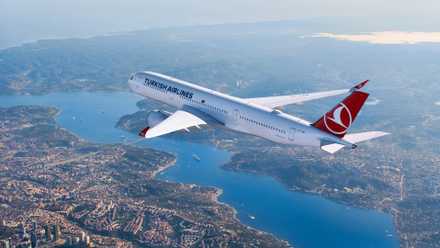
The Airbus A350 has cemented its position as the dominant platform for ultra-long-haul commercial operations in 2026, with Cirium scheduling data confirming ten routes between July and December exceeding 19 hours of block time. Finnair's Melbourne–Bangkok–Helsinki service leads the list at a peak block time of 23 hours and 40 minutes, operated with the standard A350-900 and launching in October. French bee and Air France round out the top three with competing one-stop services to Papeete via San Francisco and Los Angeles respectively, each exceeding 22 hours. Turkish Airlines contributes three entries on the list, connecting Australia and South America to Istanbul with intermediate stops in Kuala Lumpur, Singapore, and São Paulo. The sole nonstop entry is Singapore Airlines' New York JFK–Singapore Changi service, operated exclusively by the A350-900ULR subvariant in a low-density, all-premium configuration, with a 2026 peak block time of 19 hours and 15 minutes.
The operational implications of these missions for flight crews and operators are substantial. Block times approaching or exceeding 19 hours trigger the most demanding augmented crew requirements under most regulatory frameworks, typically mandating three- or four-pilot configurations with defined bunk rest cycles, extended pre-duty rest obligations, and complex fatigue risk management protocols. Airlines operating these routes must maintain highly specialized crew pools qualified on the A350 with the requisite medical and scheduling infrastructure to sustain legal rest in-flight. For airline pilots and union representatives, the proliferation of routes at the 20-plus-hour threshold represents a meaningful shift in what constitutes a normal long-haul operation, pushing fatigue science, crew resource planning, and collective bargaining agreements into increasingly complex territory.
The A350-900ULR's technical significance should not be overlooked by aviation professionals monitoring fleet strategy. Singapore Airlines remains the only operator of this subvariant, which achieves its range through a substantially enlarged fuel capacity of approximately 158,000 liters, aerodynamic refinements, and engine optimization — all without the structural weight penalty of a larger airframe. The aircraft's ability to sustain JFK–Changi nonstop at 19-plus hours, compared to the one-stop services that dominate the rest of the list, illustrates the meaningful range ceiling that still exists even for the standard A350-900 without ULR modifications. Turkish Airlines' publicly stated ambition to operate Istanbul–Sydney nonstop with A350-1000s by 2027 signals that at least one major carrier believes the next-generation variant can close that gap on a commercially viable basis.
From a broader industry perspective, the concentration of ultra-long-haul capacity on the A350 reflects a structural shift away from four-engine legacy platforms and toward high-efficiency twin-engine widebodies as ETOPS authorizations have matured. The Boeing 777X, which has faced persistent certification delays, was widely anticipated as a competitor in this segment, but the A350 family has largely filled the void in the interim. For Part 91K and Part 135 business aviation operators flying long-range jets such as the Global 7500 or G700, these airline milestones are relevant benchmarks — the operational lessons learned by airlines managing crew fatigue, fuel reserves, and alternate planning on 19-to-24-hour missions increasingly inform best practices and regulatory guidance across all segments of professional aviation. The normalization of near-24-hour scheduled operations will likely accelerate both regulatory scrutiny and technological development in human factors, automation, and aircraft health monitoring for the next generation of ultra-long-haul platforms.








 Read original article