Here's How The FAA Lets Boeing Sign Off On Its Own 737 MAX Deliveries
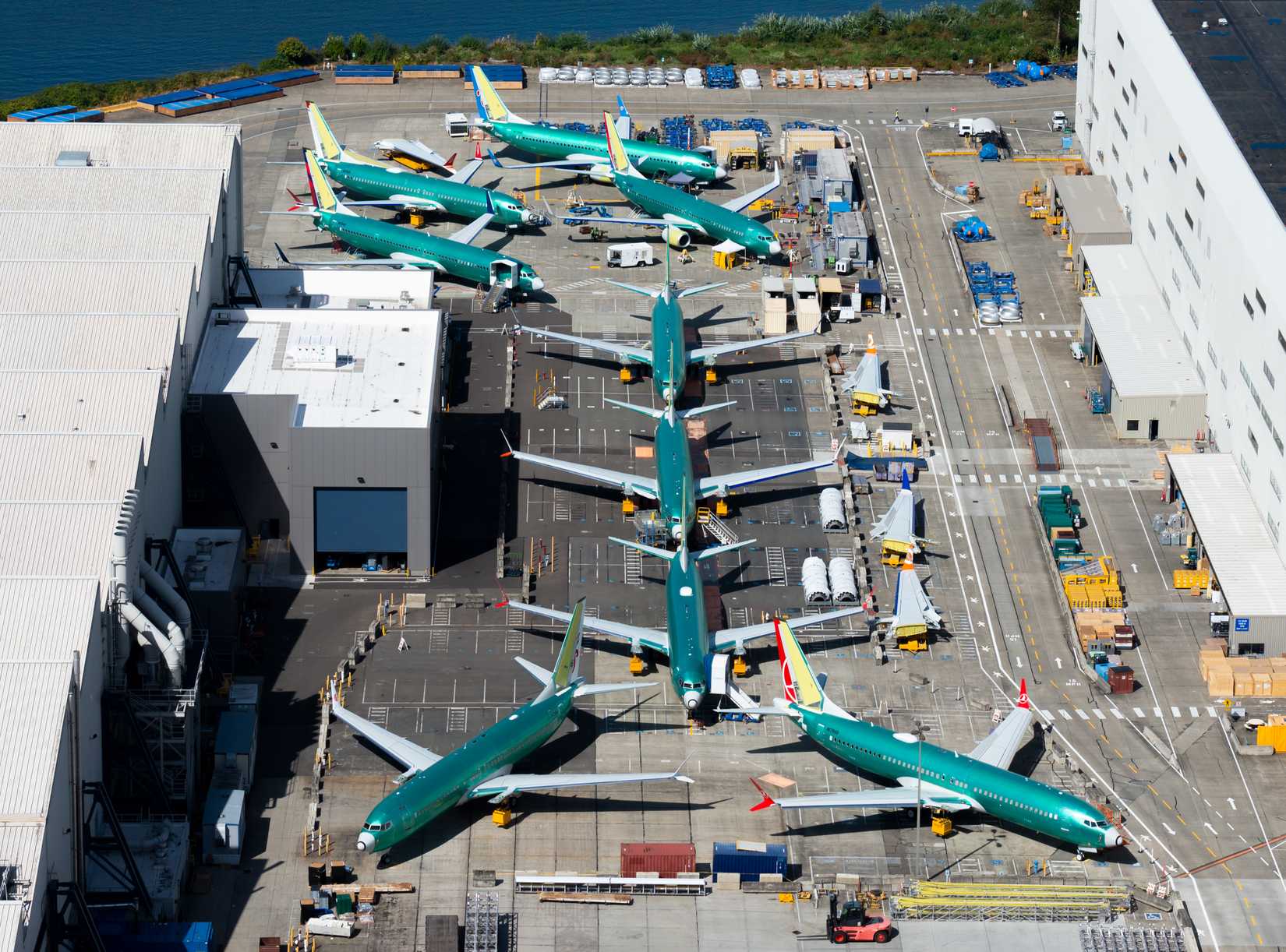
Boeing's 737 MAX production and delivery pipeline operates under a formally restored but carefully constrained self-certification arrangement that has been in effect since September 29, 2025, when the FAA reinstated a three-year Organization Designation Authorization to the manufacturer after stripping it entirely in the wake of the 2018–2019 MCAS-related accidents. Under this restored ODA, Boeing's own unit members — corporate employees who simultaneously hold legal status as FAA designees — sign off on individual airworthiness certificates on alternating weeks, while FAA inspectors rotate into primary control on the intervening weeks. The arrangement runs alongside a hard cap of 47 MAX deliveries per month, a ceiling the FAA imposed as part of its broader quality-control enforcement posture, and it exists concurrently with Boeing's November 2025 non-prosecution agreement that carried a $1.14 billion payment. The result is a deliberately bifurcated regulatory architecture in which unit-level airworthiness determination and factory-wide production-line oversight are treated as legally distinct processes, each with separate accountability chains.
The ODA framework itself is not a novel or informal mechanism — it is a congressionally authorized structure codified in federal aviation law that has underpinned certificated aircraft production across the industry for decades. What makes the current Boeing application significant is the political and safety context surrounding its restoration. The delegation was revoked in 2019 under extraordinary circumstances tied to two fatal crashes and a global fleet grounding, making its return a deliberate regulatory judgment that Boeing had sufficiently stabilized its internal compliance infrastructure to resume limited self-certification. The alternating-week structure is a modified version of the standard ODA model, adding a visible rhythm of federal reversion that is unusual in practice. Unit members retain their legal dual identity — Boeing employee and FAA representative — but the rotating schedule creates predictable windows in which the federal government reasserts direct sign-off authority, ostensibly providing a check on any drift in internal standards.
For airline operators, maintenance directors, and flight operations personnel who accept 737 MAX deliveries, the practical implications of this structure are considerable. An aircraft issued an airworthiness certificate by a Boeing ODA unit member during a manufacturer-controlled week carries the same legal standing under 14 CFR as one signed off directly by an FAA inspector. The airworthiness certificate itself does not indicate which track produced it, meaning accepting operators cannot distinguish delivery-week provenance from the document alone. What they can scrutinize is the quality of accompanying conformity documentation and the aircraft's specific maintenance records, particularly any evidence of traveled work — out-of-sequence manufacturing tasks that require rework on partially completed or finished airframes. The article notes that traveled work and total rework hours are among the six key performance indicators tracked under Boeing's mandatory quality plan, and both metrics have been problematic enough on the Renton line that finished jets have required partial disassembly for access to interior systems.
The broader significance for Part 91, 91K, and 135 operators acquiring MAX variants — including the MAX 8, MAX 9, and the emerging MAX 10 — is that the two-track system explicitly decouples a specific aircraft's certified airworthiness status from the overall health of the factory environment that produced it. An individual jet can be legally certificated as airworthy even while the production line generating it remains under intensive corrective action plans and active FAA scrutiny. This is not a loophole — it reflects a long-standing regulatory philosophy that aircraft conformity is an engineering determination made about a specific machine, not a factory-wide statistical judgment. However, it places greater responsibility on receiving operators to conduct rigorous incoming inspection, engage thoroughly with delivery documentation, and flag any anomalies through Aviation Safety Hotline or manufacturer warranty channels rather than assuming that the certificate resolves all production-quality questions.
The restored ODA arrangement fits within a wider industry tension between manufacturing throughput demands and safety-culture integrity that has intensified across both commercial and business aviation sectors in recent years. The Spirit AeroSystems fuselage supply crisis, the Alaska Airlines door-plug incident of January 2024, and ongoing Congressional scrutiny of FAA oversight capacity have collectively pushed regulators toward greater transparency about delegation limits and systemic audit frequency. The alternating-week model Boeing now operates under is a visible, structural acknowledgment that pure delegation — once the industry norm — is insufficient when a manufacturer has a documented history of quality-system breakdowns. Whether this hybrid approach achieves the intended behavioral outcome inside Boeing's production culture, where line-rate pressure and inspection independence routinely come into direct conflict, will likely determine whether the FAA expands, maintains, or again curtails the authorization when the three-year term expires in 2028.











 Read original article