Delta Air Lines' Secret Weapon: The Fastest-Growing Focus City In 2026 [9 New Routes]
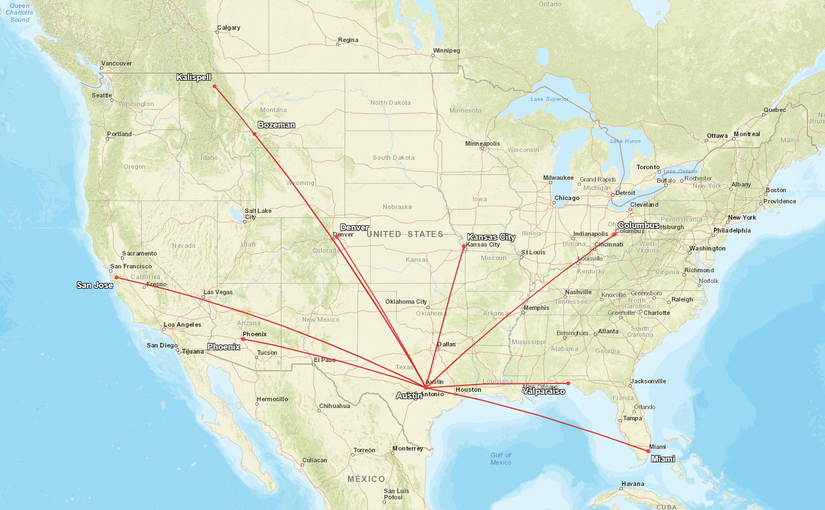
Delta Air Lines has accelerated its capacity push at Austin-Bergstrom International Airport (AUS) at a pace that places the Texas focus city at the forefront of the carrier's 2026 domestic network expansion. According to aviation analytics firm Cirium, Delta has scheduled 14% more seats from AUS in 2026 compared to 2025, outpacing even Raleigh-Durham in its rate of growth among Delta's focus city portfolio. Nine new nonstop routes have been added this year alone, spanning geographically diverse markets including Phoenix, San Jose, Miami, Destin-Fort Walton Beach, Bozeman, Denver, Kalispell, Columbus, and Kansas City. The expansion brings Delta's total nonstop destination count from AUS to nearly 30, and annual scheduled departures are projected to reach 21,405 in 2026—more than doubling the 2019 pre-pandemic figure of 8,790 and representing sustained year-over-year growth since the carrier's post-COVID recovery inflection in 2021.
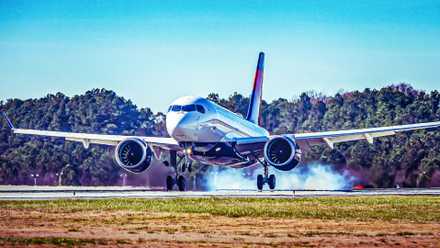
The operational composition of Delta's Austin flying reflects the broader industry structural divide between mainline and regional feed. Of the 1,798 nonstop departures Delta has scheduled from AUS in June 2026, 1,151 are mainline operations while 647 are Delta Connection regional services—560 flown by SkyWest Airlines on the Embraer E175 and 87 operated by Endeavor Air. The E175 is numerically the most deployed aircraft type in Delta's Austin operation, accounting for just over 31% of monthly departures, though the Airbus A321 leads in seat production with 48,896 seats across 256 flights. Other significant types in the mix include the A319, Boeing 737-800, A220-300, and A320, indicating that Austin is being served across Delta's full narrowbody and regional fleet spectrum rather than being concentrated in a single gauge.
For airline crews and corporate flight departments operating into AUS, Delta's aggressive capacity additions carry concrete airspace and infrastructure implications. Austin has historically ranked among the fastest-growing large airports in the United States by passenger volume, and Delta's sustained expansion—combined with Southwest's commanding market-leading position of 3,537 monthly departures and 571,209 seats—means ground delay programs, gate congestion, and ramp sequencing complexity at AUS will likely intensify through the summer and into the fall schedule period. Corporate operators running Part 91 or 135 flights into AUS should anticipate increased IFR traffic loads during peak departure banks, particularly as Delta's mainline and regional scheduling overlaps during morning and evening complex push windows.
Delta's trajectory at Austin also signals a deliberate strategic choice to contest Southwest's historically dominant position in point-to-point leisure and business markets within Texas, rather than simply using AUS as a passive feed city to Atlanta. The nine new routes added in 2026 target both leisure-heavy leisure markets like Bozeman and Destin and business-travel-rich corridors like Columbus and Kansas City, suggesting Delta is pursuing a dual revenue strategy at Austin rather than a single-segment play. This mirrors what the carrier has executed at other focus cities—Raleigh-Durham, Salt Lake City—where depth of destination coverage and competitive frequency are used to build loyalty among road warriors who would otherwise default to Southwest or United on intra-continental routes. Network Planning SVP Paul Baldoni's public commentary framing the expansion around premium experience and network convenience reinforces that Delta views AUS as a premium-revenue opportunity rather than solely a volume play.
The longer historical arc of Delta's Austin scheduling data—from a low of 2,853 flights in 2009 during the financial crisis to the projected 21,405 in 2026—underscores how dramatically the Austin market has matured as a commercial aviation center. Austin's transformation from a secondary Texas city into a major corporate and technology hub over the past decade has made it one of the most contested markets in U.S. domestic aviation, with all three legacy carriers plus Southwest and Spirit vying for share. For business aviation operators based in or regularly serving the Austin region, that competitive dynamic translates into continued infrastructure pressure on AUS itself and growing relevance for reliever airports such as Austin Executive Airport (EDC) and San Marcos Regional Airport (HYI) as alternatives for Part 91 traffic seeking to avoid mainline congestion during peak operational periods.






 Read original article