Change Incorporation, Configuration Control, and the High Cost of Getting It Wrong
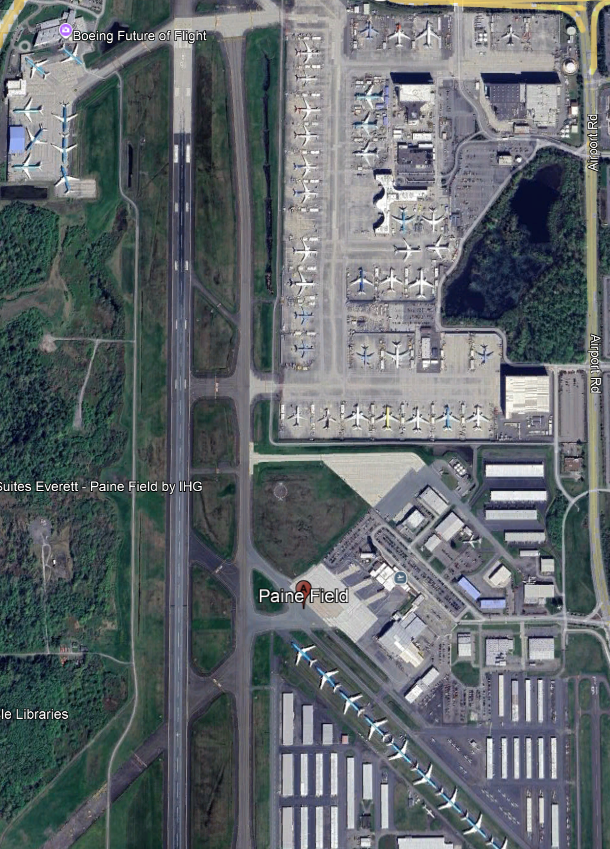
Boeing's Change Incorporation process—the systematic retrofitting of airframes built to pre-certification standards once a type certificate is formally issued—has become one of the most consequential operational and financial variables in commercial aircraft production. The practice of assembling aircraft ahead of regulatory approval is standard across the industry, driven by the economics of recouping development investment and satisfying early delivery positions. However, the Boeing 777-9 program illustrates the compounding risk that accumulates when a certification timeline extends far beyond initial projections. With more than 30 777-9 airframes already assembled to early-production standards at Paine Field, Boeing faces a rework cycle whose scope and duration it has not publicly disclosed, though revised flight control software is confirmed as at least one required change. The FAA's heightened scrutiny of Boeing's production and quality systems means the agency's sign-off on those changes—and the subsequent retrofit process—will be subject to a level of oversight unprecedented in recent Boeing history.
The scale and cost of Boeing's prior Change Incorporation campaigns provide the clearest benchmark for what lies ahead. The 737 MAX grounding, which lasted 21 months following two fatal crashes, ultimately required rework on 450 airframes, with the final deliveries clearing only in 2025. The 787 program presented a parallel challenge: deliveries were suspended in October 2020 after production-quality issues surfaced, 110 aircraft required remediation, and that inventory was not fully cleared until 2025 as well. The 787 rework averaged three to four months per airframe; the 737 MAX timelines were similarly protracted. Thirty-five 737 MAX 7 and MAX 10 variants remain in a holding pattern pending their own certification-dependent design changes. For airline operators awaiting these aircraft, each of these programs represents not only delayed revenue but sustained disruption to fleet planning, crew training pipelines, and route network development.
The January 2024 Alaska Airlines Flight 1282 door plug separation has fundamentally altered the regulatory and cultural environment in which Boeing's Change Incorporation work now occurs. That event—directly attributed to failures in Boeing's documented parts removal and reinstallation process—exposed deficiencies in the very configuration control disciplines that Change Incorporation depends upon. The FAA's subsequent oversight actions, including production caps and mandatory audits, mean that Boeing cannot execute the 777-9 retrofit program under the same relatively permissive conditions that governed earlier campaigns. Every step in the rework chain—documentation, traceability, inspection, sign-off—will be subject to elevated scrutiny, which is operationally prudent but almost certainly extends timelines.
For airline operators holding 777-9 delivery positions, the practical implications are significant. Capacity planning built around the aircraft's entry into service—whether for ultra-long-haul routes or high-density widebody replacement cycles—remains hostage to a certification timeline Boeing has been unable to anchor with precision. The pattern across the MAX, 787, and now 777-9 programs suggests that pre-certification production, while economically rational in isolation, creates a structural liability that grows nonlinearly when certification is delayed. Each month of additional delay adds to the inventory of airframes awaiting rework, potentially increases the complexity of required changes as flight testing continues to generate data, and compounds the logistical challenge of sequencing rework across dozens of airframes efficiently. Operators should treat 777-9 delivery schedules as subject to significant slippage beyond any current Boeing guidance.
The broader implication for Part 121 operators and business aviation fleet planners is a reinforced case for robust delivery-position contingency strategies. Boeing's configuration control failures are not unique to a single program; they reflect systemic pressures in high-tempo, complex manufacturing environments where the temptation to treat documentation and process discipline as secondary to production rate has repeatedly proven catastrophic in cost and consequence. As the FAA continues to tighten oversight of both Boeing and the broader OEM ecosystem following the Flight 1282 investigation, operators should expect greater transparency requirements around aircraft configuration history, particularly for airframes that have undergone substantive rework—data that will matter for maintenance planning, airworthiness determinations, and insurance assessments throughout the aircraft's service life.




 Read original article