How A Dassault-Airbus Workshare Fight Killed Europe's $116 Billion 6th-Generation Fighter Program
The Future Combat Air System's Next Generation Fighter program — Europe's most ambitious post-Cold War military aviation undertaking — officially died on June 8, 2026, when German Chancellor Friedrich Merz confirmed that a jointly developed 6th-generation crewed combat aircraft replacing the Dassault Rafale and Eurofighter Typhoon was no longer viable. Nine years after French President Emmanuel Macron and German Chancellor Angela Merkel unveiled the program at the 2017 ILA Berlin Air Show, and after an estimated €100 billion ($116 billion) in projected development costs, not a single prototype had been constructed and no demonstrator had ever left the ground. The final determination came from a German mediator appointed following a March 2026 Brussels dinner between Macron and Merz, with German Defense Minister Boris Pistorius publicly acknowledging on June 9 that the program's end had been visible since at least December 2025. The proximate cause was not a technical failure or a funding collapse, but an unresolvable industrial dispute between Dassault Aviation and Airbus Defence and Space over workshare allocation on the Next Generation Fighter — specifically, Dassault's reported insistence on retaining up to 80% of the airframe's development work, a figure Germany and Airbus found incompatible with the principle of equal partnership across three contributing nations.
The structural logic behind Dassault's position illuminates why no negotiated compromise could hold. Dassault's entire export franchise is built on the proposition that France offers a sovereign fighter with genuine technology transfer, a value proposition demonstrated most clearly by the Rafale's export success, which accounted for roughly two-thirds of France's €27 billion in arms exports in 2022 alone. Ceding design authority over the NGF to a German-backed industrial partner would have handed Airbus direct access to the proprietary systems underlying Rafale's competitive position in third-party markets. From Dassault's perspective, an equal workshare arrangement was not merely a contractual inconvenience — it was an existential threat to its long-term viability as an independent fighter manufacturer. Airbus Defence and Space, meanwhile, represented the industrial interests of a German government that had committed program funding predicated on an equitable return to German aerospace workers and facilities. With neither position offering meaningful room for compromise, nine years of political mediation produced no airframe. The mediator's April 18, 2026, conclusion that a jointly built crewed fighter was no longer feasible was, in retrospect, simply the formal acknowledgment of a structural incompatibility that had been present from the beginning.
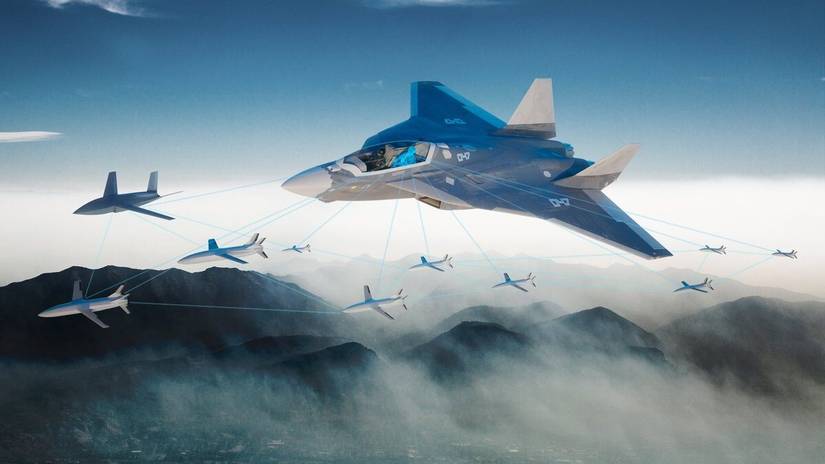
For working military pilots and the operators of European defense aviation, the collapse creates an immediate and significant capability planning problem. The Rafale and Eurofighter Typhoon — the aircraft FCAS was designed to replace — will now serve extended operational lives without an agreed successor. European air forces operating these platforms must now develop long-range sustainment strategies for airframes that were already expected to be approaching retirement by the 2040s and 2050s. The French Air and Space Force and Germany's Luftwaffe face the prospect of operating aging platforms into a threat environment shaped by advanced Russian and Chinese 5th-generation developments, without the interoperability architecture — the AI-powered Air Combat Cloud and autonomous Remote Carrier drone network — that FCAS was designed to provide. Spain, a full partner since 2019, faces the same gap. The absence of a crewed next-generation platform also disrupts the human factors pipeline: fighter pilot training, tactics development, and mission systems qualification for a 6th-generation aircraft typically begin a decade or more before the aircraft enters service.
The FCAS collapse should be read alongside the parallel trajectory of the Global Combat Air Programme, the tri-national 6th-generation effort involving the United Kingdom, Japan, and Italy that emerged partly as a consequence of Britain's post-Brexit exclusion from FCAS. GCAP, which absorbed the UK's Tempest program, has maintained a more coherent governance structure to date, though it faces its own workshare and technology-sharing pressures as it moves toward a target service entry date in 2035. The FCAS failure reinforces a pattern visible across European defense industrial history — from the Eurofighter Typhoon's own tortured development to the A400M transport program — in which the political logic of multinational cooperation and the commercial logic of national industrial champions prove fundamentally difficult to reconcile. For commercial and business aviation operators, the implications extend beyond military procurement: the European aerospace industrial base that supports MRO, avionics development, and airframe manufacturing for civil aviation is partly capitalized and technically sustained by defense programs of this scale, and the absence of a major next-generation fighter program leaves a structural gap in the engineering and investment pipeline that France, Germany, and Spain will need to address through some combination of national programs, revised partnerships, or expanded procurement of existing platforms — most likely an accelerated acquisition of additional Rafale and Typhoon airframes, and potentially increased reliance on American platforms including the F-35.










 Read original article