AXIS Flight Simulation adds second qualified Level D CL350 simulator in US | Corporate Jet Investor | CJI news
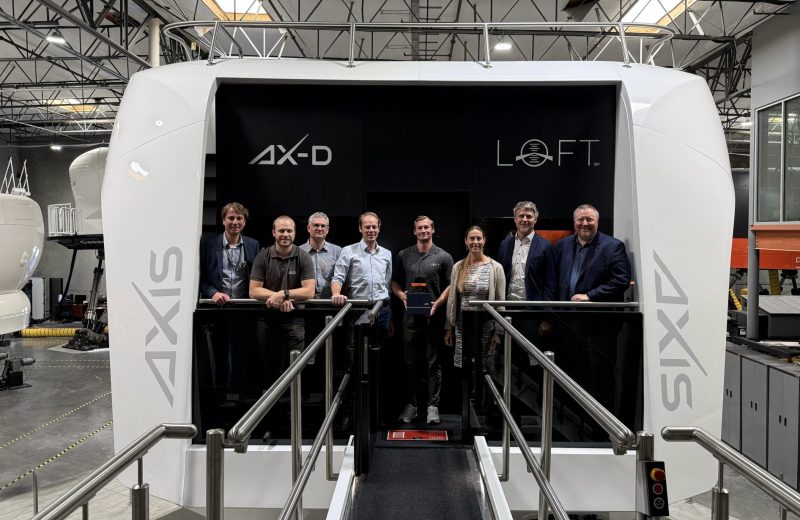
AXIS Flight Simulation has secured FAA Level D qualification for a Bombardier Challenger CL350 full-flight simulator (FFS) installed at LOFT, a boutique California-based pilot training facility, marking the second Level D-qualified CL350 simulator on U.S. soil and AXIS's fourth qualified training device in the country overall. Level D represents the highest FAA qualification achievable for a full-flight simulator, requiring the most stringent standards for motion cueing, visual fidelity, systems modeling, and aerodynamic replication — and is the only simulator class that permits its use as a substitute for actual flight time in type rating and recurrency programs. LOFT intends to deploy the device for initial type ratings, recurrent training, upset prevention and recovery training (UPRT), and area familiarization. The hardware configuration includes a Van Halteren motion system, an RSi XT6 visual system with a 200×45 degree field of view, Collins Pro Line 21 Advanced avionics, and the optional steep approach capability package.
For professional pilots operating or transitioning into the Challenger 350, the commissioning of this simulator expands training access at a time when scheduling pressure on existing Level D devices has become a practical constraint. The CL350 occupies a prominent position in the mid-size business jet segment, widely operated by Part 135 charter operators, fractional providers, and Part 91K flight departments across North America. Until now, training options in the western United States for this type have been limited, with most Level D CL350 access concentrated through the dominant providers — primarily FlightSafety International and CAE — at their established learning centers. LOFT's positioning as a boutique facility suggests a deliberately differentiated service model emphasizing scheduling flexibility, instructor continuity, and a lower student-to-resource ratio, which can be operationally significant for flight departments managing tight crew availability windows.
AXIS's concurrent qualification of a second CL350 Level D device in Ohio for Vista America further signals the growing demand for Challenger 350 simulator capacity across the fractional and on-demand charter sectors. Vista America, one of the larger U.S.-based private aviation operators, maintaining its own dedicated simulator reflects an industry-wide trend toward vertically integrated training infrastructure, where large fleet operators bring type-specific devices in-house or under direct contract to control cost, scheduling, and standardization. The EASA-qualified CL350 simulator AXIS delivered to the Austrian Aviation Academy in parallel underscores that this demand profile is transatlantic, driven by the CL350's strong penetration of both North American and European business aviation markets.
The broader significance of AXIS's expansion in the United States is that it introduces meaningful competitive pressure into a simulator manufacturing and qualification market long dominated by CAE and L3Harris. European-headquartered AXIS has been methodically building its U.S. footprint, and achieving Level D qualification — which requires close FAA coordination and rigorous evaluation — validates its engineering and regulatory execution capability in the American market. For training organizations and operators evaluating simulator procurement, this creates an alternative supply chain that could influence lead times, pricing, and customization options for future devices. The inclusion of steep approach capability as an option on the LOFT device is also noteworthy, as it signals anticipation of operational scenarios involving constrained airports — a consideration increasingly relevant as operators expand international routing and encounter approach-restricted destinations previously outside mid-size jet mission profiles.