The Narrowbody Jet That Made Launching Nearly 40 New Transatlantic Routes In 2026 Possible
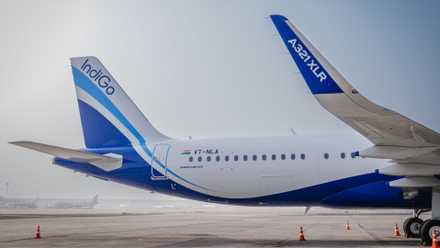
The Airbus A321XLR has fundamentally altered the economics of transatlantic aviation in 2026, enabling approximately 37 new US-Europe routes across roughly 14 airlines — the largest single-year expansion of transatlantic service in modern commercial aviation history. The aircraft's defining engineering achievement is a permanently integrated Rear Center Tank (RCT) built into the rear cabin floor structure, adding approximately 12,900 liters of fuel capacity for a total of around 40,000 liters and extending manufacturer-rated range to 4,700 nautical miles with a maximum endurance of roughly 11 hours. Unlike the A321LR's removable auxiliary tanks in the forward cargo hold, the XLR's RCT is a load-bearing airframe element, which required EASA to conduct over 900 flight test hours, more than 400 specialist meetings, and review in excess of 500 technical documents — with certification hinging on demonstrated tank resistance to external pool fires for at least 2.5 minutes and controlled fuel leakage behavior during extreme structural events such as belly landings or gear collapse. The aircraft's maximum takeoff weight reaches 101 tonnes, compared to 97 tonnes for the A321LR and just 82 tonnes for the Boeing 737 MAX 8, reflecting the structural investment required to unlock ocean-crossing capability in a single-aisle airframe.
For airline operators, the commercial logic reshapes the fundamental calculus of route planning. Widebody aircraft such as the 777 or A330 require 250 to 350 occupied seats per transatlantic departure to reach break-even; the A321XLR achieves viability at 180 to 220 passengers, a threshold that secondary markets — cities like Halifax, Raleigh-Durham, or Nantes — can meet on a seasonal or reduced-frequency schedule. Airlines are launching routes at three weekly departures, testing demand without the capital exposure of full-scale widebody commitment, and either scaling or exiting at far lower risk. The aircraft can also operate from runways as short as approximately 7,300 feet at maximum takeoff weight, granting access to airports that widebodies cannot efficiently use, which further widens the pool of viable city pairs. The 30 percent reduction in fuel burn per seat versus older-generation jets on equivalent sectors — driven by either the CFM LEAP-1A or Pratt & Whitney PW1100G-JM engine options — reinforces unit economics on routes where yield per passenger is inherently moderate.
For flight crews and training departments, the A321XLR introduces operationally significant considerations without demanding the large-scale type conversion normally associated with long-haul expansion. Full cockpit commonality with the A320 family means pilots already holding an A321neo or A321LR type rating can transition to the XLR with minimal additional training, a meaningful cost advantage for carriers building transatlantic programs from scratch or expanding capacity rapidly. However, the aircraft's 11-hour maximum endurance pushes it into ETOPS and crew rest territory that narrowbody operators have not historically navigated. Dispatchers, schedulers, and chief pilots at airlines deploying the XLR must now manage fatigue rules, alternate fuel planning, and ETOPS contingency procedures across crew bases that were previously organized entirely around short- and medium-haul operations — a structural shift in how those flight departments operate.
The competitive landscape produced by the A321XLR carries direct implications for Boeing and the broader industry. The 737 MAX 8's maximum range of approximately 3,500 nautical miles places transatlantic city pairs entirely beyond its reach, and Boeing currently has no certified narrowbody equivalent to challenge the XLR. That gap — exceeding 1,200 nautical miles of range — amounts to a structural monopoly for Airbus on single-aisle ocean crossings for the foreseeable future, and airlines are accelerating orders and route launches accordingly. The broader trend underway is a systematic decentralization of transatlantic travel away from legacy mega-hubs: as point-to-point narrowbody service proliferates between secondary cities, connecting traffic through New York JFK, London Heathrow, or Paris CDG declines, with ripple effects on slot values, alliance feed strategies, and hub carrier revenue models. What the A321XLR has introduced is not merely a new aircraft type but a structural realignment of where transatlantic aviation's center of gravity sits — and operators across the industry, from network carriers to corporate flight departments planning international charter exposure, are still working through the full implications.





 Read original article