12-Hour Nonstop Flights: Alaska Airlines' 10 New Longest Routes In 2026 [Full List]
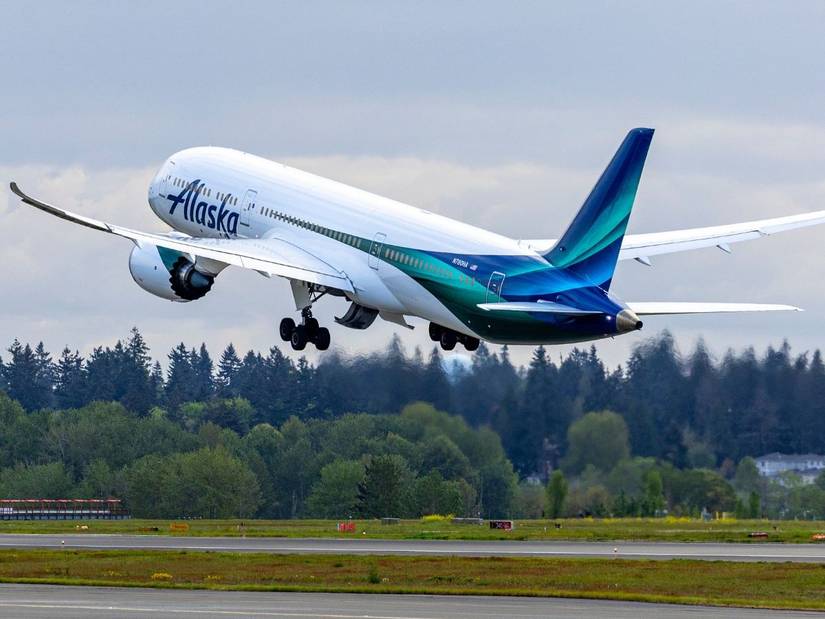
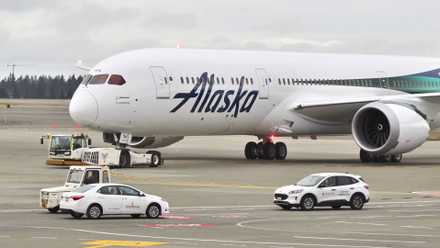
Alaska Airlines has positioned itself as a significant long-haul carrier in 2026, with its ten longest routes spanning the Pacific, Atlantic, and domestic U.S. system and reflecting the profound structural changes brought about by its merger with Hawaiian Airlines. The carrier's longest scheduled block time sits at just under 12 hours on the westbound Seattle–Seoul (SEA–ICN) rotation, operated by the Boeing 787-9 Dreamliner with near-daily frequency and generating more than 308 million available seat miles between May and December. The addition of a Seattle–Rome (SEA–FCO) corridor, launched in April 2026 with an 11-hour-25-minute return leg, marks Alaska's continued push into the transatlantic market—a space it had not meaningfully competed in until recent years. Rounding out the top five are two inherited Hawaiian routes, including the domestically-classified but operationally intercontinental JFK–Honolulu corridor at 11 hours and 15 minutes aboard the Airbus A330-200, and a Honolulu–Sydney segment at 11 hours.
For professional pilots and aviation operators, the fleet composition across these routes carries notable operational significance. Alaska is actively transitioning certain ex-Hawaiian routes—most visibly Honolulu–Tokyo Narita—from the A330-200 to the 787-9, a shift that reflects both fleet standardization priorities and the 787's superior fuel economics on long overwater stages. The A330-200, inherited from Hawaiian, remains the workhorse for South Pacific routes including Honolulu–Auckland and Honolulu–Osaka, and its continued deployment indicates Alaska has not yet completed full fleet rationalization following the merger. For flight crews, dispatchers, and planners at Alaska, this dual-fleet reality on intercontinental operations presents meaningful complexity in training pipelines, MEL management, and crew qualification tracking—particularly across routes that span multiple oceanic FIRs and require ETOPS authorization well beyond 180 minutes.
The appearance of the 737 MAX 8 at tenth place on this list—linking JFK to Anchorage in just under eight hours—highlights an underappreciated dimension of Alaska's domestic network. The JFK–ANC segment is among the longest regularly scheduled narrowbody operations in the U.S. domestic system, placing significant demands on extended single-class cabin crews and requiring careful fuel planning given the limited alternate infrastructure across portions of the route's northern corridor. For Part 91K and charter operators considering competitive positioning in Alaska's key markets, the carrier's aggressive frequency build on transcontinental and transpacific routes from Seattle signals that SEA is being developed as a true international hub rather than merely a connecting waypoint—a dynamic that will increasingly shape corporate travel routing decisions for operators based on or regularly serving the U.S. West Coast.
The broader strategic picture is one of deliberate long-haul expansion by a carrier that, as recently as five years ago, had no meaningful transoceanic footprint of its own. Alaska's CCO Andrew Harrison has signaled continued international route announcements from Seattle, and the carrier's oneworld alliance membership gives its intercontinental ambitions an interlining and FFP infrastructure that independent expansion alone could not quickly replicate. For the corporate and business aviation sector, the growth of competitive nonstop options on routes like SEA–ICN, SEA–NRT, and SEA–FCO directly affects the calculus of when ultra-long-range business jets—Gulfstream G700s, Dassault Falcon 10Xs, and Bombardier Global 7500s—offer a genuine time or productivity advantage over commercial alternatives. As Alaska's widebody frequency and seat capacity on these corridors continues to build through 2026, the competitive pressure on business aviation on Pacific and emerging Atlantic routes from the Pacific Northwest will intensify accordingly.








 Read original article