The 4 Concorde Cost Lines Boom's Overture Has To Beat To Survive
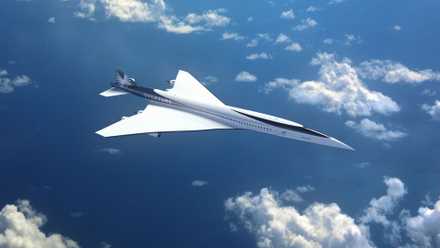
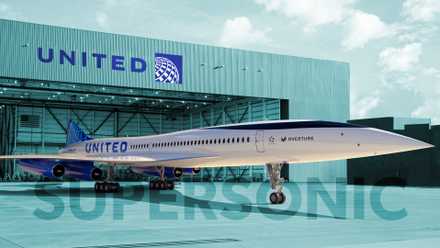
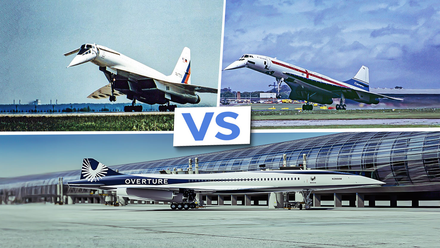
Boom Supersonic's Overture program faces a challenge that has less to do with breaking the sound barrier than breaking even, and the company's public strategy increasingly reflects that reality. The Concorde was retired in 2003 not because it failed to fly fast and quiet enough for its era, but because it was economically unsustainable: four afterburning Olympus 593 turbojets burned nearly 6,800 gallons per flight hour, maintenance ran roughly 60 hours for every hour aloft, and round-trip fares regularly topped $12,000-$15,000 in today's dollars. Boom's response is a deliberately smaller, slower airplane — 170,000 pounds and 80 seats versus the Concorde's 400,000-plus pounds and 130 seats, cruising at Mach 1.7 instead of Mach 2.0 without afterburners. That's a calculated trade of raw performance for unit economics, targeting $5,000 round-trip fares that would put the Overture within reach of a much larger segment of premium business and leisure travelers than the Concorde's ultra-wealthy charter clientele ever represented.
For working pilots and operators, this matters because Boom's business case rests on assumptions that will directly shape how the aircraft gets certified, dispatched, and flown if it reaches service. The company is betting heavily on its in-house Symphony engine — a bold move given Boom has never built a turbine engine before and has no backing from GE, Pratt & Whitney, or Rolls-Royce, the three manufacturers with the institutional knowledge to de-risk a clean-sheet supersonic powerplant. Engine programs are historically the long pole in any new airframe's timeline and cost structure; Boom's sprint core testing at the Colorado Air and Spaceport is still early-stage relative to a stated end-of-decade production target. Pilots evaluating Boom's credibility — as United's Scott Kirby has publicly done, giving Overture roughly 50-50 odds — are essentially assessing whether a startup can compress a decade-plus engine development cycle into a few years using modern CFD, AI-driven thermal and combustion modeling, and digital twin techniques that simply didn't exist when Concorde or the SR-71's engines were designed.
The regulatory backdrop adds another layer relevant to flight operations planning. The June 2025 executive order overturning the 1973 FAA ban on supersonic overland flight removes a legal barrier, but Boom's engineering path — quiet supersonic technology developed alongside NASA's X-59 Quesst program and Lockheed Martin Skunk Works — suggests the company intends to operate within a noise envelope that wouldn't need that exemption at all, using low-boom aerodynamic shaping to turn a sonic boom into something closer to a "thump." That's a meaningfully different regulatory and route-planning proposition than Concorde faced, which was largely restricted to overwater tracks and a handful of transatlantic city pairs precisely because of boom-related overland restrictions. If Overture can validate quiet supersonic cruise, it opens overland domestic and transcontinental routing that was never commercially available to Concorde, materially changing load-factor math and network planning for launch customers like United, American, and Japan Airlines.
Broader industry context makes this a bellwether program worth tracking closely. Business aviation has already shown appetite for premium speed products, and mainline carriers' willingness to place conditional orders signals real interest in reviving supersonic passenger service as a premium-cabin differentiator rather than a mass-market play. But the aviation industry has seen ambitious clean-sheet OEM programs stumble on certification timelines, supply chain maturity, and financing before (from various eVTOL startups to stalled business jet programs), and a from-scratch engine effort with $300 million in backing is a thin cushion against the capital intensity typical of propulsion development. For flight departments, airline planning groups, and pilots watching the supersonic space, the Overture story is less about whether Mach 1.7 flight is technically achievable — it likely is — and more about whether Boom can execute the unglamorous cost-control disciplines across fuel burn, maintenance intervals, flyaway price, and load factor that determine whether any aircraft program survives contact with airline economics.










 Read original article