Rolls-Royce Says Airlines Could Save Nearly $10 Million A Year From Its Latest Airbus A350 Engine Upgrade
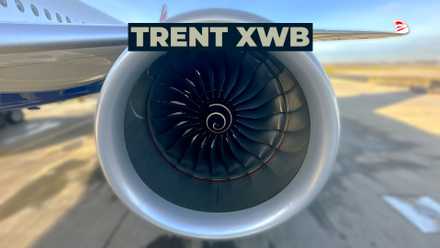
Rolls-Royce used a pre-Farnborough Airshow press briefing to disclose that its Trent XWB-84 EP engine, which powers the Airbus A350-900, is now delivering nearly double the fuel-efficiency gains originally promised. The program launched with a target of 1% improvement in specific fuel consumption (SFC) through a series of incremental aerodynamic refinements that optimize airflow through the engine core. With more than 100,000 flight hours accumulated since Delta Air Lines became the launch customer in 2025, Rolls-Royce now says actual results are tracking toward a 1.8% SFC improvement. Rob Watson, President of Civil Aerospace, framed the financial impact in stark terms: a 1% SFC gain is worth roughly $500,000 per aircraft per year, meaning an operator running a 20-aircraft A350 fleet could see $9-10 million flow directly to the bottom line annually. The EP variant was EASA-certified in December 2024 and entered service in May 2025 as part of a $1.33 billion investment Rolls-Royce made to modernize the broader Trent engine family.
For pilots and flight operations departments, this kind of incremental SFC improvement is largely invisible in day-to-day handling—thrust response, N1 targets, and EGT margins on the EP variant are essentially unchanged from earlier Trent XWB builds—but it matters enormously to the economics that determine fleet planning, route assignments, and ultimately job stability at the carriers operating these jets. Fuel remains the single largest controllable cost for airlines, often 20-30% of operating expense, so a sub-2% engine efficiency gain that compounds across a widebody fleet operating ultra-long-haul sectors translates into real margin protection, particularly as jet fuel prices remain volatile. Airlines like Delta and Singapore Airlines, which lean heavily on the A350 for long-haul and ultra-long-haul missions, benefit disproportionately since fuel burn savings scale with sector length and block hours. This also reinforces why Rolls-Royce touts a 90% share among profitable widebody operators choosing the Trent XWB—engine selection decisions increasingly hinge on lifecycle fuel economics rather than just acquisition cost or thrust rating, a trend crew and dispatch planners have watched reshape fleet composition over the past decade.
The broader significance lies in how engine manufacturers are now competing on continuous, in-service performance improvement rather than one-time design breakthroughs at entry into service. Rolls-Royce's approach—retrofitting and refining an already-mature engine years after certification—mirrors similar iterative efficiency campaigns from CFM and Pratt & Whitney on narrowbody powerplants, and signals that OEMs view post-EIS optimization as a core competitive lever, not an afterthought. This matters to operators and maintenance planning teams because it suggests airframe-engine combinations already in fleets may continue improving in efficiency without requiring new aircraft orders, extending the economic life of existing widebody assets. The parallel emphasis on SAF compatibility—the Trent XWB-84 EP is already certified for up to 50% SAF blends with a stated goal of 100% capability—ties directly into airline decarbonization commitments and EU/UK SAF mandates that are becoming binding through the back half of this decade, making engine-level efficiency and fuel-flexibility improvements a dual lever for both cost and emissions compliance.
Coming just ahead of Farnborough 2026, where Rolls-Royce, Airbus, and rival engine makers will be jockeying for headlines and orders, this announcement also serves a clear commercial purpose: reinforcing the Trent XWB's position as the exclusive powerplant on the A350 against competitive pressure from GE's widebody offerings on the 787 and 777X programs. For pilots and operators tracking industry direction, the message is that engine performance competition is shifting toward measurable, dollar-quantified in-service gains—a trend likely to accelerate as airlines demand more transparent, data-backed efficiency commitments from OEMs before committing to large widebody orders in the current high-interest-rate, fuel-cost-sensitive environment.










 Read original article