Here's Why US Marine F-35B Pilots Quit For Airline Jobs Paying Roughly Double
The retention crisis affecting Marine Corps fast-jet aviators has reached a structural inflection point in 2026, coinciding with the retirement of the last operational AV-8B Harrier II squadron, VMA-223, and the accelerating drawdown of the legacy F/A-18 Hornet fleet. With the Harrier gone, the Marines now operate only the F-35B, F-35C, and a dwindling number of legacy Hornets as frontline fighters, consolidating an already stressed pilot corps around fewer platforms even as the service remains roughly 600 pilots short of its manning targets, with fixed-wing fighter communities bearing a disproportionate share of that shortfall. The core economics are straightforward: military base pay is standardized by rank and years of service regardless of airframe, meaning an F-35B pilot earns the same as any other officer of equivalent seniority. Targeted retention bonuses exist, but they don't meaningfully differentiate by aircraft type, leaving total compensation in the $120,000–$200,000 range even with flight pay and allowances factored in—competitive early in a career, but increasingly lopsided as commercial captains reach seniority levels where pay can exceed $450,000.
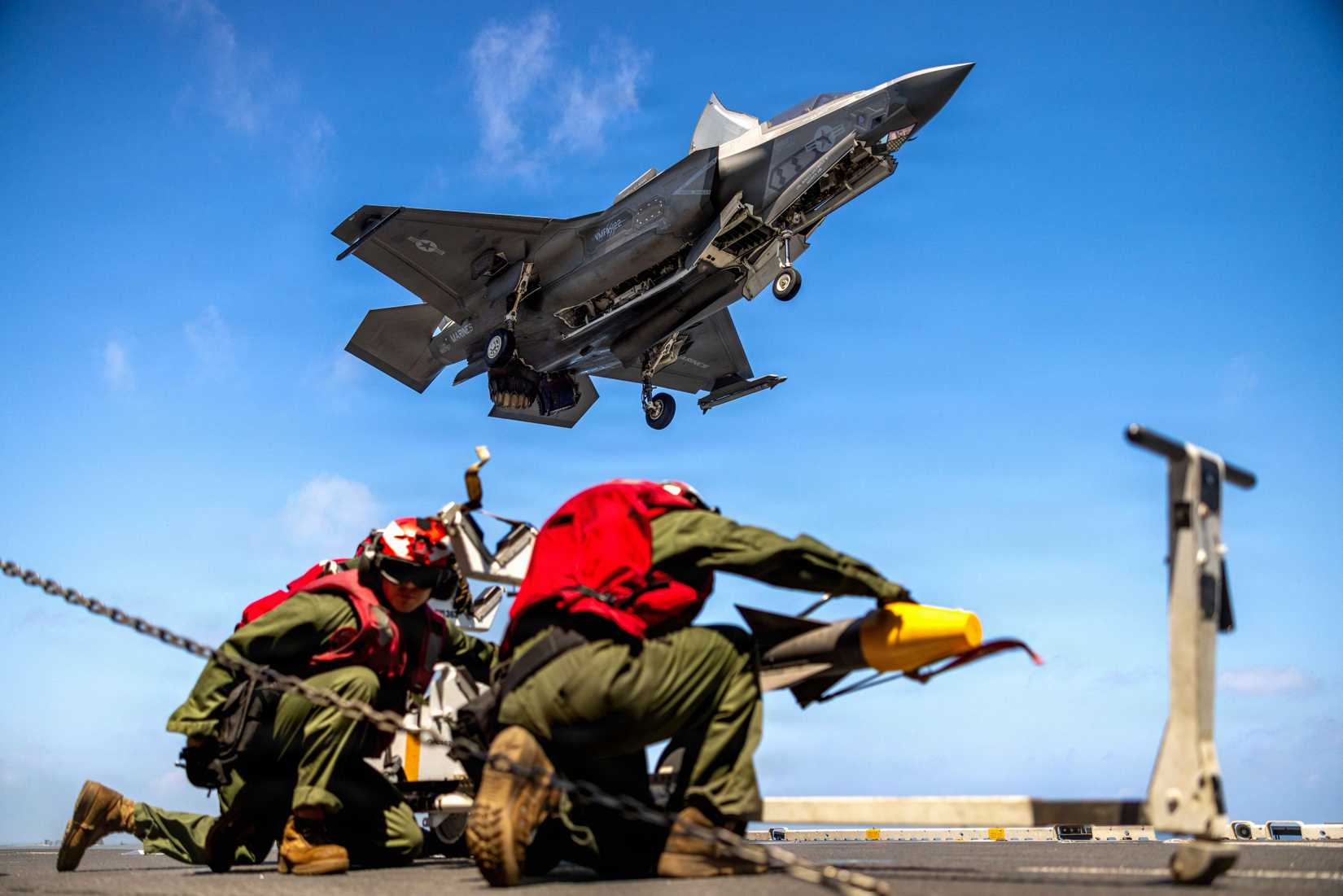
What distinguishes the Marine experience from sister services is less about money and more about lifestyle and career predictability. F-35B pilots tied to Marine Expeditionary Units face extended shipboard deployments aboard amphibious assault ships, with cramped berthing and grinding operational tempo that Air Force F-35A pilots stationed at land bases simply don't encounter to the same degree. Compounding this is the Corps' cultural insistence that "every Marine is a rifleman first," which routinely pulls aviators out of the cockpit for ground-officer billets like Forward Air Controller—reducing flight hours, disrupting career progression, and eroding the very flying experience that drew many into naval aviation in the first place. Against that backdrop, airline careers offer not just superior pay ceilings but home-based stability, predictable seniority-based bidding, and freedom from the paperwork and ground-tour churn that increasingly defines Marine fixed-wing service.
For working airline and corporate pilots, this dynamic is a familiar pipeline story with new urgency. Military fast-jet aviators have long fed regional and major carrier hiring pools, and despite recent hiring slowdowns at some majors, the fundamental value proposition—quality of life, schedule control, and long-term earning potential—remains a powerful pull relative to expeditionary military service. The Marine Corps' Force Design 2030 restructuring, which shrinks F-35 squadrons from 16 to 10 aircraft and divests MV-22 tiltrotors, is a direct policy response aimed at reducing pilot demand, improving flight-hour density per aviator, and easing the ops-tempo grievances that have historically driven departures. Early indications suggest this has stabilized rather than reversed the exodus, but the transition period itself has introduced new disruptions as squadrons reorganize and platforms sunset.
The broader implication for the aviation industry is a continued, steady transfer of highly trained fighter and attack pilots into the civilian sector at a time when airlines, fractional operators, and business aviation employers are still absorbing experienced military talent even amid softer hiring cycles. The Harrier's retirement closes one chapter of Marine aviation but also signals to current F/A-18 and F-35 pilots that platform consolidation is accelerating, potentially sharpening the choice between committing to an increasingly specialized, high-tempo military career or transitioning to the stability of airline life. For airline recruiting and training departments, this remains a reliable, if not unlimited, source of disciplined, carrier-qualified aviators—but the same quality-of-life and compensation gaps drawing Marines out of the cockpit will continue shaping retention conversations across every fast-jet community in the Department of Defense, not just the Corps.









 Read original article