The Tiny Fin You'll Never Notice From Your Window Seat That Could Quietly Save Delta Air Lines Millions
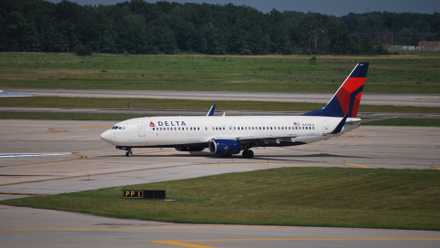
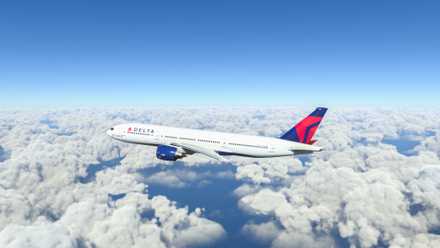
Delta Air Lines is moving forward with a fleetwide retrofit that, while imperceptible to passengers, reflects the kind of incremental engineering optimization that increasingly defines airline economics. The carrier has ordered Vortex Control Technologies' (VCT) aluminum finlets for its entire 240-aircraft Boeing 737 fleet—77 -800s and 163 -900ERs—after completing an in-service validation on 22 aircraft that confirmed a 1.2% fuel burn reduction, with VCT claiming up to 1.4% is achievable. The four blade-shaped finlets, mounted asymmetrically on the aft fuselage behind the rear exits, work by reshaping airflow and reducing vortex-induced drag in an area of the fuselage that has historically been aerodynamically inefficient. Because they're bolted to the skin with eight standard fasteners in an unpressurized section of the airframe, installation is comparatively simple: Delta expects to complete the entire fleet retrofit in about 18 months, roughly half the time it took to install split scimitar winglets on the same aircraft.
For working pilots and flight operations departments, this retrofit is a reminder that meaningful fuel savings increasingly come not from radical redesigns but from small, distributed drag-reduction technologies stacked on top of one another. Delta has already layered split scimitar winglets across its 737NG fleet, blended winglets on its 757s, and is pursuing similar efficiency gains on its 767s. The finlets add another incremental layer specifically targeting aft-fuselage flow separation, a drag source that winglets don't address. None of this changes handling characteristics, weight and balance, or operating procedures in any way flight crews would notice, but it does matter for dispatch planning and fuel-burn modeling over time, as fleet performance data used in flight planning software and EFB fuel calculations will gradually reflect these efficiency gains. Maintenance crews will see the retrofit show up in overnight line maintenance and heavy check visits rather than as a disruptive modification program, since VCT's design was specifically validated for low installation and upkeep costs.
The broader significance lies in what this signals about airline capital allocation strategy in a high-fuel-cost, high-interest-rate environment where new aircraft deliveries are constrained by OEM production backlogs. Delta, like many carriers, is stretching the economic life and efficiency of its existing fleet while it waits on deliveries of A321neos, A330neos, A350s, and eventually 737 MAX 10s and 787s. Retrofitting proven, existing airframes with certified drag-reduction hardware is a lower-risk, faster-payback alternative to fleet renewal, particularly for a carrier like Delta that has deliberately avoided the 737 MAX to date and leans on a mixed narrowbody strategy built around Airbus A220s and A320-family jets alongside its 737NG fleet. The pattern also reflects a maturing niche market: VCT's finlets have now been adopted by Avelo, Copa, Norwegian, Southwest, and SunExpress before Delta, and their spread across both low-cost and full-service, US and international operators suggests this is becoming a standard efficiency upgrade rather than a boutique experiment.
This trend extends beyond the 737 specifically. VCT's underlying microvane technology has already been proven on military transports like the C-130 and C-17, and its migration into commercial narrowbody fleets illustrates how drag-reduction technologies increasingly move across sectors as airlines chase every fractional percentage of fuel savings. With oil prices remaining a persistent cost pressure and ESG/emissions targets pushing carriers toward measurable efficiency gains without waiting for next-generation aircraft, expect more of these "invisible" retrofits—finlets, vortex generators, winglet upgrades—to become standard fleet management practice across both mainline and regional carriers, quietly reshaping unit fuel costs long before any new aircraft type ever reaches the flight line.










 Read original article