5 Passenger Airports That Share Facilities With Active Military Squadrons
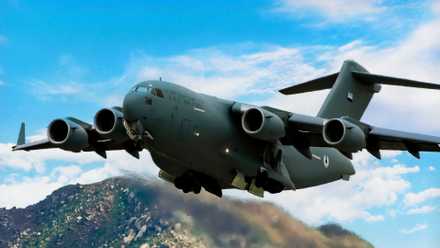
The coexistence of commercial airline operations and active-duty or Air National Guard flying units on shared airfields is far more common than most passengers—and even many pilots—realize. The FAA formally recognizes 21 joint-use airports, where the military owns and operates the airfield while civilian carriers operate under agreement, plus roughly 65 shared-use fields where a civilian authority owns the airport and military units are tenants. Charlotte Douglas (CLT), the nation's sixth-busiest airport and American Airlines' second-largest hub, exemplifies the tenant model: the North Carolina Air National Guard's 145th Airlift Wing runs eight C-17 Globemaster IIIs from a 79-acre base on the airfield's east side, a unit that completed over $1 billion in infrastructure investment and its first combat deployment cycle in 2025 while sharing runways with American, Frontier, Southwest, and JetBlue. Charleston International (CHS) inverts that relationship entirely—the civilian terminal and ramp are the tenant, operating on runways and taxiways owned outright by Joint Base Charleston, home to the 437th and 315th Airlift Wings' concentrated C-17 fleet. Nashville's BNA, meanwhile, traces an unbroken military presence back to 1937, with the Tennessee ANG's 118th Wing still flying from what was originally Berry Field, a lineage preserved in the airport's IATA code.
For working pilots, these arrangements carry direct operational relevance well beyond historical trivia. Shared-use and joint-use airfields often mean mixed traffic patterns involving heavy strategic airlifters, fighter or ISR aircraft on military approach procedures, and civilian jets on standard IFR arrivals and departures—all coordinated through a single ATC facility that may prioritize military traffic during exercises, alert scrambles, or contingency operations. Crews flying into CLT, CHS, or similar fields should expect occasional NOTAMs for temporary runway closures, TFRs tied to military flight operations, noise abatement procedures shaped by fighter or transport traffic, and ramp congestion during large-scale deployments or redeployments. Dispatchers and flight planners benefit from understanding that airfield ownership structure—military versus civilian—can affect everything from landing fee structures and slot availability to emergency divert planning, since a joint base's primary mission (national defense) technically takes precedence over commercial scheduling even when the civilian side generates the bulk of daily movements.
The broader trend illustrated here reflects the Pentagon's increasing reliance on dual-use infrastructure as a cost-efficiency measure, particularly for airlift and mobility wings that need long runways, ramp space, and proximity to metropolitan population centers for recruiting and quality of life. As active-duty wings like the 437th at Charleston and Guard units like the 145th at Charlotte modernize their fleets—transitioning from C-130s to C-17s, for instance—the infrastructure investment required (hangars, simulators, fuel-cell facilities) often piggybacks on commercial airport expansion projects, creating tightly interwoven capital planning between the FAA, airport authorities, and the Department of Defense. This is particularly visible at fields like Charleston, where Boeing's 787 final assembly line sits adjacent to a joint base, linking commercial aerospace manufacturing, military airlift, and civilian passenger growth into a single, interdependent airfield ecosystem.
For corporate and charter operators flying into these fields under Part 91 or 135, the practical takeaway is heightened situational awareness around military airfield ownership and operational tempo. Crews should brief for potential temporary flight restrictions, expect stricter security postures near ANG or active-duty ramps, and recognize that ATC priorities can shift rapidly during deployment cycles like the 145th's 2025 Middle East rotation. As defense budgets continue to favor consolidated basing and joint infrastructure over standalone military airfields, pilots at all levels of aviation—from regional airline crews to business jet operators—will increasingly encounter this blended operational environment, making familiarity with joint-use and shared-use airport dynamics a practical necessity rather than a historical footnote.







 Read original article