Gulfstream Tests: 100% SAF Reduces Contrails At High Altitude
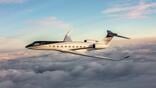
Gulfstream has completed what appears to be the first flight test campaign specifically designed to measure contrail-forming emissions reductions at high altitude using 100% sustainable aviation fuel (SAF), pairing a G800 test aircraft with a G700 flying as a chase/measurement platform. The G800, powered by Rolls-Royce Pearl 700 engines, was flown at altitudes up to 50,000 ft while burning unblended SAF, with the trailing G700 sampling engine exhaust and observing contrail formation in real time. This altitude regime is significant because most prior SAF emissions research has focused on ground-level or lower-altitude engine testing; validating contrail-reduction benefits at cruise altitudes in the mid-40,000s to 50,000 ft range—where business jets like the G700 and G800 routinely operate above congested airline traffic—closes a critical data gap for an aircraft category that spends a disproportionate amount of time at the very altitudes where persistent contrail cirrus formation is most climate-sensitive.
The science behind the test reflects a growing body of research showing that SAF's lower aromatic and sulfur content reduces soot particle formation during combustion, which in turn limits the ice crystal nucleation that produces persistent contrails. Contrails have drawn increasing scrutiny from climate scientists because their radiative forcing effect—trapping outgoing heat—may rival or exceed CO2's warming contribution from aviation in the near term, despite contrails' much shorter atmospheric lifetime. Airlines and researchers, including projects backed by NASA, the DLR, and various European carriers, have been experimenting with contrail avoidance through altitude and routing changes, but fuel chemistry offers a complementary lever that doesn't require rerouting or added fuel burn. Gulfstream's use of unblended, 100% SAF (rather than the 50% blend limit currently certified under ASTM D7566 for most operations) suggests the company is also generating data to support eventual approval of higher SAF blend ratios, a regulatory milestone the industry has been pushing toward for several years.
For business aviation operators and corporate flight departments, this test matters on multiple fronts. First, it strengthens the sustainability case for SAF adoption at a time when large fractional and charter operators, along with corporate flight departments under increasing ESG reporting pressure, are being asked to demonstrate measurable emissions and climate-impact reductions, not just reduce lifecycle CO2. Contrail mitigation data gives OEMs and operators a new marketing and compliance data point beyond the standard SAF carbon-reduction narrative. Second, because business jets often cruise at higher altitudes than airline traffic specifically to avoid congestion and turbulence, understanding SAF's contrail behavior in that specific flight envelope is directly relevant to how manufacturers position aircraft like the G700/G800 family as environmentally differentiated products. Third, engine OEMs like Rolls-Royce benefit from flight-validated data supporting Pearl engine family SAF compatibility claims, which feeds into broader certification and marketing efforts across both business and commercial engine platforms.
More broadly, this test fits into an accelerating trend across commercial and business aviation where SAF's value proposition is expanding beyond simple carbon-lifecycle accounting toward more nuanced climate metrics, including non-CO2 effects like contrail formation and NOx. Airlines including United, Delta, and various European carriers have pursued similar contrail research, but the use of a purpose-built business jet test campaign—flying at altitudes airliners rarely reach—positions Gulfstream and Rolls-Royce as contributors to a dataset that could eventually inform both operational contrail-avoidance procedures and future fuel-blend certification standards. As regulatory bodies like ICAO and EASA continue refining non-CO2 climate impact frameworks, and as SAF supply and cost remain persistent constraints across all aviation sectors, flight-validated performance data of this kind will likely become increasingly valuable for manufacturers, operators, and fuel suppliers seeking to substantiate sustainability claims with hard operational evidence rather than lab-based projections alone.









 Read original article