Why Airbus Is Introducing An Entirely New First Class On Its Largest Twinjet
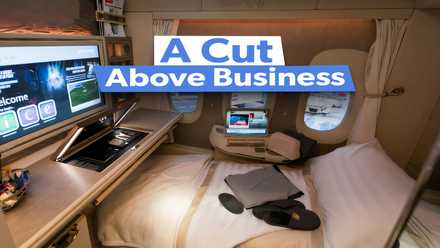
Airbus has unveiled a concept for an entirely reimagined first-class cabin on the A350-1000, its largest twin-engine widebody, signaling that the manufacturer sees renewed commercial life in a cabin class many airlines abandoned over the past two decades. Rather than simply enlarging existing suites, the concept restructures the forward cabin architecture itself: a 1-1-1 layout with a windowless center Master Suite positioned directly behind Door 1, opposite the cockpit entrance. That suite includes lounge furniture convertible into a double bed, a dedicated lavatory, a changing area, and a small bar, all made possible by relocating crew-rest access and stowage out of prime real estate near the forward door into a dedicated center module. The result is a product Airbus is positioning closer to a hotel suite than a conventional first-class seat, intended to differentiate the A350-1000 as it competes with the Boeing 777X for bragging rights as the world's largest twinjet.
For working pilots and flight operations planners, this development is a reminder that cabin configuration decisions increasingly ripple into operational considerations well beyond passenger comfort. Relocating crew-rest zones and galley/stowage space to accommodate a denser, more elaborate first-class module has implications for weight and balance, crew rest compliance under duty-time regulations, and turnaround servicing logistics. Flight crews operating long-haul international routes already navigate complex crew-rest scheduling tied to ultra-long-range missions; any redesign that shifts where crew rest facilities are located within the fuselage can affect crew rotation planning and even emergency egress considerations that dispatch and safety departments will need to evaluate before an airline commits to the configuration. Additionally, changes to forward cabin density and door-area layout can affect boarding flows, weight distribution near the nose, and cargo-hold trade-offs on an airframe already noted for surplus power and strong freighter potential.
Strategically, this concept reflects a broader trend reshaping premium widebody cabins across commercial aviation: the business-class product has become commoditized, with enclosed suites and direct-aisle access now standard across nearly every major long-haul carrier's premium cabin. That commoditization has pushed airlines seeking brand differentiation and high-yield loyalty back toward first class, but only in a form that feels categorically different rather than incrementally better. This mirrors moves by carriers in the Gulf, Asia, and increasingly North America to reintroduce ultra-premium products as a marketing and revenue-management tool rather than a bulk cabin offering, using a handful of high-margin suites to subsidize and legitimize premium pricing throughout the rest of the cabin. For manufacturers like Airbus, offering a ready-made cabin blueprint also simplifies the sales pitch to airlines still deciding between the A350-1000 and the incoming 777X, effectively bundling an aircraft sale with a differentiated passenger experience concept.
The bigger-picture implication for aviation professionals, particularly those in fleet planning, cabin engineering, and long-haul crew operations, is that first class is being repositioned not as a static legacy product but as a flexible architectural tool tied directly to aircraft-level competition. As Airbus and Boeing continue to court airlines with range, efficiency, and cargo flexibility on next-generation twinjets, cabin innovation is becoming an equally important battleground. Pilots and operators should expect continued airframe-level customization requests from airlines chasing this halo branding strategy, meaning more variation in weight, systems layout, and crew-support configurations even within a single aircraft type across different carriers' fleets.









 Read original article