World’s First Commercial Vertiport Certified For Joby Ops In Dubai
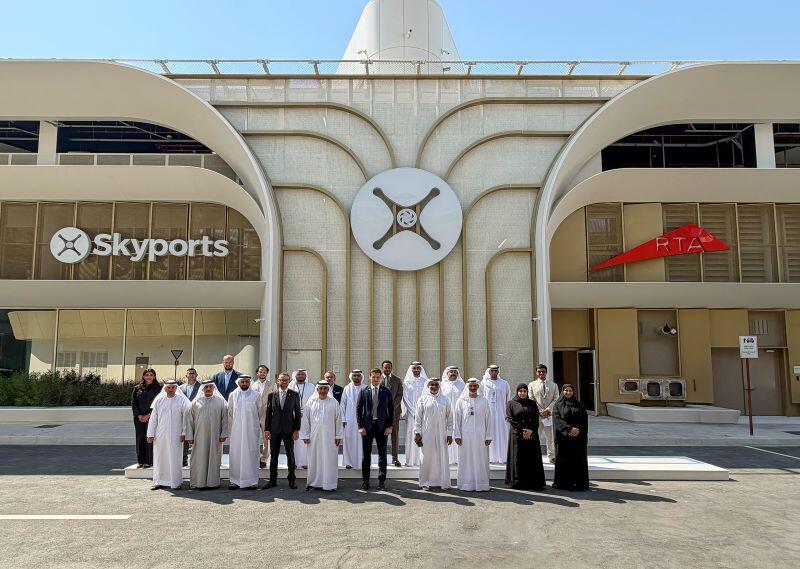
Dubai's General Civil Aviation Authority (GCAA) and Skyports Infrastructure have certified VDX, described as the world's first purpose-built commercial vertiport for eVTOL operations, marking a concrete milestone in the long-hyped urban air mobility (UAM) sector. The four-story, 3,100 m² facility includes dual takeoff/landing pads, rapid charging infrastructure, and passenger processing designed to handle up to 170,000 passengers annually. This certification clears a critical infrastructure hurdle for Joby Aviation, which holds exclusive six-year rights (secured in 2024) with Dubai's Roads and Transport Authority to operate eVTOL air taxi services in the emirate. VDX will serve as the network's primary hub, with three additional Skyports-built vertiports in development, signaling that Dubai intends to move from pilot demonstrations to an actual operating network rather than a one-off showcase flight.
For working pilots, this development is significant less for its immediate operational impact and more as a bellwether for where new-entrant certification, training, and career pathways may emerge. Joby, Archer, Beta Technologies, and other eVTOL manufacturers have spent years chasing type certification from the FAA, EASA, and other regulators, but the parallel challenge—largely underappreciated in industry discourse—has been ground infrastructure: where these aircraft take off, land, charge, and load passengers safely in dense urban environments. Dubai's GCAA, which has cultivated a reputation for regulatory agility to attract aviation innovation (similar to its early embrace of A380 operations and open skies policies), has effectively leapfrogged the U.S. and Europe in vertiport certification, even though Joby has not yet received full type certification for commercial passenger operations anywhere. This matters to charter, corporate, and helicopter pilots in particular, since vertiport-based eVTOL networks are being positioned as direct competitors to helicopter shuttle and short-hop charter services in congested metros—Dubai, New York, Los Angeles, and Paris among them.
The broader trend here is the maturation of UAM from a technology and airframe conversation into an infrastructure and regulatory-harmonization conversation. Vertiport design standards, charging throughput, airspace deconfliction near existing helicopter routes, and integration with air traffic control are now the pacing items, not just battery energy density or motor reliability. Skyports, a UK-based vertiport developer, has now demonstrated a template that other operators and municipalities can study or license, and its involvement in multiple Dubai sites suggests a scalable commercial model is emerging. Pilots transitioning into eVTOL operations—many recruited from helicopter and fixed-wing backgrounds—should expect vertiport procedures, multi-aircraft-type ramp coordination, and high-frequency turnaround operations to become a meaningful part of training curricula as these networks come online.
Finally, this certification reinforces the UAE's broader strategy of using aviation innovation as a tool of economic diversification, tying directly into the "We the UAE 2031" vision and Dubai Economic Agenda D33. For airline and business aviation operators watching from abroad, Dubai's willingness to certify infrastructure ahead of full-scale commercial service—betting that aircraft certification will follow—offers a preview of how governments eager to lead in UAM may sequence regulatory approvals differently than the FAA's typically conservative, incremental approach. Whether that bet pays off depends heavily on Joby's progress toward FAA type certification and whether Dubai's regulatory framework can be reconciled with U.S. certification timelines for an aircraft built and certified primarily under American oversight. Pilots and operators should watch this space closely, as it may foreshadow where the first genuinely commercial, revenue-generating eVTOL air taxi routes actually launch.









 Read original article