Light Aircraft's Beijing Skyscraper Crash Blamed On 'Personal Reasons'
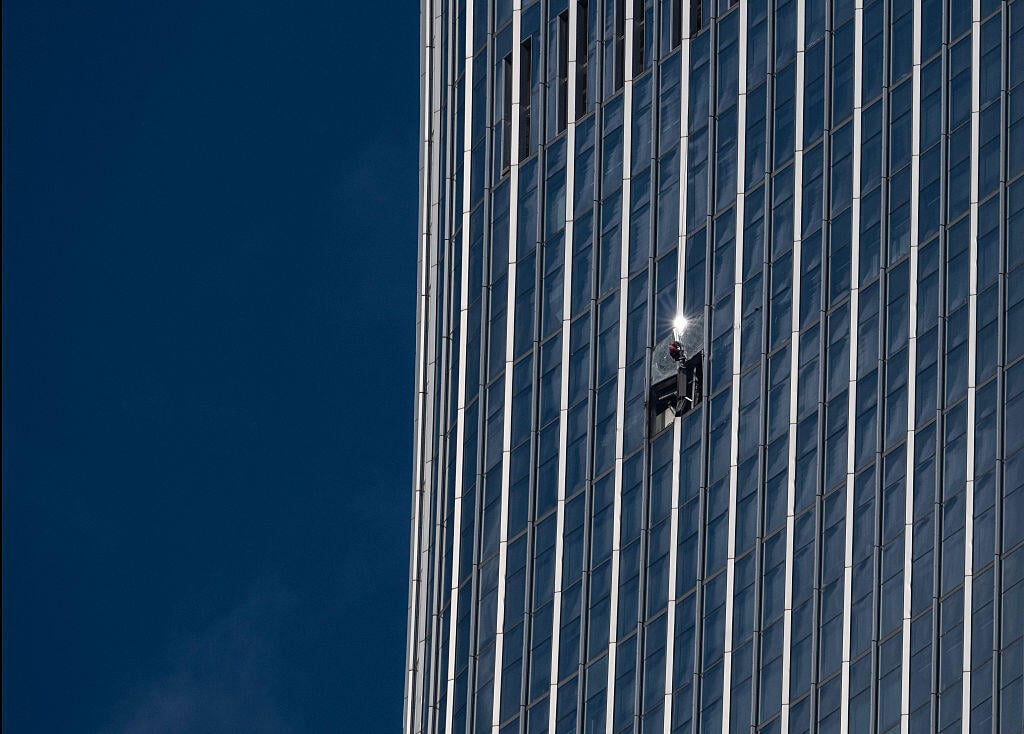
Chinese authorities have closed the investigative loop on the June 26 crash of a Sunward SA-60L Aurora light sport aircraft into Beijing's CITIC Tower, attributing the accident to the pilot's deliberate act rather than mechanical failure or airspace confusion. The 66-year-old pilot, identified only by his surname Liu, had reportedly documented suicidal ideation in personal diaries recovered after the crash, with authorities citing chronic insomnia and anxiety as contributing factors. The aircraft struck the 1,700-ft supertall skyscraper during what was characterized as a solo flight following supervised training out of a general aviation airfield in Beijing's Pinggu district, killing the pilot and injuring 13 people on the ground or in the building. The official finding of "personal reasons" effectively closes the file as a case of pilot suicide, a conclusion that carries significant weight given the accident's proximity to one of the most tightly controlled airspaces in the world.
The more operationally alarming detail for aviation professionals is not the cause but the trajectory: the aircraft deviated from its designated operating area, lost communication with its departure airport, and subsequently penetrated the airspace of Beijing Capital International Airport, forcing a Hainan Airlines A330 to abandon an approach. That a light sport aircraft could transit from a suburban GA field into the no-fly zone surrounding China's political center and then into Class B-equivalent airspace serving one of the world's busiest airports—all without apparent intercept or effective air traffic intervention—raises serious questions about the layered defense typically assumed to exist around Beijing's airspace. For crews operating into ZBAA or any high-density Chinese terminal environment, the incident is a reminder that even in heavily militarized and radar-saturated airspace, a slow-moving, non-transponding light aircraft can create an unpredictable conflict with airline traffic on short notice. The go-around executed by the Hainan A330 crew underscores that TCAS and ATC vigilance remain the last line of defense regardless of how restricted the surrounding airspace is presumed to be.
For operators and pilots in the general aviation and flight training sector, the aftermath may prove more consequential than the crash itself. Chinese authorities suspended non-essential GA operations, including flight training, in the immediate wake of the accident, and it remains unclern whether those restrictions have been lifted. China's GA and LSA sector has been expanding steadily as Beijing has sought to diversify pilot training pipelines and stimulate domestic aircraft manufacturing, with light sport types like the Sunward SA-60L playing a growing role in ab initio instruction. A blanket suspension, even if temporary, disrupts training throughput at a moment when Chinese carriers and business aviation operators are still working through pilot supply constraints. Historically, Chinese regulators have responded to high-profile GA incidents with prolonged bureaucratic tightening—stricter flight plan approval processes, enhanced background screening for pilots, and more conservative operating area definitions—all of which tend to slow training capacity rather than restore it quickly.
The incident also illustrates a broader pattern seen globally: pilot mental health screening remains one of the most difficult and inconsistently enforced components of aviation medical certification, particularly in the GA and sport pilot segments where oversight is lighter than in commercial operations. The Germanwings 9525 tragedy in 2015 prompted sweeping reforms in Europe around mental health disclosure and two-person cockpit rules for commercial carriers, but light sport and GA training environments worldwide continue to rely heavily on self-reporting and instructor observation, with far fewer safeguards against a pilot in crisis gaining unsupervised access to an aircraft. China's response—tightening airspace and training access rather than mental health screening protocols specifically—suggests the policy response may focus more on containment and control than on addressing the underlying gap in aeromedical psychological evaluation. For flight schools and DPEs operating in jurisdictions with lighter regulatory touch on mental health disclosure, the Beijing crash is a stark case study in the consequences of that gap, and a likely reference point the next time regulators debate expanding psychological screening requirements for sport and recreational pilot certificates.






 Read original article