DJI Enters Fixed-Wing eVTOL Cargo Drone Market
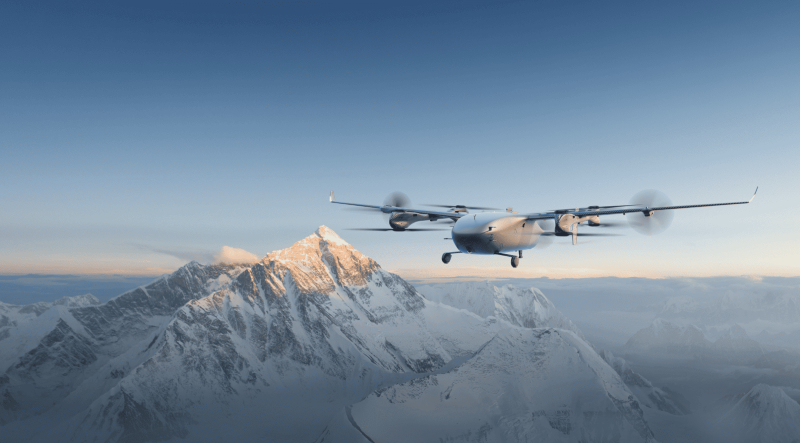
DJI, the world's dominant consumer and commercial drone manufacturer, has expanded into the fixed-wing eVTOL cargo drone segment with the launch of its EV50 platform, marking a notable strategic pivot for a company best known for multirotor aircraft ranging from photography drones to agricultural spraying systems. The EV50 combines vertical takeoff and landing capability with fixed-wing cruise efficiency, carrying a maximum payload of 50 kg (110 lb.) in a 270-liter cargo bay. The aircraft's public debut came via support of a Chinese scientific expedition to Mount Everest, a high-altitude, high-difficulty mission profile that doubles as a compelling demonstration of the platform's performance envelope in thin air and extreme terrain—conditions that stress both propulsion systems and flight control software.
For working pilots and aviation operators, DJI's entry into fixed-wing eVTOL cargo drones is significant less for the specific product than for what it signals about the trajectory of the broader uncrewed cargo market. DJI's manufacturing scale, cost structure, and existing global distribution and service network give it a potential ability to commoditize a segment that has, until now, been populated largely by well-funded but comparatively small startups such as Elroy Air, Pyka, Sabrewing, and various Chinese competitors like EHang and AutoFlight. A company with DJI's production capacity entering this space could accelerate price compression and adoption timelines in the same way it did for the photography and agricultural drone markets a decade ago, where DJI's scale effectively squeezed out numerous smaller Western competitors. Operators evaluating middle-mile and last-mile cargo drone solutions, as well as logistics providers and regional carriers considering feeder cargo applications, should watch how quickly DJI moves from demonstration missions to certified commercial products.
The regulatory and market dynamics here matter to crewed aviation professionals in several ways. First, fixed-wing eVTOL cargo drones like the EV50 will increasingly share airspace and, in some cases, infrastructure with general aviation and business aviation traffic, particularly at smaller airports and heliports being eyed for cargo drone operations. Second, China's continued advancement in both the AAM passenger eVTOL space (EHang's type certification) and now uncrewed cargo eVTOL platforms reflects a state-supported industrial push that is outpacing much of the West in flight testing tempo and regulatory approval speed, even as US and European regulators work through more conservative certification frameworks for uncrewed and optionally piloted aircraft. This asymmetry raises competitiveness concerns for US and European drone and eVTOL manufacturers, and by extension for the supply chains and workforce tied to those programs.
Finally, DJI's move underscores a broader convergence occurring across advanced air mobility: the lines between consumer/commercial drone manufacturing, cargo logistics automation, and passenger eVTOL development are blurring as companies seek to leverage shared propulsion, battery, and autonomy technology across multiple product lines. For business aviation and AAM stakeholders, this suggests that eVTOL cargo platforms may reach operational maturity and cost-competitiveness faster than passenger-carrying eVTOL air taxis, given the lower certification bar for uncrewed freight operations. Pilots and operators in Part 91, 135, and cargo-focused segments should anticipate that uncrewed cargo eVTOLs will increasingly compete for last-mile and regional feeder missions historically served by small turboprops and piston twins, particularly in geographically challenging or infrastructure-limited regions like the one showcased in DJI's Everest expedition support mission.






 Read original article