Garmin Introduces New Line Of Flight Displays
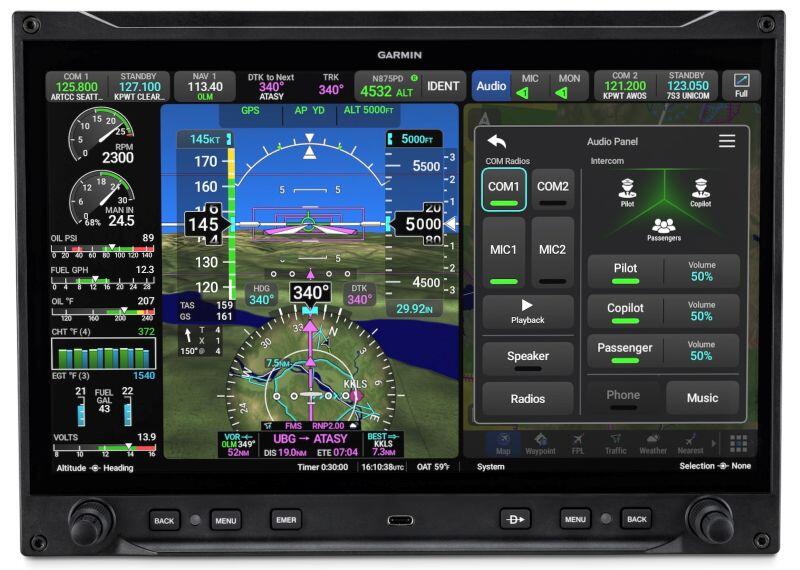
Garmin's introduction of its new Axis flight display line on July 8 marks another step in the company's ongoing effort to standardize and modernize avionics across the piston, experimental, and light sport aircraft segments. The Axis family comprises three touchscreen configurations—an 11.6-in. landscape unit, an 8-in. portrait unit, and an 8-in. landscape unit—paired with physical controls designed to give pilots quick, tactile access to critical functions without relying solely on touchscreen input. Notably, the line includes a display variant with an integrated audio panel, a packaging choice that reduces panel footprint and wiring complexity while consolidating communication and display functions into a single line-replaceable unit. This approach mirrors a broader industry trend toward simplifying panel architecture, particularly for aircraft owners and shops managing retrofit projects where space, weight, and installation labor are persistent constraints.
For working pilots, especially those flying owner-operated pistons, experimental builds, or light sport aircraft, the Axis line represents Garmin's continued push to bring touchscreen-primary interfaces—already dominant in Garmin's G3X, G1000 NXi, and G3000 product families for larger and turbine aircraft—down into segments where cost and installation simplicity remain paramount. The inclusion of physical controls alongside touchscreens addresses a longstanding pilot concern about touchscreen-only interfaces in turbulence or high-workload phases of flight, where tactile knobs and buttons offer more reliable, eyes-forward operation. The multiple size and orientation options also give aircraft owners and installers flexibility to match displays to specific panel geometries, a meaningful consideration for the diverse and often nonstandard panel layouts found in legacy and experimental airframes.
From an operator and fleet perspective, the Axis introduction fits into Garmin's broader strategy of vertical integration and product-line rationalization, following the pattern established by its G3X Touch and GI 275 lines, which have become de facto standards in the light aircraft retrofit market. By bundling an audio panel directly into a display unit, Garmin is signaling an intent to further consolidate avionics stacks, potentially reducing the number of discrete boxes—and associated maintenance and certification touchpoints—that shops must install and support. This has implications for avionics technicians and MROs, who will need to evaluate installation approvals (STCs or LSA/experimental acceptance) and training requirements as the Axis line rolls out, while also considering how it interoperates with existing Garmin ecosystem components such as GTN navigators, autopilots, and ADS-B solutions.
More broadly, the Axis launch underscores the steady march of touchscreen and integrated-avionics technology into every corner of general aviation, from advanced business jets down to two-seat light sport trainers. As avionics manufacturers compete to offer more capability in smaller, lighter, and more affordable packages, pilots across all segments can expect continued convergence in user interface design, meaning skills and habits developed on one Garmin platform increasingly transfer across aircraft types. For flight schools, this consistency simplifies training pipelines, while for owner-pilots it lowers the barrier to upgrading legacy panels with modern situational awareness tools, weather integration, and engine monitoring—capabilities once reserved for higher-end aircraft now becoming standard expectations even in entry-level segments.









 Read original article