Apparent engine fan blade failure preceded rupture of Ryanair 737 window
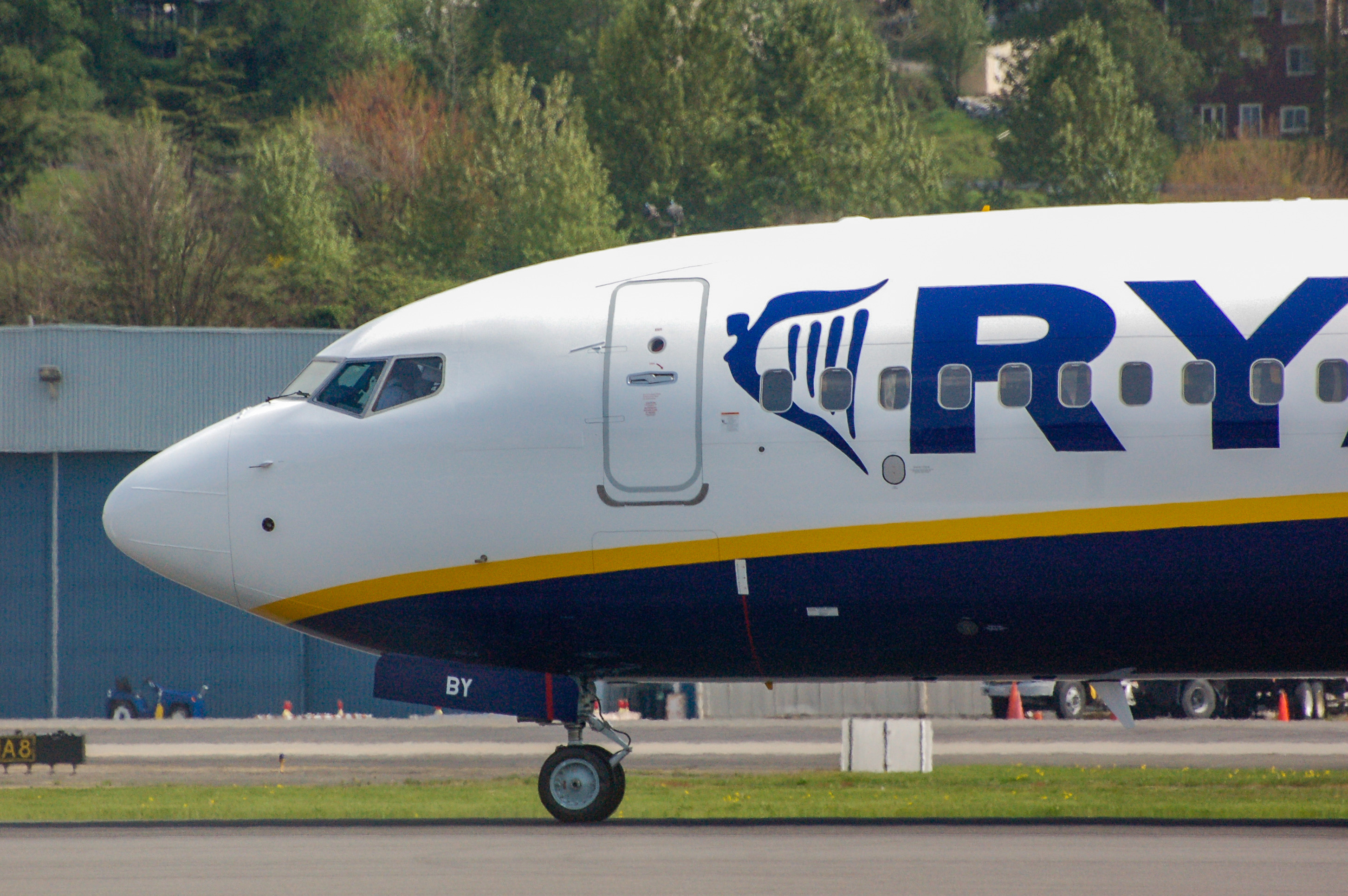
A Ryanair Boeing 737-800 experienced a serious in-flight event Friday when a window ruptured shortly after departure from Thessaloniki Airport, an incident now linked to an apparent fan blade failure in the aircraft's right CFM56-7B engine. Flight FR1879 turned back after crew reported a "right engine issue and cabin decompression," according to the Aircraft Accident and Incident Investigation Committee (AAIIC) of North Macedonia, which is leading the probe. Witnesses described a passenger being partially sucked toward the ruptured window before the aircraft landed safely and the individual received medical attention. The NTSB has appointed an accredited representative to the investigation, with technical advisors from the FAA, Boeing, and GE Aerospace standing by—standard protocol given the U.S. nexus of the engine's design and manufacture, even though the incident occurred on a European carrier operating a flight within Greek airspace.
The mechanical thread connecting this event to prior fan blade failures is what makes it significant for the industry. Uncontained or partially contained fan blade failures are among the most rigorously tested-for scenarios in engine certification, precisely because when containment fails, the consequences can be catastrophic. The 2018 Southwest Airlines 737-700 accident, in which a passenger was partially ejected through a window after a fan blade separated and tore away the engine inlet, resulted in the first passenger fatality on a U.S. carrier in nearly a decade and forced a fundamental reassessment of inlet containment design. That accident, along with a non-fatal 2016 Southwest fan blade event, led directly to FAA airworthiness directives mandating ultrasonic inspections of CFM56-7B fan blades and a redesign of the engine inlet structure, with a compliance deadline pushed out to July 2028. If this Ryanair event proves to involve a similar blade liberation and inlet failure mode, it will raise pointed questions about inspection intervals, the pace of fleet-wide compliance with those directives, and whether the multi-year runway granted to operators for retrofit work remains appropriate.
For working pilots, this incident is a pointed reminder that engine failures are not purely a powerplant problem—they can rapidly become a structural and cabin integrity problem when debris or shock effects propagate into the fuselage. Crews trained on engine-out procedures and rapid decompression response will recognize the compound nature of what this flight crew faced: simultaneous engine malfunction, unexpected structural damage to the cabin, and a passenger safety emergency requiring immediate diversion. The successful return and landing at Thessaloniki underscores the value of CRM and emergency checklist discipline in scenarios that don't fit neatly into a single training module. Operators flying legacy CFM56-7B-powered 737NGs, still a substantial portion of many global fleets including Ryanair's, should expect renewed scrutiny of blade inspection compliance timelines from both regulators and their own safety departments, particularly as the investigation develops.
More broadly, this event lands amid heightened public and regulatory sensitivity to engine and structural integrity issues across the Boeing narrow-body fleet, following a string of high-profile incidents in recent years involving door plugs, engine cowlings, and now potentially fan blades. Even though CFM56-7B fan blade failures are statistically rare, each occurrence reinforces pressure on the FAA and EASA to reconsider whether the current multi-year compliance windows for legacy directives strike the right balance between operational feasibility and risk mitigation. For fleet planners, maintenance directors, and safety officers, the Ryanair incident is likely to accelerate internal reviews of inspection records and containment redesign progress well ahead of the 2028 deadline, regardless of what the formal AAIIC investigation ultimately determines about root cause.