Here's Why Only A Handful Of Facilities Worldwide Can Service The Boeing 777X's Engines
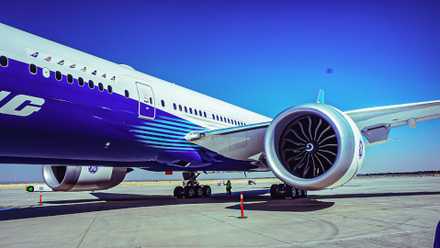
The Boeing 777X's entry into service, now projected for 2027, brings with it a maintenance ecosystem challenge that mirrors what every new-generation widebody engine has faced over the past decade, but with added complexity given the GE9X's technical ambitions. General Electric's newest engine sets records for bypass ratio (10:1), overall pressure ratio (60:1), and use of ceramic matrix composites, with 65 CMC components representing the highest count of any production turbofan. These figures translate directly into the promised 10% fuel-burn improvement over the GE90, but they also mean the engine bears little resemblance internally to its predecessors despite sharing a lineage. For maintenance planners and engineering departments at launch customers like Emirates, Qatar Airways, and Cathay Pacific, this means the GE9X cannot simply piggyback on existing GE90 or GEnx shop infrastructure — new tooling, new procedures, and new technician training are all required from scratch.
The current support network reflects this early-stage reality: GE's Nantgarw facility in Wales will anchor entry-into-service work, supplemented by a planned HAECO partnership in Xiamen, a new on-wing support facility in Dubai, Singapore-based repair services, and a Lufthansa Technik collaboration in Poland. This is a genuinely small global footprint for an engine that will power what is expected to become one of the highest-capacity twin-aisle programs in the industry over the next two decades. For flight operations and maintenance planning departments, this concentration of MRO capability creates real operational risk in the program's first several years — an unscheduled removal or shop visit could mean significantly longer aircraft-on-ground time if the nearest certified facility is thousands of miles away, and induction slots may be scarce as multiple operators compete for capacity at the same handful of shops. This is a familiar pattern: the Trent 1000 and PW1100G both experienced early-service reliability issues compounded by MRO network immaturity, driving up spare engine requirements and lease costs across the industry.
For working pilots, the direct operational impact of MRO network limitations is usually invisible day-to-day, but it shapes fleet planning decisions that eventually affect scheduling, aircraft availability, and dispatch reliability. Airlines bringing 777X aircraft into service will likely need larger spare engine pools and more conservative maintenance reserves during the early years, a cost that flows through to fleet planning and can affect route assignments, especially on long-haul sectors where technical delays are costliest. Dispatchers and maintenance control teams should also expect a learning curve period where line maintenance troubleshooting and defect rectification take longer simply because fewer technicians worldwide have deep GE9X experience, a dynamic every new engine type has experienced during its first 24-36 months in revenue service.
More broadly, this underscores a persistent tension in modern engine design: manufacturers push efficiency and emissions targets through increasingly exotic materials and tighter tolerances, but every leap in thermodynamic performance adds maintenance complexity that outpaces the industry's ability to build support infrastructure in parallel. The GE9X's extensive 3D-printed components and record CMC usage make it the most advanced commercial turbofan certified to date, but that technical achievement is precisely what constrains where and how quickly operators can get engines serviced. As GE scales its network based on demand, in-service operators, lessors, and MRO providers evaluating GE9X-related contracts should watch closely how quickly this footprint expands, since the pace of that scale-up will determine whether the 777X program avoids the reliability and dispatch reputation problems that dogged the Trent 1000 and geared turbofan programs in their early years.











 Read original article