Why A Commercial Flight Sometimes Orbits The Same Point For Over An Hour Before Landing
Extended holding patterns, while occasionally frustrating for passengers watching a flight track app loop endlessly a few miles from touchdown, represent one of the most fundamental tools in the air traffic control toolkit for managing arrival flow at capacity-constrained airports. The mechanics are straightforward: controllers assign aircraft to a racetrack-shaped protected holding area, often tied to a published fix, where vertical separation of roughly 1,000 feet allows multiple aircraft to stack safely while awaiting sequencing. London Heathrow's four legacy stacks—Bovingdon, Lambourne, Ockham, and Biggin—illustrate the system at its most mature, having organized arrivals since the dawn of the jet age. Per Heathrow's own 2024 Annual Noise and Air Transport Movement Report, the average hold time is a modest 7.15 minutes across roughly 311 daily stack entries, but that average masks the reality that congestion, weather, or a single runway inspection can push individual holds well past an hour when conditions stack up unfavorably.
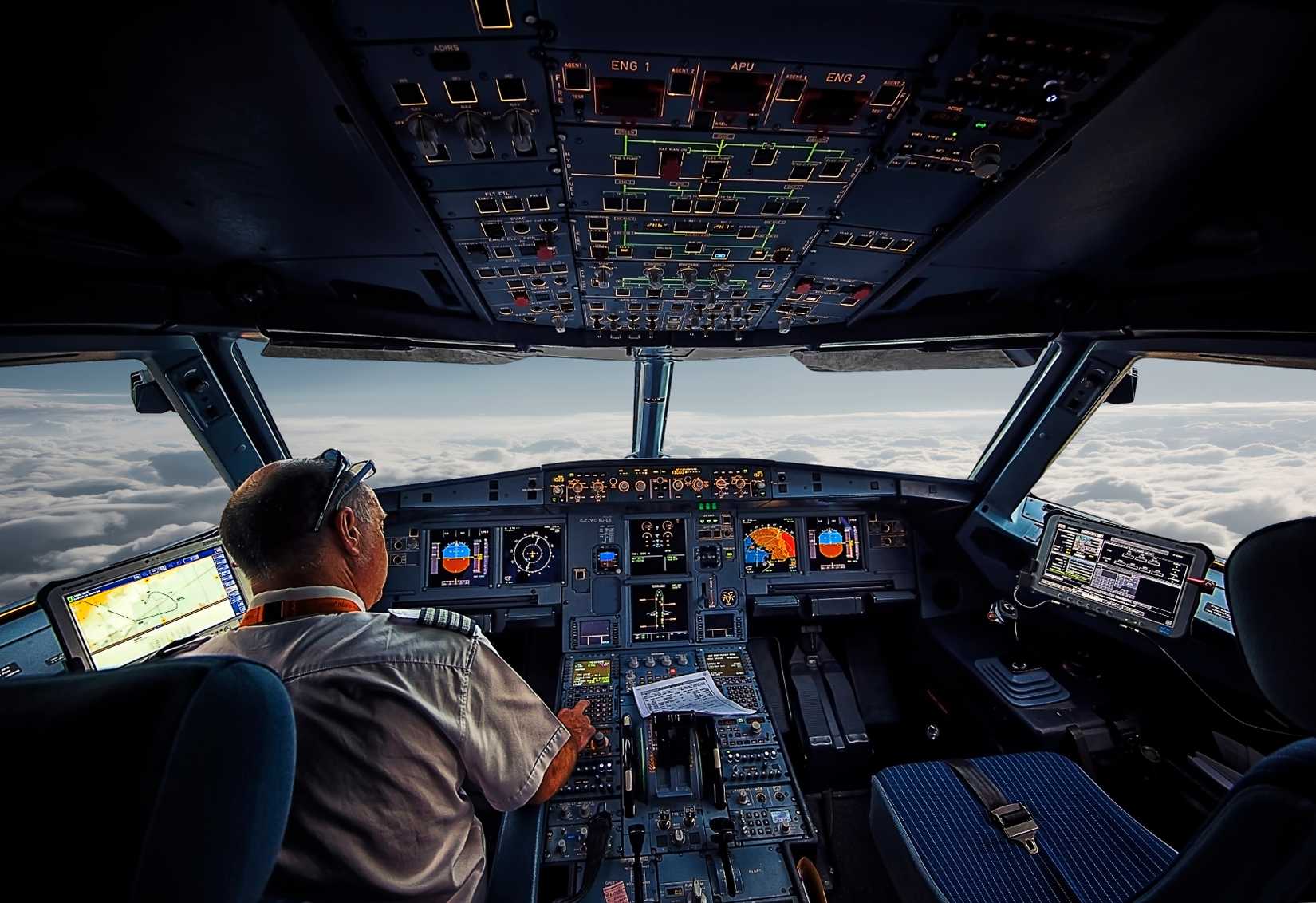
For working pilots, holding patterns are far more than a passenger-facing curiosity; they are a routine operational reality with real implications for fuel planning, crew workload, and dispatch decision-making. Modern FMS automation allows crews to fly published holds with minimal manual input, but that doesn't eliminate the need for continuous monitoring, contingency fuel awareness, and readiness to intervene if ATC amends the clearance or extends the delay unexpectedly. Dispatchers and crews build holding fuel into pre-flight planning specifically because airports like Heathrow, JFK, and Frankfurt routinely operate near their declared capacity limits, meaning even minor perturbations—a wake turbulence spacing change, a slower-than-expected runway occupancy time, a brief closure for inspection—can cascade into queuing that ripples through an entire arrival bank. Pilots operating into these slot-controlled, high-density airports need to internalize holding not as an anomaly but as an expected feature of the arrival profile, particularly during peak long-haul convergence periods.
Weather remains the most consequential variable multiplying hold frequency and duration. Reduced visibility, low ceilings, strong crosswinds, and convective activity all force controllers to increase in-trail spacing or reroute arrival corridors, directly shrinking the number of aircraft an airport can absorb per hour. Thunderstorms are particularly disruptive because they can close arrival gates outright, prompting controllers to hold aircraft while assessing whether conditions will clear rather than committing immediately to diversions—a judgment call that has significant fuel and alternate-planning consequences for flight crews monitoring the situation from the flight deck. Strong headwinds compound the problem further by degrading groundspeed on approach, effectively reducing throughput even when visibility and ceiling are otherwise unaffected.
This dynamic connects directly to broader industry pressure on airspace and airport capacity. As global traffic recovers and grows past pre-pandemic levels, legacy two-runway hubs like Heathrow—handling around 480,000 movements annually despite runway constraints that have resisted expansion for political and environmental reasons—illustrate the ceiling that infrastructure limitations place on air travel growth. Holding patterns are the visible symptom of a system running close to its margins, and as traffic density increases across major hubs in Europe, North America, and Asia, pilots and operators should expect holding to remain a persistent, and possibly growing, feature of arrival operations rather than a diminishing one. For business aviation operators flying into these same congested primary airports, the same fuel-reserve and alternate-planning discipline applies, reinforcing why robust knowledge of holding procedures remains a core competency across all segments of professional flying.





 Read original article