The Airline Quietly Putting Lie-Flat Throne Suites 8 On Short European Routes This Summer
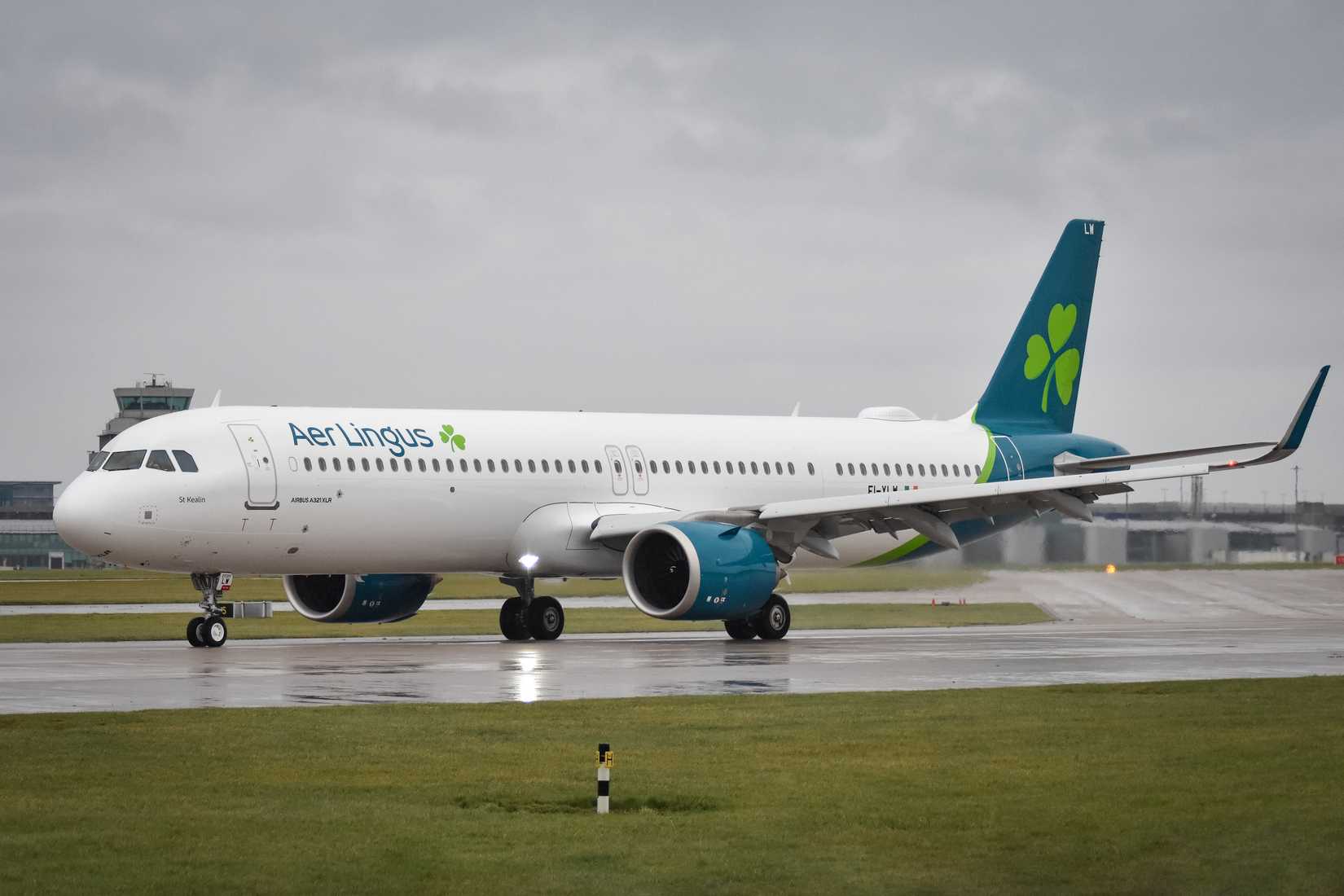
Aer Lingus has quietly turned a fleet-utilization challenge into a premium-product advantage, deploying long-haul Airbus A321LR and A321XLR aircraft — originally acquired for thin, long-range transatlantic routes to cities like Hartford, Pittsburgh, and Indianapolis — on short intra-European sectors from Dublin and Shannon to destinations such as Paris, Amsterdam, Oslo, Manchester, Venice, Munich, and London Heathrow. With eight A321LRs and six A321XLRs in the fleet, both variants carry identical 184-seat layouts (16 business, 168 economy) built around the Thompson Aero Vantage lie-flat seat, a product typically reserved for long-haul international service. Because Ireland's geography puts most of Aer Lingus's European destinations within a two-to-three-hour flight, these long-range jets end up with more ground time in Dublin than their mission profile ideally calls for. Rather than let that capacity sit idle, the airline is cross-utilizing the aircraft on short-haul rotations, effectively giving economy and business passengers a widebody-caliber experience — seatback IFE, extra legroom, and true lie-flat seating — on routes normally flown by A320-family jets with a blocked-middle-seat "premium" product.
For working pilots and operators, this is a textbook case of aircraft-utilization optimization driving network design rather than the other way around. Long-range narrowbodies like the A321LR/XLR carry a cost structure and crew qualification profile suited to extended-range, ETOPS-capable missions, but their turn times and ground utilization economics only work if the airframe is flying enough hours per day. Aer Lingus's solution — slotting these jets into short intra-European legs between long-haul rotations — mirrors a broader industry pattern where carriers use "long, thin" capable aircraft to backfill schedules and improve daily utilization, a strategy also seen at JetBlue, Iberia, and other operators flying A321LR/XLR variants on mixed-mission networks. Pilots flying these types should expect increasingly blended rosters that mix continental hops with transatlantic legs, which has implications for duty-time planning, fatigue risk management, and route qualification currency, since crews may be transitioning between a two-hour European sector and an eight-hour oceanic crossing within the same pairing cycle.
The commercial angle also matters strategically. By branding these flights under the same "AerSpace" label used for its standard short-haul premium product, Aer Lingus effectively delivers a stealth upgrade with no fare premium, a move that pressures other European legacy carriers to reconsider how they price and position intra-continental business class. This comes as the A321LR/XLR family reshapes long-haul narrowbody economics across the industry — airlines from Iberia to United to Aer Lingus are using the type to open thinner long-haul markets while simultaneously leaning on the same jets for short-haul utilization gaps, a dual-mission flexibility unavailable to legacy widebodies. For an airline whose brand differentiation increasingly rests on its Airbus long-range narrowbody strategy, matching product delivery to aircraft rotation planning is becoming a meaningful competitive lever, not just an operational afterthought.
Broadly, this reflects a maturing phase in the A321LR/XLR era: carriers are no longer just asking where these jets can fly, but how to keep them productive across a full 24-hour cycle. As more airlines take delivery of XLRs — with Wizz Air, American, United, and others expanding fleets — expect similar "opportunistic" short-haul cascading to become common, with lie-flat products popping up unexpectedly on regional European, domestic transcon, or Caribbean routes. For flight planning, scheduling, and crew-pairing professionals, the lesson is that the A321LR/XLR is increasingly being treated less as a dedicated long-haul specialist and more as a flexible, multi-mission asset — a shift that will continue to influence fleet-mix decisions, pilot bidding patterns, and passenger expectations across both business and leisure markets.











 Read original article