Why Does Alaska Airlines Fly Internationally From St. Louis?
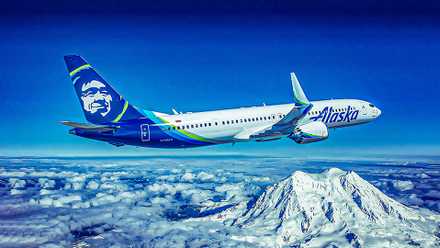
Alaska Airlines' decision to operate a seasonal Boeing 737 MAX 9 route between St. Louis and Puerto Vallarta illustrates a network strategy that has little to do with St. Louis itself and everything to do with the structural seasonality of Alaska's core Pacific Northwest and Alaska markets. As the dominant carrier in Seattle and Anchorage, Alaska faces a pronounced winter demand trough in its home markets, leaving aircraft and crews with excess capacity during a period when Latin American leisure demand from the Lower 48 is peaking. Rather than accepting idle widebody-equivalent narrowbody utilization or discounting fares in already-saturated West Coast markets, Alaska has opted to redeploy MAX 9s on Saturday-only charters-adjacent flying into secondary Midwest cities like St. Louis and Kansas City, where it otherwise has negligible presence and no meaningful connecting feed. This is a capacity-arbitrage play, not a network-building one.
The economics here are worth understanding because they reflect a broader mechanism used across the industry: block-seat partnerships with tour operators. Alaska's reported arrangement with Apple Vacations, which purchases a large seat block on every St. Louis–Puerto Vallarta departure, effectively de-risks the route before a single ticket is sold to the general public. Any additional seats Alaska sells directly are incremental margin. This model allows a full-service, publicly traded airline to behave more like a charter operator for a narrow slice of its schedule, entering markets dominated by Southwest (65% share in St. Louis) or other legacy carriers without needing organic local demand, brand presence, or connecting traffic. For pilots and crew schedulers, this translates into unusual pairings: a single weekly rotation into an outstation with no other company presence, requiring standalone crew and maintenance logistics rather than the efficiencies of hub-and-spoke flying.
For working pilots, particularly those at network and low-cost carriers watching seasonal bid packages, this pattern is a useful signal of how airlines increasingly use once-weekly, single-aircraft-type "pop-up" international routes to smooth utilization curves rather than commit to sustained market development. It's a lower-risk cousin of the seasonal Hawaii or Caribbean flying that mainline and regional pilots have seen from carriers like American, Delta, and Sun Country. Fleet commonality helps enable this: because the MAX 9 is common across Alaska's network, the airline can surge a single tail into St. Louis for a Saturday turn without disrupting broader fleet planning, then reposition it into core flying the rest of the week. This kind of tactical, opportunistic scheduling is becoming more common industry-wide as carriers try to extract marginal revenue from otherwise underutilized winter capacity without the long-term commitment of building new city pairs.
More broadly, the St. Louis routing reflects Alaska's evolving identity post-Hawaiian Airlines acquisition. Even as the airline doubles down on its West Coast and trans-Pacific/Hawaii identity, it is simultaneously experimenting at the margins with opportunistic point-to-point leisure flying far from its hub network. This dual strategy—core network consolidation paired with tactical seasonal forays into non-hub Midwest and secondary markets—may become a template other mid-size carriers replicate as they compete with the "big three" for winter Latin American demand without the hub density to support it organically. For airport planners like St. Louis Lambert, which has been rebuilding traffic past 2019 levels despite regional population decline, these seasonal single-frequency routes are a low-cost way to diversify service beyond Southwest's dominant 65% share, even if they don't represent durable network commitment from the operating carrier. Pilots monitoring furlough risk, base stability, or growth opportunities at Alaska should read these routes as tactical rather than strategic—useful indicators of where excess capacity gets parked seasonally, not where the airline is building lasting infrastructure.










 Read original article