Lockheed Martin Delivered Its Last F-22 Raptor In 2012 — And The USAF Is Now Spending $8 Billion To Keep The 187 Airframes It Has Left Combat Ready
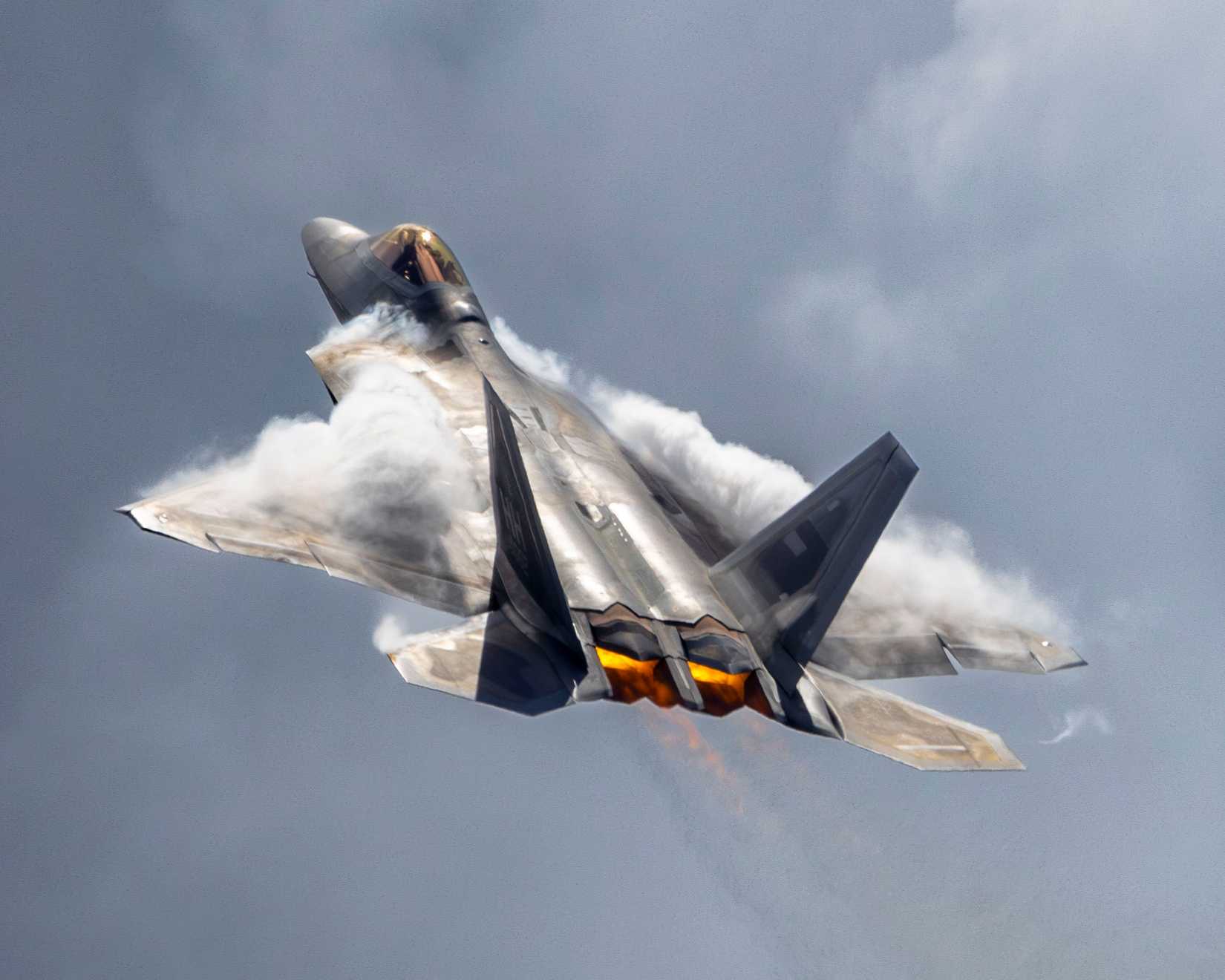
The U.S. Air Force's decision to commit $10.9 billion through 2031 to keeping 185 F-22 Raptors combat-ready lays bare a structural problem that extends well beyond one fighter program: small, out-of-production fleets are disproportionately expensive to sustain, and the F-22 is perhaps the starkest example in the inventory. Lockheed Martin delivered the final Raptor in May 2012 after Robert Gates capped production at 187 operational airframes in 2009, truncating a planned buy of 381 jets. That decision, driven by a per-aircraft cost that had ballooned past $334 million amortized across only 195 total airframes, ended any hope of achieving the economies of scale the program was designed around. Attrition from accidents in 2020 and 2023 has since trimmed the fleet to roughly 185 jets that can never be replaced — the Marietta production line is dismantled, the workforce dispersed, and RAND estimates cited in the piece put a restart at $50 billion and a decade of lead time. For working pilots, this is a vivid illustration of how procurement decisions made fifteen years ago directly shape today's readiness, cost-per-flight-hour, and operational risk calculus.
The sole-source Advanced Raptor Enhancement and Sustainment (ARES) contract awarded to Lockheed Martin in 2021 underscores a reality familiar to anyone who has worked around legacy military or even aging business jet platforms: when only one vendor retains the tooling, data rights, and cleared workforce to sustain an airframe, competitive bidding becomes theoretical. The $80,000-85,000 per flight hour operating cost and the fact that low-observable coatings alone consume half of all F-22 maintenance hours are not abstractions — they explain why the Raptor missed its own readiness targets in every fiscal year from 2011 to 2021, per GAO reporting. That maintenance burden has real downstream effects on training throughput, deployment cycles, and the availability of jets for exercises and alert commitments. Any pilot who has dealt with an aircraft type where the OEM is the sole source for parts and technical data — a common situation in corporate aviation with orphaned or low-production business jet models — will recognize the pricing dynamics at play: scarce parts, cannibalization of components from other tails, and premium custom manufacturing runs replacing what should be routine supply chain logistics.
The modernization content funded under ARES — the Infrared Defensive System with distributed Tactical Infrared Search and Track sensors, Low Drag Tanks and Pylons for extended range, and other avionics and weapons upgrades — signals that the Air Force views the F-22 not as a fleet coasting to retirement but as a bridge asset that must remain credible against advanced threats, including stealthy adversary aircraft that defeat traditional radar detection, until the Boeing F-47 matures. This is a familiar pattern across military and civil aviation alike: rather than replace an irreplaceable platform, operators pour capital into life-extension and capability insertion to preserve relevance. It mirrors decisions airlines and fractional operators make when re-engining or avionics-upgrading aircraft rather than replacing them outright, except at a scale and cost structure unique to stealth combat aircraft.
For the broader aviation community, the F-22 story is a cautionary case study in fleet-size economics and single-source dependency risk. Military planners, defense contractors, and even civil MRO providers watching next-generation fighter programs like the F-47 and NGAD should note that production truncation decisions made under budget pressure create long-tail sustainment costs that can exceed the savings from the original cut. Corporate and charter operators flying thin-fleet or orphaned aircraft types face a scaled-down version of the same dynamic — diminishing parts availability, rising per-unit sustainment costs, and growing reliance on a single OEM's goodwill and capacity. The F-22's $8-10.9 billion sustainment bill is a reminder that the true lifecycle cost of any aircraft program is inseparable from the size of the fleet it must support, a lesson with direct relevance well beyond the fighter community.






 Read original article