Artificial Intelligence Archives - Leeham News and Analysis
JetZero's evolving blended wing-body (BWB) program is under fresh scrutiny in Leeham News' latest analytical series, with Bjorn Fehrm's Aircraft Performance and Cost Model (APCM) now turning from technical performance data to the harder question of program economics. Having previously extracted operational fuel burn and cash operating cost figures for the revised Z4 design—referred to in the analysis as the Z4U—Fehrm is now modeling development costs, production costs, and net revenue at delivery to derive a payback timeline under various pricing scenarios. This matters because JetZero has publicly staked out aggressive timelines for development and entry into service, and Leeham's decade-plus of applying the APCM to new aircraft programs gives the outlet a credible independent lens for stress-testing those claims rather than simply repeating company marketing.
For pilots and operators, the BWB concept represents one of the few genuinely novel airframe geometries under serious consideration for both commercial and military application—JetZero's tanker configuration for the U.S. Air Force underscores that this isn't purely a passenger-market play. A blended wing-body aircraft would fly, load, and potentially fail very differently than a conventional tube-and-wing design, with implications for stall characteristics, crosswind handling, evacuation procedures, and cargo/passenger flow that will eventually feed into new type ratings and training curricula. While EIS remains years away and far from certain, flight departments and training organizations that historically get blindsided by radical airframe changes (as happened with early composite and fly-by-wire transitions) benefit from tracking these program economics now, since payback timelines and pricing curves are often the first hard signal of whether a manufacturer's ambitious EIS date is realistic or marketing optimism.
The BWB analysis sits alongside two other threads visible in this Leeham archive that, together, sketch the industry's current preoccupations: workforce sustainability and artificial intelligence in aircraft development. Kathryn Creedy's two-part series on workforce shortages quantifies a problem every operator already feels in the cockpit and hangar—rising "juniority" on flight decks and in maintenance bays as experienced aviators and A&P technicians retire faster than pipelines can replace them. Estimates cited (ARSA's ~$14 billion MRO impact, BCG's $27 billion in unavailable-aircraft costs, IATA's $11 billion in supply-chain-driven fuel and maintenance costs) put dollar figures on a trend pilots have anecdotally recognized for years: thinner mentorship, compressed upgrade timelines, and instructor shortages at the flight-training level feeding directly into first-officer and captain readiness downstream.
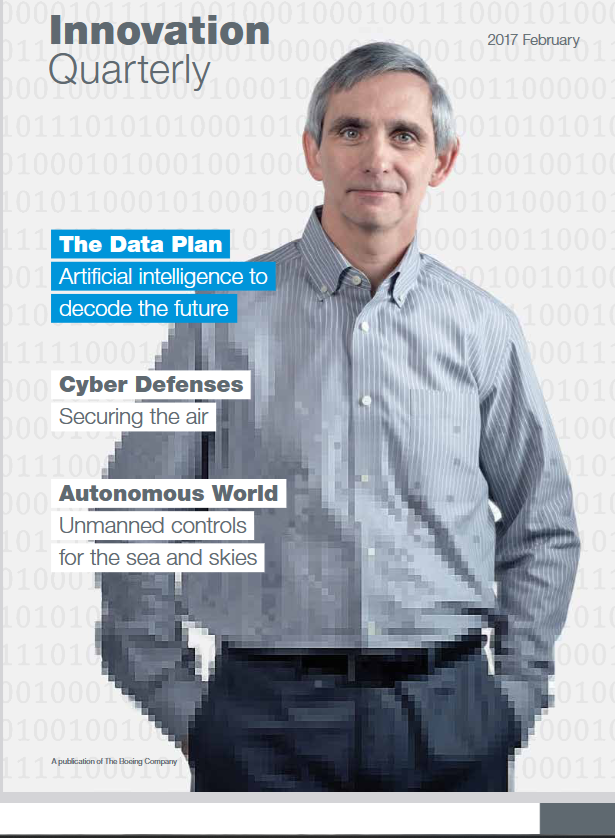
Scott Hamilton's parallel reporting on Boeing's AI strategy, informed by comments from VP of Product Development Brian Yutko at a Pacific Northwest AIAA event, reinforces that AI is no longer a peripheral R&D curiosity but a core input to how Boeing envisions designing its next clean-sheet airplane—whatever that program turns out to be. Notably, Boeing's public AI interest traces back to at least 2017, suggesting this is an evolutionary rather than sudden shift, but the emphasis now on AI-assisted design tools and "digital twin" methodologies (also referenced in JetZero's Z4 development) signals that both established manufacturers and disruptive newcomers are converging on AI-driven engineering as a way to compress development timelines and de-risk certification. For working pilots, the throughline across all three stories is the same: airframe innovation, workforce sustainability, and design-tool modernization are not separate issues but interlocking pressures that will shape what airplanes look like, who flies them, and how quickly new types reach the line in the next decade.





 Read original article