Analysis: Is FAA’s Supersonic NPRM Enough To Spawn An SSBJ?
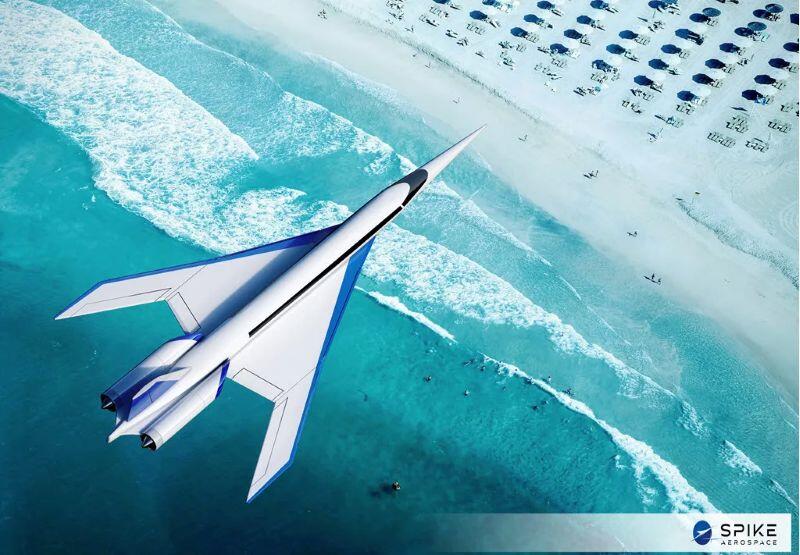
The FAA's proposed rulemaking to lift the decades-old ban on supersonic flight over U.S. land marks a pivotal regulatory shift, but the article frames a genuine industry debate about whether this alone can revive the supersonic business jet (SSBJ) market. The Notice of Proposed Rulemaking establishes a noise-based standard rather than the blanket sonic boom prohibition that has governed U.S. airspace since 1973, theoretically opening the door for aircraft like Spike Aerospace's S-512 to operate overland at supersonic speeds without requiring a boom-free "low-boom" design threshold that has been central to NASA's X-59 research program. Spike has reportedly accelerated development activity on the S-512 in direct response to this regulatory signal, suggesting the company views the NPRM as a meaningful inflection point rather than a symbolic gesture.
However, the article's framing—built around a skeptical quote suggesting "the market has looked at speed and decided it isn't worth the cost"—captures the deeper tension facing this segment. Regulatory clearance addresses only one of several barriers that have stalled supersonic business jet programs for over two decades. Certification basis, engine technology suited to business jet mission profiles, fuel efficiency at supersonic cruise, and above all the economics of a niche high-speed segment remain unresolved. Programs like Aerion's AS2, which collapsed in 2021 despite Boeing backing and a substantial order book, demonstrated that even strong customer interest and technical credibility couldn't overcome the combination of engine-development costs and market size constraints. The NPRM removes a legal obstacle, but it does not automatically solve the unit economics that have doomed prior attempts.
For business aviation operators, fractional providers, and flight departments watching this space, the significance lies less in an imminent product than in what it signals about the broader regulatory environment. A move away from a blanket ban toward performance-based noise standards mirrors trends elsewhere in aviation certification, where technology-neutral, outcome-based rules are replacing prescriptive prohibitions—similar to how eVTOL and advanced air mobility certification has evolved toward performance standards rather than category-specific bans. If the rule is finalized, it would validate years of low-boom shaping research pioneered by NASA and could eventually normalize supersonic transit corridors for both business jets and any successor to Concorde-class airline service, a market Boom Supersonic continues to pursue with its Overture program.
For flight operations and airspace planning, pilots and dispatchers should watch for how ATC procedures, routing, and altitude restrictions evolve alongside the noise rule, since overland supersonic operations will require new coordination even after certification hurdles are cleared. The more immediate takeaway for corporate and charter operators is that this is a market-defining moment rather than a market-creating one: the regulatory logjam may be breaking, but whether an SSBJ program can actually reach production depends on manufacturers solving the same engine, cost, and demand equations that sank Aerion and stalled Spike's own timeline for years. Aviation Week's framing—posing the question rather than answering it—reflects genuine industry uncertainty about whether renewed enthusiasm from companies like Spike represents a durable business case or another speculative cycle in a market that has repeatedly promised more than it has delivered.







 Read original article