Qatar Airways Abruptly Delays Launch Of 1st Flight On New 21-Hour Route
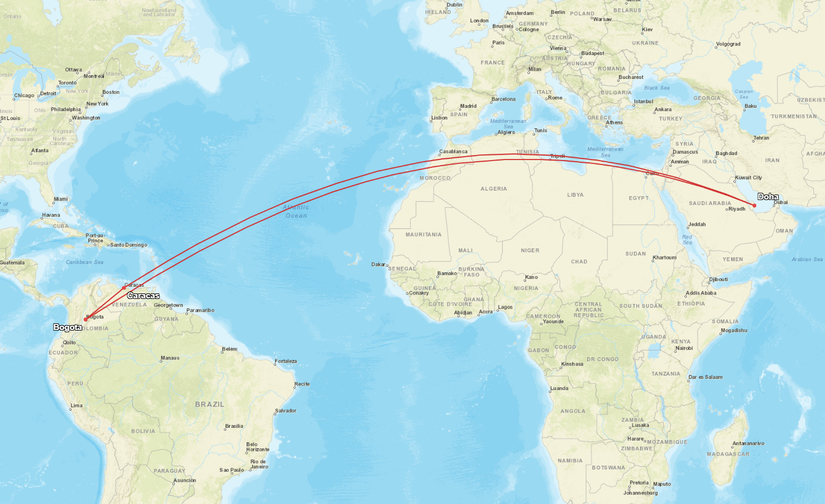
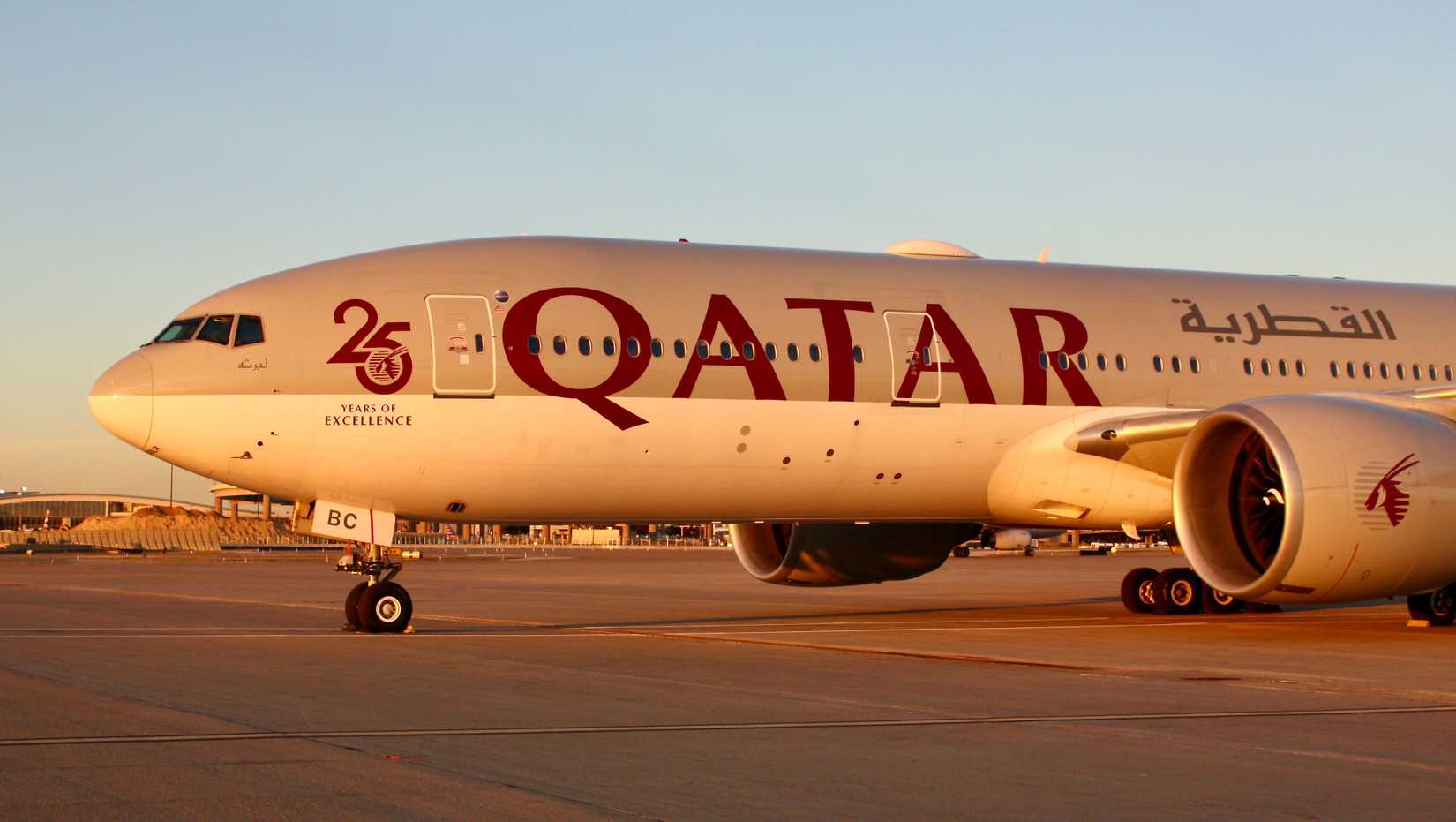
Qatar Airways has quietly pushed back the launch of its new triangular Doha–Bogotá–Caracas routing by six weeks, from the originally planned July 22 start to September 2, 2026. The carrier has not disclosed a reason for the delay, but the timing coincides with a broader pattern of Middle East schedule disruptions throughout 2026 driven by regional geopolitical tensions. Scheduling data from Cirium now shows just 35 rotations on this route for the remainder of the year, a modest figure when set against the 79 rotations Qatar Airways will operate in July alone on its only other South American service, the Doha–São Paulo route. The aircraft assignment remains unchanged: a Boeing 777-200LR configured with 42 business and roughly 230-234 economy seats, drawn from a fleet of six such aircraft averaging 16.4 years of age.
The operational complexity of this route is itself noteworthy for pilots and dispatchers tracking ultra-long-haul planning. Because Bogotá's high elevation (over 8,300 feet) imposes significant payload and runway performance restrictions on a fully loaded 777-200LR, Qatar Airways cannot operate a straightforward nonstop return leg from Bogotá to Doha. Instead, the carrier has built an asymmetric triangular rotation: the outbound leg flies Doha direct to Caracas (a market with its own well-documented operational and sanctions-related sensitivities), then a short hop to Bogotá, while the return routing reverses the order, departing Bogotá for Caracas before the long haul back to Doha. This produces a total elapsed journey time of nearly 21 hours for through passengers and reflects the kind of payload-driven route engineering that ultra-long-range widebody operators increasingly must navigate as they push into high-altitude, weight-restricted airports far from their hub.
For working pilots, this case illustrates several trends reshaping long-haul network planning. First, high-altitude airport performance limitations continue to force airlines into multi-stop, tankering, or weight-restricted configurations rather than true point-to-point nonstops, even with capable aircraft like the 777-200LR that can technically fly the sector distance. Second, the route's structure, with block times of 16-plus hours on one leg and just over two hours on another, demonstrates the crew scheduling and duty-time complexity inherent in triangular ultra-long-haul rotations, which carry different fatigue risk management considerations than standard out-and-back pairings. Third, the six-week delay itself, occurring without public explanation, is consistent with a wider 2026 pattern of Gulf carriers adjusting schedules in response to regional airspace tensions, diplomatic friction, and operational caution in markets like Venezuela that carry sanctions and overflight considerations.
More broadly, this development underscores how Middle Eastern hub carriers are continuing to expand into underserved South American markets despite considerable operational friction. Qatar Airways' cautious, single-frequency approach to Bogotá and Caracas, compared to its established multi-daily São Paulo service, suggests the carrier is treating this route as a lower-frequency, higher-complexity addition rather than a core network pillar. For crews and planners elsewhere in the industry, the episode is a reminder that ultra-long-haul route launches, especially those touching politically sensitive or high-altitude destinations, remain vulnerable to last-minute schedule slippage even after public timetables have been published, and that payload-restricted airports will continue to dictate creative, non-intuitive routing solutions rather than simple nonstop city pairs.





 Read original article