New Hints: Delta Boeing 787-10s To Feature 50% Premium Seats As “Basic” Business Class Goes Live
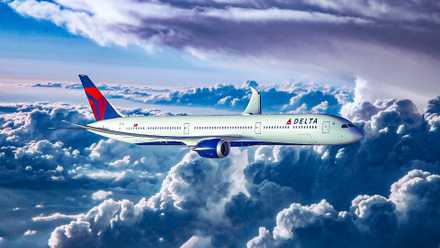
Delta Air Lines is signaling a fundamental reshaping of its widebody strategy, with chief commercial officer Joe Esposito confirming on the carrier's July 10 earnings call that more than half of the seats on its incoming Boeing 787-10 fleet will be premium products. That figure represents a dramatic jump from the roughly 30% premium mix found on the Boeing 767-300ER and 767-400ER aircraft the 787-10s are slated to replace beginning in 2031. The math behind this shift is significant: a 787-10 can carry up to 375 passengers in a standard two-class layout versus 216-238 on the 767 variants it succeeds, giving Delta both greater scale and a much richer revenue mix per departure on transatlantic routes. Esposito's framing of continental Europe as a "domestic-efficiency market served by widebody aircraft" underscores how Delta views these routes less as traditional long-haul international flying and more as high-frequency, high-margin corridors where premium demand can be reliably monetized.
For working pilots, particularly those flying widebody transatlantic sectors or eyeing a transition to that flying, this signals a multi-year shift in fleet planning, training pipelines, and route structuring. A 787-10-heavy fleet replacing 767s means different performance characteristics, different ETOPS considerations, and eventually different type-rating demand as Delta's pilot corps absorbs a larger 787 fleet alongside its existing 787-8/-9 operations. The decision also reinforces a broader industry pattern in which mainline carriers are retiring smaller, older widebodies in favor of larger aircraft with a heavier premium skew rather than simply adding capacity in economy. Flight crews should expect continued growth in 787 and A350 flying at Delta, while 767 operations wind down over the next five-plus years, a timeline that gives current 767 pilots a long runway but signals where fleet growth and seniority list movement will concentrate going forward.
The parallel rollout of Delta One "Basic," an unbundled fare tier that keeps the same seat and amenities but strips away seat selection, refundability, and full mileage earning, shows Delta applying the same segmentation playbook to business class that it pioneered in economy with Comfort Basic. This matters to corporate flight departments and travel managers because it adds another layer of fare complexity in premium cabins that, until now, have largely been sold as a single bundled product. Corporate travelers with unpredictable schedules will likely continue paying for full-flexibility Delta One or Main/Extra fares, but the existence of a cheaper, restricted business-class tier could pressure corporate travel policies and negotiated fares industry-wide, much as Basic Economy reshaped coach pricing a decade ago.
Beyond Delta, the move reflects a broader repositioning happening across U.S. network carriers. United's new 787-9 "Elevated" Dreamliners, with 99 premium seats split between Polaris and premium economy, and Delta's own A350-1000s launching next year with roughly half their seats in premium categories, both point to a widebody re-fleeting cycle built around maximizing premium yield rather than raw seat count. This mirrors the narrowbody upgauging trend Delta led over the past decade, replacing 50-seat regional jets and MD-88/90s with larger, more efficient aircraft, a strategy rivals eventually copied once it proved margin-accretive. If Delta One Basic performs as well as Comfort Basic did in economy, expect American, United, and possibly international competitors to introduce similar restricted business-class products, formalizing a new industry norm where premium cabins are priced in tiers rather than sold as a single fixed product. For pilots and operators alike, the throughline is clear: fleet decisions, cabin configurations, and fare structures are increasingly being engineered together, with long-haul aircraft selection now inseparable from revenue management strategy.








 Read original article