Waypoint: A Tale Of Two Airshows—Farnborough, AirVenture Take Flight
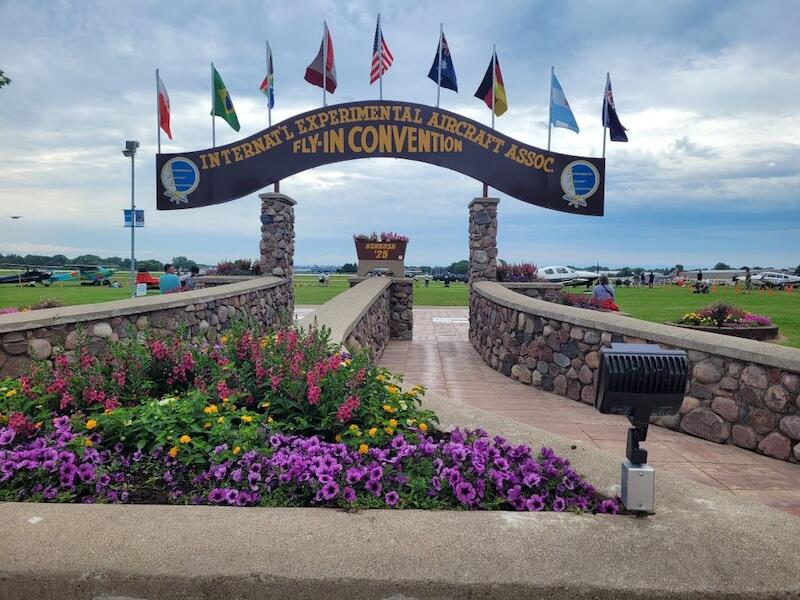
The 2026 aviation calendar delivers a rare scheduling convergence as the biennial Farnborough Airshow (July 20-24) and the 73rd EAA AirVenture Oshkosh (July 20-26) overlap for the first time in recent memory, splitting industry attention between two fundamentally different but equally significant events. Farnborough, held at the airfield southwest of London, represents the commercial and defense aerospace establishment—OEM order announcements, military procurement deals, and high-level industry strategy unveiled by manufacturers like Boeing, Airbus, and their supply chains. AirVenture at Wittman Regional Airport in Oshkosh, Wisconsin, by contrast, is the world's largest gathering of the general aviation community, drawing hundreds of thousands of pilots, owners, homebuilders, and enthusiasts for a week of airshows, forums, and grassroots aviation culture. The simultaneous timing forces media outlets, corporate flight departments, and industry executives to make hard choices about where to allocate coverage, travel budgets, and personnel.
For working pilots, this dual-show week carries practical and cultural significance beyond mere scheduling trivia. Farnborough typically generates news that ripples through commercial and business aviation operations for years—aircraft orders, engine program updates, sustainable aviation fuel commitments, and defense contracts that shape fleet planning and career trajectories at airlines, fractional operators, and charter companies. Business aviation professionals in particular watch Farnborough closely for business jet and advanced air mobility developments, given Aviation Week's own coverage angle through its Business Aviation & Advanced Air Mobility Report. Meanwhile, AirVenture remains the pulse of the owner-flown and light aircraft community, where FAA officials, avionics manufacturers, and type clubs make announcements affecting everything from Part 91 operations to experimental aircraft certification, and where NOTAMs and TFR procedures for the temporary Wittman tower operation offer a real-world case study in high-density VFR arrival management that every corporate pilot transiting Wisconsin airspace that week should review.
The overlap also underscores a broader industry reality: aviation's stakeholder base is not monolithic, and the interests of transport-category and defense aerospace diverge meaningfully from those of the general aviation and homebuilt community, even as both segments depend on shared infrastructure, workforce pipelines, and regulatory frameworks. Corporate flight departments planning trips to either location during this period should anticipate congested airspace, hotel and FBO capacity strain, and elevated slot demand—Farnborough's airfield closes to general traffic during show days, while Oshkosh's arrival procedures are notoriously unforgiving for pilots unfamiliar with the mass-arrival protocols published in the annual NOTAM.
More broadly, the concurrent scheduling reflects how aviation's biggest storylines in 2026—sustainable fuels, electric and hybrid propulsion, advanced air mobility, and defense modernization—are being pursued on parallel tracks by different constituencies. Business aviation media outlets like Aviation Week must split resources to capture both the boardroom-level dealmaking at Farnborough and the hands-on innovation showcased at Oshkosh's forums and flight lines. For pilots and operators, the takeaway is that no single event in 2026 will capture the full scope of where aviation is headed; those who want a complete picture of the industry's direction, from military contracts to homebuilt kit innovations, will need to track coverage from both shows rather than assume either one tells the whole story.





 Read original article