The Forgotten Boeing 747 Variant That Invented The Silhouette Every Jumbo Copied After It
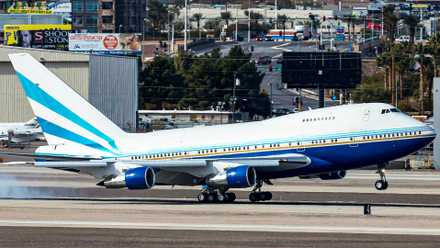
The Boeing 747-300, though often dismissed as the shortest-lived member of the 747 family, occupies a more significant place in jumbo jet history than its modest production run of 81 aircraft suggests. Introduced in the early 1980s as a bridge between the 747-200 and the far more successful 747-400, the -300's defining contribution was the Stretched Upper Deck (SUD)—a 23-foot-4-inch extension of the fuselage hump that transformed a small novelty lounge into genuinely useful revenue space. Rather than commissioning an entirely new fuselage, Boeing engineers extended the existing upper deck and replaced the iconic spiral staircase with a straight one, freeing up cabin area and improving passenger flow between decks. This single modification created the elongated hump silhouette that every subsequent passenger 747 variant, most notably the 747-400, would inherit and refine.
For pilots and operators, the significance of the -300 lies less in its cockpit technology—which remained firmly rooted in the analog, three-crew 747 Classic architecture—and more in what it demonstrated about aircraft lifecycle economics. Boeing's data showed the SUD delivered roughly a 10% increase in passenger capacity for only a 2% increase in operating empty weight, translating into an approximate 5% reduction in fuel burn per seat-mile. That is a substantial efficiency gain achieved without touching the wing, engines, or basic structure, and it validated the airlines' hypothesis that upper-deck real estate was an underexploited revenue lever rather than a cosmetic curiosity. For flight departments and fleet planners, this stands as an early, concrete example of how incremental structural modifications can extract meaningful economic value from a mature airframe design—a lesson that echoes in later programs like winglet retrofits, cabin densification efforts, and fuselage stretches across other manufacturers' product lines.
The 747-300's commercial shortfall, despite its architectural innovation, offers an instructive case study for understanding why airlines ultimately gravitated toward the 747-400 instead. Because Boeing paired the improved cabin with an unchanged flight deck, three-person crew requirement, and Classic-era systems, the -300 failed to deliver the operational cost savings that mattered most to airlines: reduced crew costs, modernized avionics, and improved range performance. The 747-400 solved that gap by combining the SUD cabin with a two-crew glass cockpit, extended wingtips, and improved fuel efficiency, making it the more complete and durable investment. This dynamic—where a manufacturer nails the cabin experience but falls short on flight deck modernization—recurs throughout aviation history and remains relevant today as operators weigh cabin refreshes and structural modifications against full re-engining or avionics upgrades when evaluating aging fleets.
Beyond its historical footnote status, the 747-300 illustrates a broader truth about aircraft development that still applies to current widebody and business jet programs: cabin economics and flight deck technology must advance in tandem to produce a truly compelling product. Airlines and operators evaluating today's derivative aircraft, whether stretched fuselages, re-engined variants, or cabin-reconfigured business jets, continue to weigh the same trade-offs Boeing faced with the -300—incremental improvement versus wholesale redesign. For pilots, understanding this history offers useful context when transitioning between 747 variants or discussing legacy jumbo operations, and it reinforces why the -400's combination of cabin and cockpit modernization, rather than the -300's cabin-only leap, ultimately became the template airlines demanded from every widebody generation since.





 Read original article