The Airlines With The World's Newest Premium Economy Seats In 2026
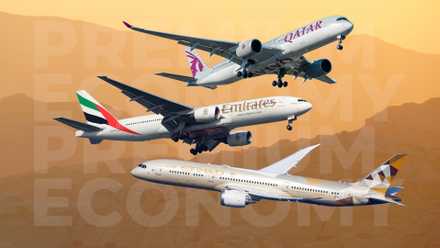
Premium economy has crossed a tipping point in the global airline industry, with carriers that once resisted the class now racing to retrofit widebody fleets and reconfigure new-build aircraft to capture what Lufthansa bluntly calls a "money-generating machine." The economics are compelling: Lufthansa reports premium economy generates 33% more revenue per square foot than standard economy and even outperforms business class by 6% on the same metric. Emirates, long a holdout that worried premium economy would cannibalize its business-class revenue and dilute its luxury brand positioning, has reversed course entirely—CEO Tim Clark now describes demand as "tremendous" and "shocking," with sellable inventory that could move multiple times over. The cabin class has effectively matured from an experimental niche into a core revenue driver, with industry-standard specs solidifying around 38-40 inch pitch, 18.5-19.5 inch width, and 12-13 inch touchscreens, commanding roughly 1.3x to 1.8x the economy fare while remaining a fraction of business-class pricing at 2.5x to 4x premium's cost.
For working pilots, this shift carries operational and scheduling implications worth tracking, even though seat class doesn't directly affect flight operations the way payload or range does. Cabin reconfigurations tied to retrofit cycles mean aircraft spend extended time in maintenance facilities, affecting fleet availability and potentially crew base assignments as airlines shuffle which tail numbers serve which routes during the transition. More significantly, the shift toward premium economy reflects broader route-network economics: carriers are optimizing widebody deployment on long-haul sectors where this cabin performs best, and the American Airlines A321XLR transcontinental example—along with Emirates running widebodies on shorter regional hops—shows how premium economy is blurring the traditional narrowbody/widebody, short-haul/long-haul distinctions. Pilots flying international widebody routes for major carriers should expect continued cabin churn as their airlines chase this revenue stream, meaning more frequent reconfiguration downtime and potentially evolving weight and balance profiles as seat counts and cabin layouts shift.
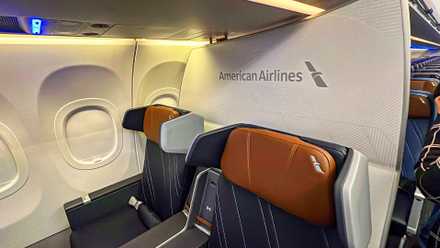
The competitive dynamics among U.S. carriers illustrate how thoroughly this trend has permeated network planning. United's "Elevated Interior" rollout on 787-9s, launching first on San Francisco–Singapore and San Francisco–London routes in 2026, and American Airlines' decision to retire first class entirely in favor of expanded premium economy on 787-9s and retrofitted 777-300ERs, signal that the four-class hierarchy of decades past (first, business, premium economy, economy) is consolidating into a three-tier model at most legacy carriers. Delta's move to expand premium economy at the direct expense of standard economy seating, and JetBlue's forthcoming "Junior Mint" product, show the trend extending even to carriers not traditionally associated with premium long-haul international service. Alaska Airlines' apparent holdout status—inheriting 787 Dreamliners originally configured for Hawaiian Airlines' route network—stands out as increasingly exceptional in an industry where nearly every major long-haul operator is either actively retrofitting or has already completed the transition.
This consolidation reflects deeper structural changes in commercial aviation's revenue model. The decline of first class, driven by its prohibitive cost structure and the loss of commercial flying's once-elite status, combined with business class facing margin pressure from premium economy's "good enough" value proposition, has pushed airlines toward a barbell strategy: ultra-low-cost economy at one end and a comfortable, moderately priced premium tier capturing upgrade-motivated economy passengers at the other. For flight departments and corporate aviation planners tracking commercial travel trends, this signals that premium economy is no longer a marginal product but a structural fixture of long-haul network planning—one that will continue driving retrofit cycles, cabin crew training updates, and aircraft utilization patterns industry-wide well beyond 2026.







 Read original article