Airbus revives A220 sales as AirAsia places largest-ever order
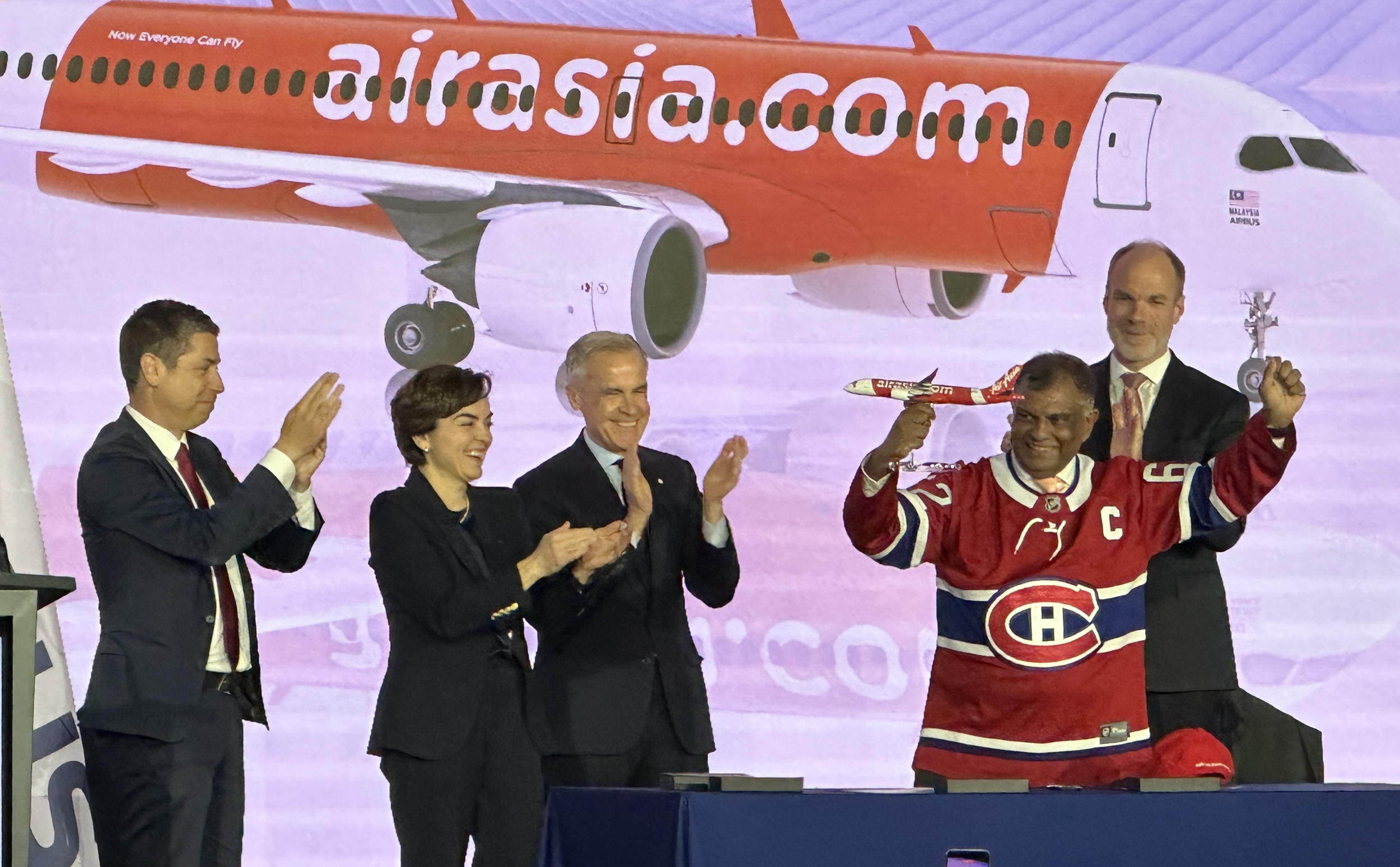
AirAsia Group's firm order for 150 Airbus A220-300 aircraft, signed May 6, 2026, at the Airbus Mirabel facility in Québec, represents the single largest order in the A220 program's history and pushes total firm commitments for the type past the 1,000-aircraft threshold. Valued at approximately $19 billion at list price, the deal more than doubles the combined 66 orders Airbus recorded for the A220 across all of 2024 and 2025, a period during which the program's commercial momentum had clearly stalled. AirAsia CEO Tony Fernandes signed the commitment with Canadian Prime Minister Mark Carney in attendance — a deliberate diplomatic signal emphasizing Canada's interest in trade diversification and the strategic export role of Airbus Canada's Mirabel production line. The airline's interest in the type traces back more than a decade, with Fernandes famously using a 2012 Farnborough appearance alongside Bombardier leadership as leverage in his broader Airbus negotiations — a tactic that has now, some 14 years later, culminated in an actual purchase commitment.
The A220-300 that AirAsia ordered is a technically capable narrowbody that professional operators should understand on its own merits. Powered by Pratt & Whitney PW1500G geared turbofan engines, the aircraft seats between 130 and 160 passengers with a maximum range of approximately 3,600 nautical miles, giving it meaningful reach for thin intra-ASEAN routes as well as sectors into Central Asia that would be uneconomical for A320-family aircraft at lower load factors. Notably, AirAsia is serving as launch customer for a revised 160-seat cabin configuration enabled by additional overwing emergency exits — a density improvement that directly affects MEL considerations, evacuation certification, and cabin crew complement planning for operators who eventually adopt the type. With roughly 800 A220s delivered by early 2026 and Airbus targeting a production rate of 14 aircraft per month by year-end, the supply chain and MRO ecosystem for the PW1500G and airframe systems are maturing, which reduces the early-operator risk premium that has historically weighed on pilot training pipelines and parts availability for newer programs.
For airline and charter operators evaluating fleet strategy, the AirAsia deal reinforces a commercial logic that has been building across the low-cost carrier sector in Asia: smaller, longer-range narrowbodies allow carriers to profitably serve city pairs that cannot sustain A320neo or 737 MAX frequency levels, effectively unlocking secondary markets without the unit cost penalty of regional jets. For Part 135 and business aviation operators, the deal is less directly relevant but carries an indirect implication — as A220 deliveries accelerate and AirAsia builds out type-rated crew, the global pool of PW1500G-qualified maintenance technicians and pilots will deepen, potentially improving availability and reducing training costs for any operator considering the type. Fractional and charter companies operating in the super-midsize narrowbody segment should also note that the A220's economics are beginning to attract serious fleet commitments from sophisticated, cost-disciplined operators, which historically signals that the type has crossed a durability threshold in operator confidence.
The broader industry context positions this order at the intersection of three converging trends: post-pandemic traffic recovery in Southeast Asia driving genuine fleet expansion demand, geopolitical pressure on supply chains pushing airlines toward diversified OEM relationships, and Airbus's ongoing need to balance A220 production investment against the dominant commercial pull of the A320neo family. The Canadian government's visible participation in the signing ceremony underscores how narrowbody aircraft programs have become instruments of trade policy, particularly as Airbus Canada positions Mirabel output as a hedge against tariff exposure affecting transatlantic aerospace supply chains. For pilots and flight operations professionals tracking fleet trends, the AirAsia order is a reliable indicator that the A220 has secured a long-term place in the global narrowbody market — and that type ratings, simulator availability, and recurrent training infrastructure for the aircraft will continue to expand through the end of the decade.