American Airlines Launches New 3-Hour Nonstop Regional Jet Flights To South America
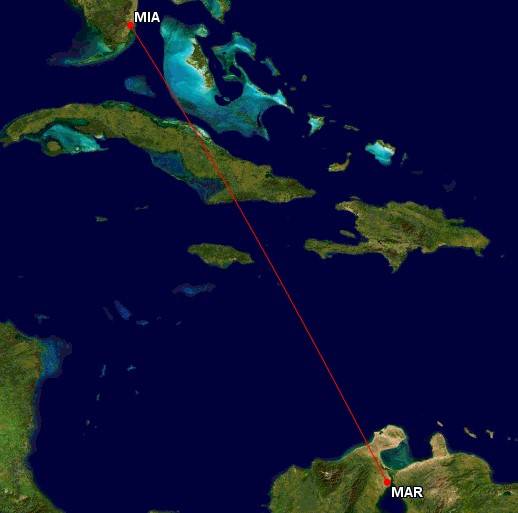
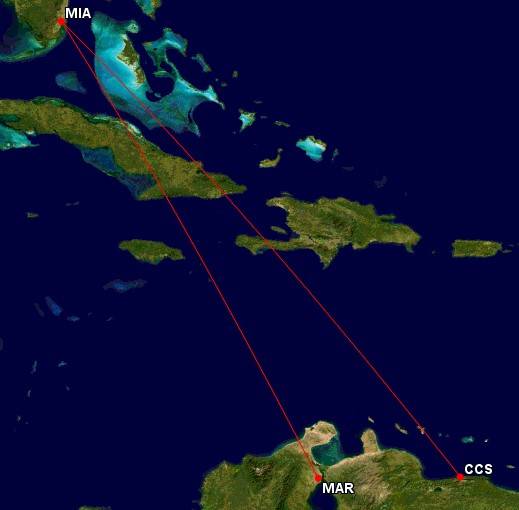
American Airlines' resumption of nonstop service between Miami and Maracaibo marks a notable, if narrow, expansion of U.S.-Venezuela air links at a moment when the broader network into the country remains in flux. The daily flight, operated by Envoy Air under the American Eagle brand using a 76-seat Embraer E175, returns to a city pair American last served in 2019 with mainline 737-800, 757-200, and A319 equipment. The shift to a regional jet reflects both the cautious, incremental nature of this market reopening and the practical realities of restarting service into a country still working through diplomatic normalization, infrastructure limitations, and now recovery from the June 24 earthquake that has shuttered Caracas' Simón Bolívar International Airport to scheduled commercial traffic. For American, Maracaibo becomes the second Venezuelan destination reactivated since diplomatic and consular relations were restored, following the airline's return to Caracas earlier this year.
For working pilots, particularly those flying for regional partners like Envoy, this route illustrates how mainline carriers use E175 and similar regional jet equipment to test, de-risk, and incrementally rebuild service into recovering or politically sensitive markets before committing larger aircraft and crews. The 76-seat E175, with its three-class configuration, allows American to right-size capacity to genuine demand while limiting exposure in a market where operating conditions can change quickly — as evidenced by the Caracas suspension. Flight crews assigned to these routes should expect heightened attention to alternate airport planning, fuel reserves, and contingency procedures given Venezuela's evolving airspace and airport status, along with the operational unpredictability that comes with flying into a market still stabilizing politically and physically. The mention that one Caracas frequency will upgrade to a 737-800 in mid-August, contingent on airport reopening, further underscores how fluid scheduling and equipment assignments have become in this corridor.
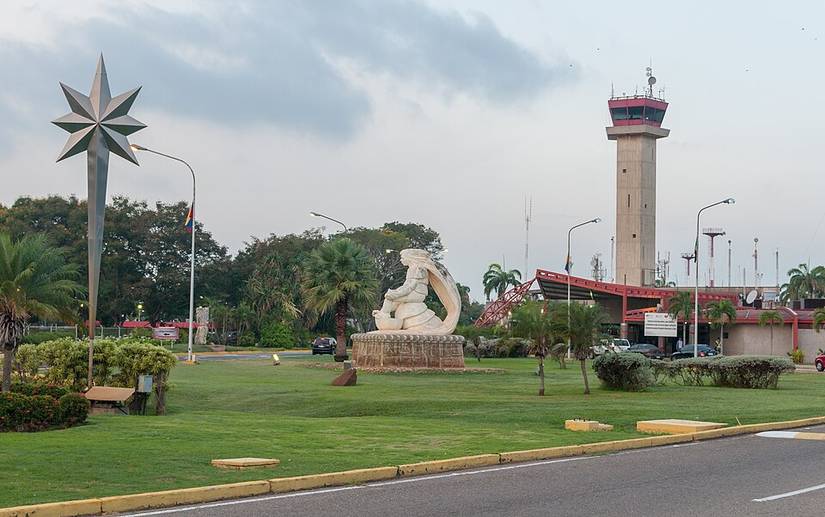
The broader significance extends beyond a single city pair. Venezuela's gradual reintegration into international commercial aviation — with American, United (adding Houston-Caracas in August), Qatar Airways launching Doha-Caracas service, Copa, and Avianca all expanding or resuming operations — signals a meaningful shift in a market that was largely written off by U.S. and international carriers for years amid sanctions, political instability, and safety concerns. This mirrors patterns seen elsewhere in Latin America and in previously isolated markets, where diplomatic normalization is quickly followed by careful, regional-jet-led route testing before mainline widebody or narrowbody capacity returns in force. The earthquake's disruption of Caracas operations, forcing traffic to alternates like Valencia's Arturo Michelena airport, also highlights how natural disasters can reshape network strategy in real time, pushing carriers to redistribute capacity to secondary cities like Maracaibo that offer stable infrastructure — in this case, a 9,843-foot runway capable of supporting larger equipment if demand justifies it later.
For business aviation operators and charter providers, Venezuela's slow reopening likely represents an emerging niche opportunity, particularly for relief flights, energy-sector support to Maracaibo's oil industry, and ad hoc corporate travel that scheduled carriers are not yet positioned to serve reliably. The continued designation of relief flights into Caracas, even as scheduled service remains paused, suggests corporate and charter operators with experience in high-scrutiny, evolving regulatory environments may find opportunities here well before mainline capacity fully normalizes. More broadly, this development reinforces a trend across commercial aviation in 2026: carriers are increasingly using regional jets as strategic tools for market re-entry in geopolitically sensitive or infrastructure-challenged regions, a pattern likely to recur as other historically underserved markets reopen in the years ahead.










 Read original article