The 6 Military Aircraft Manufacturers Still Building New Combat Aircraft For The US Armed Forces In 2026
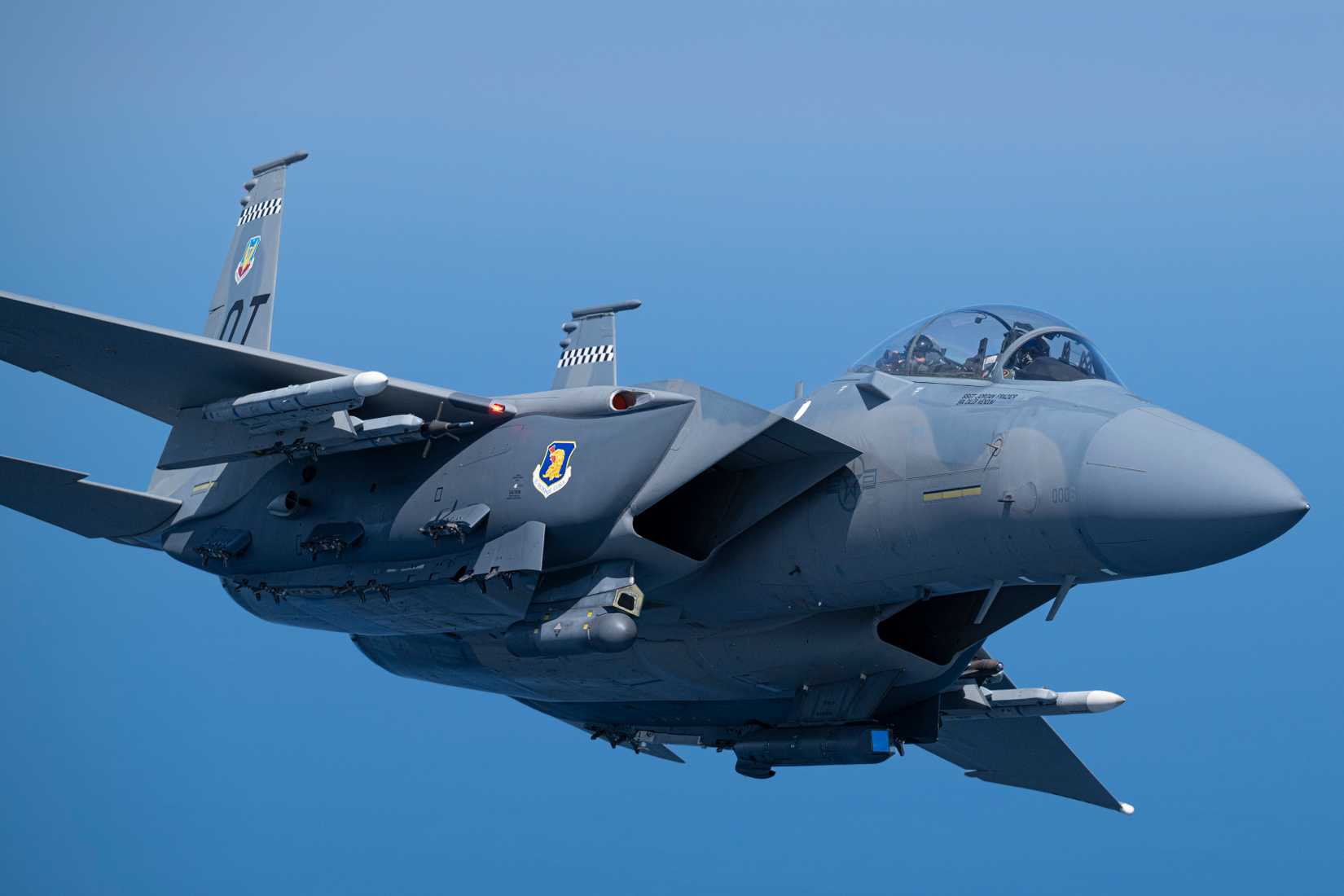
The U.S. military's combat aircraft supplier base has consolidated into a small, specialized group of six manufacturers as of 2026: Bell Textron, Boeing, General Atomics Aeronautical Systems, and three others (Lockheed Martin, Northrop Grumman, and Sikorsky, per the broader industry landscape referenced but not fully detailed in the source text). This roster reflects decades of defense-industry mergers and acquisitions—Boeing's F-15EX and Apache lines trace back to McDonnell Douglas and Hughes Helicopters, while Bell's entire rotorcraft portfolio descends from the original UH-1 Huey platform first fielded in 1959. The persistence of Huey-derived airframes like the UH-1Y Venom and AH-1Z Viper, which share roughly 85% parts commonality, underscores how the Pentagon prioritizes logistics efficiency and shared supply chains over clean-sheet designs, a pattern that recurs across nearly every program mentioned, from the F/A-18E/F Super Hornet's lineage to the AH-64E Apache's decades-long evolution.
For working pilots, particularly those with military backgrounds or aspirations toward government contract flying, this consolidation matters because it shapes career pathways, training pipelines, and the types of airframes likely to remain in service for the next 20-30 years. The introduction of the Bell MV-75 Cheyenne II tiltrotor, slated for 2031 service entry as a Black Hawk replacement, signals a broader shift toward tiltrotor and hybrid VTOL platforms in military aviation—technology that traces its lineage to the V-22 Osprey and increasingly informs civilian eVTOL and advanced air mobility development. Pilots transitioning from military to civilian careers, especially those flying helicopters or business aviation platforms, will find that familiarity with tiltrotor flight characteristics and fly-by-wire systems becomes increasingly valuable as this technology migrates into commercial and public-use applications.
The article also highlights the accelerating role of uncrewed systems within traditionally crewed combat aircraft categories. Boeing's autonomous testing of the AH-6 gunship and General Atomics' MQ-9B SkyGuardian/SeaGuardian program demonstrate that drone technology is no longer confined to reconnaissance roles but is being integrated into strike and utility missions once exclusive to human pilots. This trend has direct implications for corporate and business aviation operators who monitor airspace integration challenges, as the FAA and international regulators continue grappling with how to safely deconflict military UAV traffic, particularly larger platforms like the MQ-9B, within civil airspace corridors shared by Part 91 and Part 135 operators.
Finally, the emergence of the F-47 as Boeing's answer to sixth-generation fighter requirements—intended to replace the F-22 Raptor—reflects the broader industry trend toward next-generation air dominance platforms that will eventually shape doctrine, training syllabi, and even air traffic management as these aircraft enter operational testing later this decade. For business jet operators and airline pilots operating near military training ranges or restricted airspace, awareness of these emerging platforms and their performance envelopes remains operationally relevant, particularly as advanced fighters and increasingly autonomous combat systems create new dynamics in shared airspace, NOTAMs, and TFR planning. The consolidation to six manufacturers also signals continued high barriers to entry in defense aviation, meaning the incumbents' technology choices—rotorcraft, tiltrotor, autonomous systems, sixth-gen fighters—will likely define the trajectory of both military and adjacent civil aviation markets well into the 2030s.








 Read original article