Pipistrel Launches Voyager For Training Market
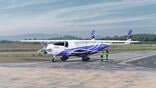
Pipistrel used the opening day of EAA AirVenture Oshkosh 2026 to unveil the Voyager, a two-seat, purpose-built training aircraft aimed squarely at flight schools and high-utilization instructor-student operations. The launch is notable both for the product itself and for the corporate lineage behind it: Pipistrel, once known primarily as a Slovenian innovator in electric and light-sport aircraft, is now operating as an affiliate of Textron Aviation, giving it access to a much larger manufacturing, certification, and distribution infrastructure than it possessed as an independent company. The Voyager's debut signals that Textron intends to leverage that acquisition not just for electric propulsion R&D, but to compete directly in the conventional flight-training aircraft segment—a market that has been underserved by fresh, purpose-built designs for years.
For working pilots and flight-training operators, this matters because the trainer fleet at most U.S. and international flight schools remains dominated by decades-old airframes—Cessna 172s, Piper Warriors and Archers, and Diamond DA40s/DA20s—many of which are stretched thin by the persistent pilot shortage and the resulting surge in ab initio training volume. Flight schools have been contending with rising maintenance costs, parts availability issues, and aircraft utilization rates that often exceed what legacy trainers were designed to sustain. A new-production aircraft engineered specifically for high-frequency, high-cycle instructional use addresses a real operational pain point: airframes and systems designed from the outset for the wear patterns of touch-and-goes, short cross-countries, and multiple daily student sorties, rather than adaptations of aircraft originally intended for personal or light utility flying.
The Voyager also arrives amid a broader industry conversation about the economics of pilot training. With airlines, fractional operators, and corporate flight departments all competing for a limited pipeline of new pilots, the cost and throughput of primary flight training has become a strategic bottleneck. Training providers are increasingly evaluating total cost of ownership, dispatch reliability, and instructor workflow efficiency when selecting trainer fleets—factors that a clean-sheet design can address more directly than a legacy platform with decades of incremental modification. Pipistrel's background in lightweight, efficient airframe design—developed initially for electric and hybrid-electric applications—suggests the Voyager may also offer fuel efficiency and lower operating costs relative to traditional four-seat trainers being flown as two-seat trainers at a cost penalty.
Strategically, the Voyager's debut also reflects Textron Aviation's broader push to control more of the pilot pipeline that eventually feeds into its Cessna and Beechcraft aircraft sales, as well as its interest in advanced air mobility and electric propulsion, where Pipistrel's technology has already been influential (notably the Velis Electro, the first type-certified electric aircraft in Europe). By fielding a dedicated training aircraft now, Textron positions itself to capture flight-school fleet renewal cycles that are likely to accelerate as training demand remains elevated globally. For flight departments, training organizations, and fractional providers watching fleet-modernization trends, the Voyager is worth monitoring closely—both as a potential fleet option and as an indicator of how legacy OEMs are restructuring around newly acquired innovative brands to address gaps in general aviation's aging trainer inventory.






 Read original article