The engineering behind Anduril and Archer’s Thunder drone
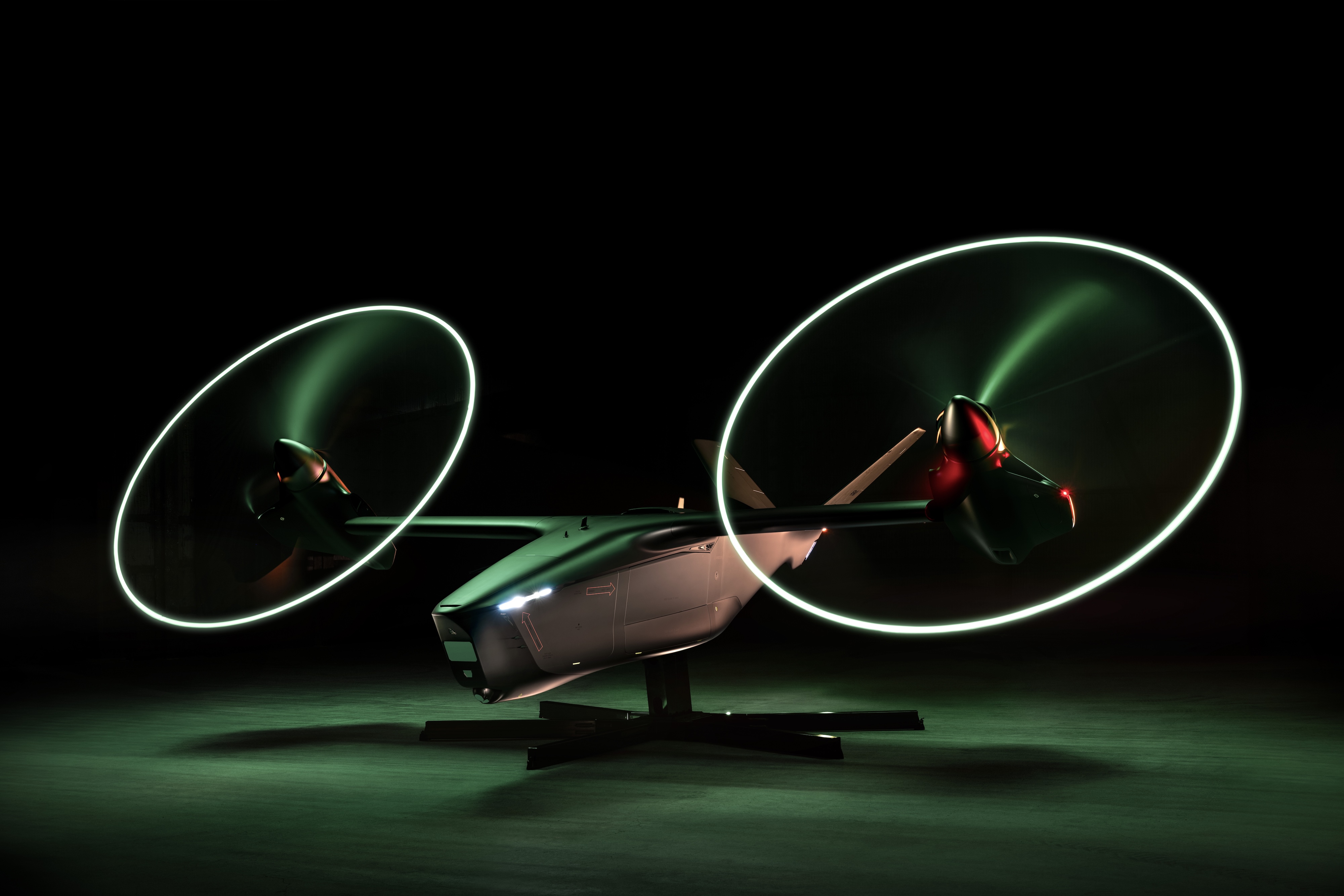
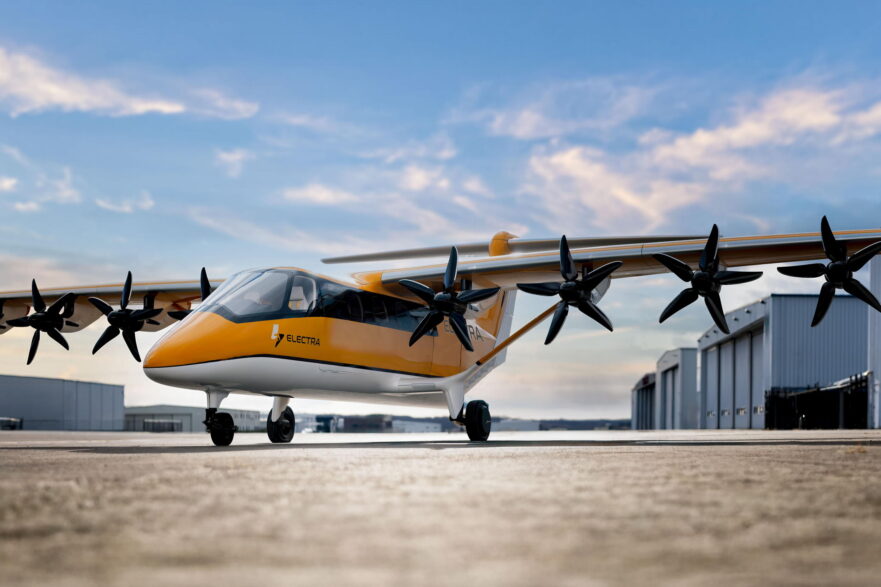
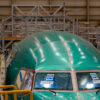
Anduril Industries and Archer Aviation used the 2026 Farnborough International Airshow to unveil "Thunder," the autonomous hybrid-electric tiltrotor the two companies have been developing since announcing their partnership roughly eighteen months ago. Thunder pairs Anduril's mission autonomy and battle-management software with a hybrid-electric powertrain from Archer, and it incorporates Optimum Speed Tiltrotor (OSTR) technology originally developed by Karem Aircraft and its Overair air-taxi spinoff — intellectual property Archer acquired last year. While full specifications remain undisclosed, a full-scale model shown privately at the airshow suggests Thunder is roughly the same size as Archer's Midnight eVTOL air taxi, though built around a markedly different airframe geometry optimized for hover efficiency and extended range rather than passenger transport. Anduril's Shane Arnott framed the design intent succinctly: Apache-comparable payload capacity combined with the range and speed characteristics of a Bell Cheyenne II, positioning Thunder as a high-performance uncrewed teammate rather than a scaled-down utility drone.
The program's origin story matters as much as its specs. Thunder is a direct answer to the collapse of the U.S. Army's Future Attack and Reconnaissance Aircraft (FARA) program in early 2024, which was terminated after the Army concluded that low-altitude crewed reconnaissance aircraft were increasingly vulnerable to proliferated drones, loitering munitions, and layered air defenses seen in Ukraine. Rather than replace FARA's crewed mission with another crewed platform, the Army — and now allied programs like Britain's Project NYX, for which Anduril was recently down-selected — are betting on uncrewed "loyal wingman" aircraft that can fly alongside existing attack helicopters such as the Apache and the newly selected Bell MV-75 (formerly FLRAA) tiltrotor. Thunder is explicitly designed to operate collaboratively with those crewed platforms, extending sensor reach, absorbing risk in contested airspace, and multiplying strike or reconnaissance capacity without putting additional aircrew in harm's way. This reflects a broader doctrinal shift across Western militaries toward manned-unmanned teaming (MUM-T) as the organizing concept for next-generation rotary and tiltrotor combat aviation.
For working pilots and aviation operators, Thunder is a signal of where airframe engineering talent, capital, and regulatory attention are migrating. Archer's involvement marks a significant strategic pivot for a company that built its public identity — and its Wall Street valuation — around civil eVTOL air taxi service. The pursuit of a defense variant alongside a still-planned commercial derivative called "Halo" mirrors a pattern seen across the eVTOL sector, where companies such as Joby, Beta Technologies, and others have increasingly hedged commercial ambitions with defense contracts as certification timelines for passenger-carrying autonomous aircraft continue to slip. For military and government pilots, Thunder's emergence reinforces that future rotary-wing formations will routinely include uncrewed teammates flying in close coordination with crewed cockpits, which carries direct implications for training, tactics, air traffic deconfliction, and human-machine interface design in the cockpit itself.
More broadly, Thunder illustrates how hybrid-electric propulsion, autonomy stacks, and tiltrotor aerodynamics originally incubated in the commercial advanced air mobility space are now flowing directly into defense applications — and vice versa. Karem's OSTR technology, once aimed at a now-defunct air taxi venture, has found a second life in a combat-oriented airframe, underscoring how thin the line has become between civil and military rotorcraft innovation. As NATO militaries continue to reassess crewed low-altitude aviation risk in light of drone-saturated battlefields, expect further consolidation between traditional defense primes, venture-backed aerospace startups, and legacy rotorcraft patent holders, with programs like Thunder serving as a template for how autonomy, electrification, and combat-proven tiltrotor design can be fused into a single platform.