The US Air Force Is Scrapping 119 F-15E Strike Eagles While Saudi Arabia Pays $5 Billion For Upgraded Versions Of The Same Jet
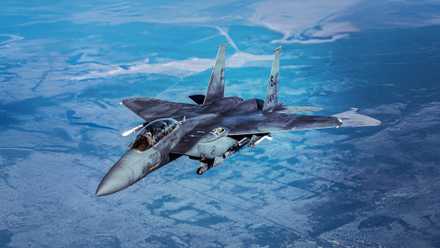
The U.S. Air Force's decision to retire 119 F-15E Strike Eagles while Saudi Arabia invests $5 billion to upgrade its F-15SA fleet to near-F-15EX standard represents a striking divergence in how allied air forces are managing fourth-generation fighter fleets amid the shift toward next-generation combat capability. The USAF will retain only 99 of 218 Strike Eagles—specifically those powered by the F100-PW-229 engine—while divesting airframes equipped with the older F100-PW-220. The retained jets will receive the Eagle Passive Active Warning Survivability System (EPAWSS) to modernize electronic warfare capability, but they will not receive the Advanced Display Core Processor II or APG-82 AESA radar that Saudi Arabia's upgraded F-15SAs will carry, the same systems found on the new-build F-15EX Eagle II. The practical result is that Saudi Arabia's upgraded Strike Eagle variant will, on paper, outclass the U.S. Air Force's own retained Strike Eagle fleet in sensor fusion, computing power, and missile-guidance capacity, even though both aircraft share a common airframe lineage.
For working military and defense-adjacent aviation professionals, this deal illustrates how foreign military sales increasingly function as a release valve for U.S. defense industrial capacity while allied nations leapfrog in relative capability terms. Saudi Arabia's F-15SA already shares the reinforced airframe and fly-by-wire flight control architecture of the F-15EX, meaning the RSAF avoids the costly structural rework the USAF would need to bring its own legacy jets to Eagle II standard. That commonality lets Boeing and RTX-Raytheon deliver near-parity capability—including the twelve-station missile loadout, APG-82 AESA radar, and advanced open-mission-system software—without a full new-production buy. This is a case study in how allied sustainment and upgrade programs can be more cost-effective than fleet recapitalization from scratch, and it underscores why FMS packages tied to shared airframe designs are becoming a preferred tool for extending combat relevance among partner air forces even as the originating service divests the same platform.
The broader significance for commercial, business, and general aviation observers lies less in the tactical details and more in what this signals about industrial-base sustainment, engine-family standardization, and radar/avionics modernization cycles that ripple across the aerospace supply chain. The APG-82 AESA radar and F110-GE-129 engine, both shared between the F-15EX and the upgraded F-15SA, exemplify the industry's push toward common-architecture avionics and propulsion across multiple airframe generations, a trend that mirrors similar modular upgrade philosophies seen in commercial transport retrofit programs. Pilots and maintenance professionals tracking Boeing's defense division should note that St. Louis production lines sustaining the F-15EX and F-15SA programs directly support long-term U.S. fighter manufacturing capacity, which matters for supply chain stability affecting parts, castings, and specialized alloys shared with other Boeing commercial and defense products.
Finally, the Strike Eagle retirement decision reflects the Air Force's broader fleet-balancing calculus as it funds sixth-generation fighter development (NGAD) and F-35 procurement simultaneously, a resource allocation challenge familiar to any operator managing capital-intensive fleet transitions. The logic that "additional investment is better spent on new airframes" rather than fully modernizing older, lower-hour-remaining jets parallels decisions civilian and business aviation operators face when choosing between deep avionics retrofits versus fleet replacement. For military and civilian aviation professionals alike, the F-15E/F-15SA divergence is a reminder that airframe age, remaining service life, and total upgrade cost increasingly outweigh sentimental or historical value in fleet-modernization decisions, even for aircraft with combat records as storied as the Strike Eagle's.







 Read original article