What SR-71 Ground Crews Had To Do After Every Landing That Took Hours To Complete
The SR-71 Blackbird's post-flight maintenance regimen stands as one of the most extreme examples of the operational tax that extreme performance envelopes impose on ground support operations, and it offers a striking historical benchmark for pilots and maintainers who now take for granted the relative simplicity of modern turbine aircraft turnarounds. As detailed in the article, a single Blackbird sortie generated a cascade of inspection requirements driven by the aircraft's Mach 3.2 cruise speed and airframe skin temperatures exceeding 1,200°F. What might be a routine post-flight walkaround on a conventional aircraft became, for the SR-71, a six-hour structural scan by five specialists just to check spot welds for microscopic fractures—part of a post-flight maintenance cycle that could run beyond 27 hours of combined labor, layered on top of an 18-hour pre-flight preparation process. For an aircraft that flew relatively short, infrequent missions, the maintenance-to-flight-hour ratio was staggering, illustrating how thermal and structural stress can dwarf the actual airborne time in determining an aircraft's true operational cost.
The thermal cycling challenges described—titanium expanding significantly at speed and contracting on landing, fasteners requiring literal oven-baking before reinstallation to prevent seizing or warping—speak to a broader engineering truth that remains relevant to today's high-performance aircraft, from supersonic military jets to reentry vehicles and even high-speed business jet concepts under development. Modern titanium and composite airframes still contend with heat-cycle fatigue, though contemporary nondestructive inspection (NDI) techniques like eddy-current testing, which the article notes was already in use on Blackbird landing gear struts, have become standard practice across commercial and military fleets for detecting subsurface fatigue invisible to the naked eye. Pilots flying anything from turboprops to widebody jets benefit from decades of accumulated knowledge about metal fatigue and heat-cycle stress that programs like the SR-71 helped pioneer, often at extraordinary cost and manpower.
For working pilots, particularly those in military, test, or high-performance flight operations, the Blackbird's life-support inspection regimen also underscores how aircrew protective systems can become nearly as maintenance-intensive as the airframe itself. The David Clark S1030 full-pressure suits, essentially NASA-derived spacesuits, required full disassembly, sanitization, and inspection after every flight, while the liquid nitrogen cryogenic cooling system demanded a carefully sequenced drain-and-dehydration process to prevent corrosion and component damage. This level of life-support complexity has direct descendants in current high-altitude reconnaissance platforms, spaceflight programs, and even in the pressure-suit protocols used by U-2 pilots today, reminding contemporary aviators that human physiological protection at extreme altitudes remains a nontrivial engineering and maintenance burden, not a solved problem.
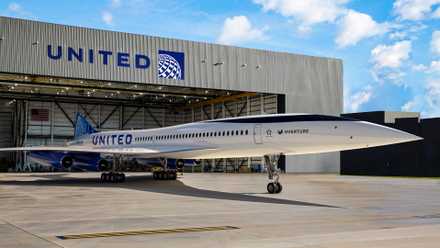
More broadly, the SR-71's maintenance story reinforces why sustainment and lifecycle cost—not just airframe design or top speed—ultimately determine an aircraft's practical viability. The Blackbird's retirement in the 1990s was driven as much by the enormous logistical and financial burden of operations like the ones described here as by satellite reconnaissance advances rendering its mission less essential. This lesson resonates in current debates over next-generation hypersonic aircraft, advanced fighter programs, and even supersonic business jet ventures like Boom's Overture, where designers must weigh peak performance against the realistic operational tempo, maintenance manpower, and turnaround costs that flight departments and squadrons can actually sustain. The Blackbird remains a cautionary tale and an inspiration in equal measure: proof that pushing an airframe to its absolute physical limits produces extraordinary capability, but at a maintenance cost that few programs, military or civilian, could justify replicating today.








 Read original article