Gulfstream G500 and G600 reach 400 customer deliveries | Corporate Jet Investor | CJI news
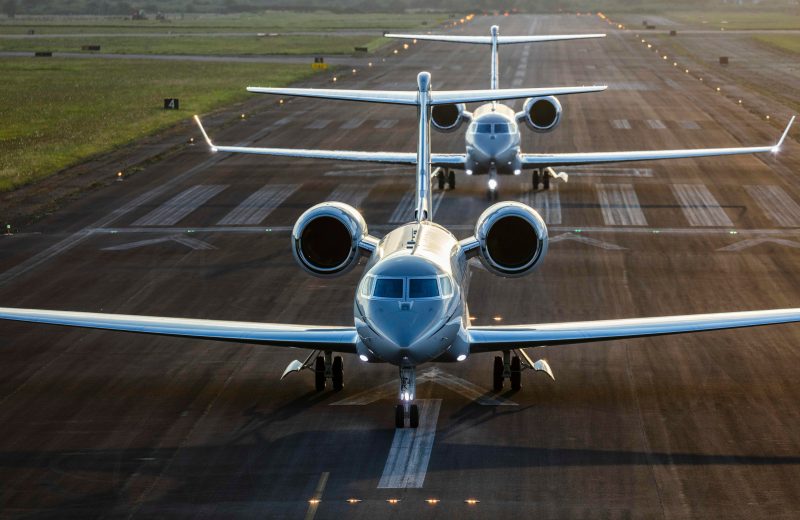
Gulfstream Aerospace has reached a significant production milestone, delivering the 400th combined G500 and G600 aircraft since the twin-aircraft program entered service. The delivery, a G600 completed at Gulfstream's St. Louis outfitting center, went to a customer in the Asia-Pacific region—underscoring the increasingly global nature of demand for large-cabin business jets. Collectively, the fleet has now logged more than 519,000 flight hours and 200,000 landings, figures that reflect not just strong sales but sustained utilization, a metric operators and manufacturers alike watch closely as an indicator of an aircraft type's reliability and mission relevance in service.
For working pilots and flight departments, the G500/G600 program's maturation matters on several practical levels. Both aircraft share the Gulfstream Symmetry Flight Deck, meaning crews transitioning between the two types benefit from significant commonality in systems, automation philosophy, and touchscreen-based flight controls—an advantage for operators running mixed fleets or crews holding type ratings across both models. The aircraft's Mach 0.925 maximum operating speed and demonstrated long-range performance, exemplified by the recent Sapporo-to-Savannah flight covering 5,835 nautical miles in 11 hours 38 minutes at Mach 0.88 average cruise, give crews genuine intercontinental capability with fuel and routing flexibility that reduces the need for technical stops. With 190-plus city-pair speed records contributing to Gulfstream's total of 815, the program continues to reinforce the manufacturer's performance credentials in a competitive segment against Bombardier's Global series and Dassault's Falcon line.
The EASA steep-approach certification earned earlier this year, enabling access to London City Airport and similar constrained fields, is arguably the most operationally consequential development for flight planning and scheduling teams. London City's steep 5.5-degree approach and short runway have historically limited large-cabin business jet access, so certification for the G500 and G600 opens a high-value slot into central London that competitors cannot easily match. This kind of airport-access expansion often drives fleet purchase decisions as much as raw range or speed specifications, since it directly affects mission flexibility for corporate flight departments serving financial and business hubs with restrictive infrastructure.
Broader trends in business aviation continue to favor manufacturers who can pair performance milestones with expanding operational flexibility—cabin comfort features like the 100% fresh air system with plasma ionization purification and panoramic oval windows have become competitive differentiators post-pandemic, as passenger health and cabin environment increasingly factor into purchase decisions alongside traditional range and speed metrics. The 400-delivery threshold, reached within roughly five years of entry into service for the G500, signals a healthy production ramp and order backlog that should reassure operators, lessors, and used-aircraft buyers about long-term parts support, resale value, and the type's staying power in a market where program longevity directly affects total cost of ownership. As Gulfstream continues expanding its "aircraft for every mission" strategy alongside the larger G700 and G800, the G500/G600 pairing appears positioned as the reliable mid-large cabin workhorse anchoring that broader fleet strategy.