Saudi Arabia’s THC To Add Bombardier Business Jets
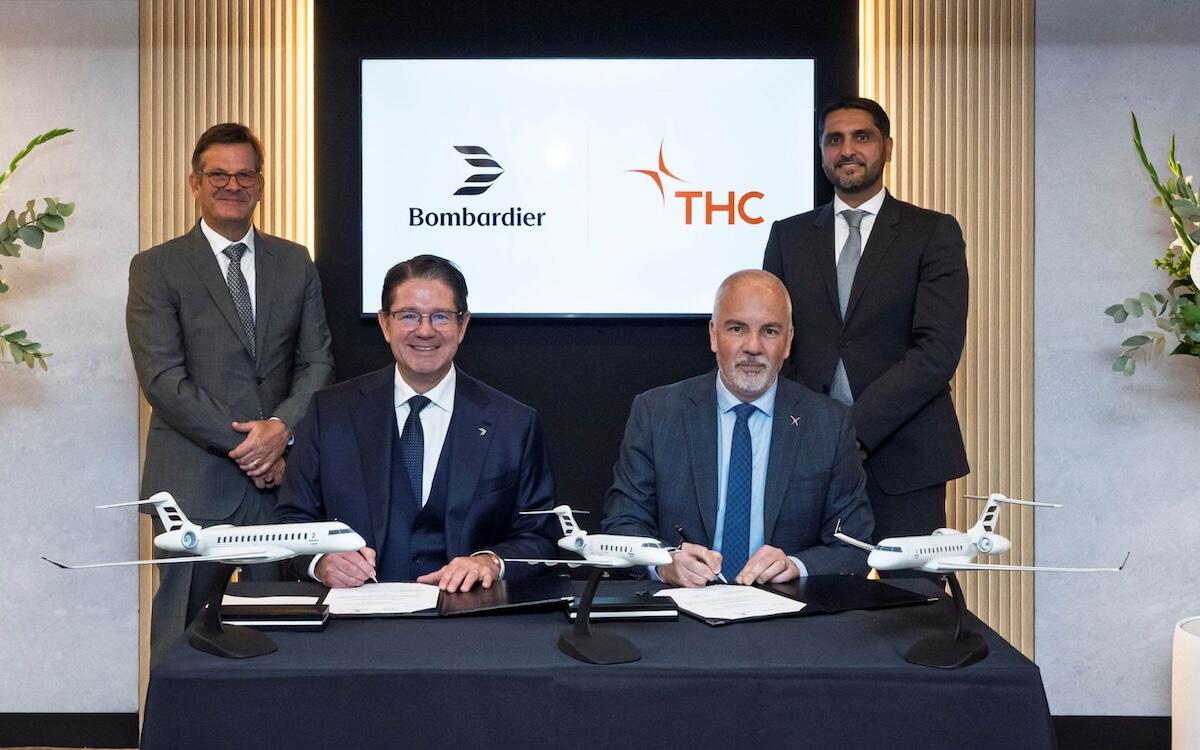
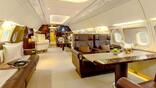
The Helicopter Company (THC), the Public Investment Fund-owned Saudi rotorcraft operator, has signed a letter of intent with Bombardier for 12 firm business jets—five Challenger 3500s, five Global 5500s and two Global 8000s—with options for 48 more, marking the manufacturer's formal entry into the Saudi market and THC's diversification beyond helicopters for the first time since its 2018 founding. Signed at Farnborough on July 21, the deal establishes a single-OEM fixed-wing fleet strategy that CEO Capt. Arnaud Martinez framed as central to THC's ambition to become "the general aviation champion from Saudi Arabia to the world." The agreement will launch new private jet charter and aircraft management lines of business, positioning THC to capture demand tied to the kingdom's Vision 2030 tourism and economic diversification push. In the same announcement window, THC also firmed up orders for eight Airbus H145s and 11 Leonardo AW139s, both drawn from existing multi-year framework agreements, underscoring a broader fleet expansion across both rotary and fixed-wing segments.
For working pilots and operators, this deal is significant beyond its headline aircraft count. THC's decision to standardize on Bombardier types across light, super-midsize and large-cabin categories signals a deliberate fleet-commonality strategy—shared type ratings, maintenance training pipelines and operational procedures across the Challenger 3500 and Global 5500/8000 lines. That approach mirrors what many fractional and charter operators in North America and Europe have pursued to control training costs and crew scheduling complexity, and it suggests THC is building toward a scalable charter and management business rather than a boutique VIP fleet. Pilots eyeing opportunities in the Gulf region should note that THC's move into fixed-wing management creates a new employer entering a market historically dominated by operators like NetJets Middle East, Jet Aviation, and various royal/private flight departments. The AW139 and H145 orders also matter operationally—both types are staples of EMS, offshore and VIP transport work in demanding "hot and high" conditions, and continued fleet growth in that segment points to sustained hiring demand for rotary pilots and maintenance technicians in the kingdom.
This transaction fits within several broader industry trends. First, it reflects Bombardier's continued push to expand its footprint in the Middle East, a region where Gulfstream and Dassault have historically held strong positions among sovereign wealth-linked operators; a state-owned Saudi entity standardizing exclusively on Bombardier metal is a meaningful commercial and symbolic win for the Canadian manufacturer, reinforced by CEO Éric Martel's characterization of the deal as a "significant endorsement." Second, the deal illustrates how Gulf sovereign wealth funds are increasingly building vertically integrated aviation ecosystems—combining helicopter EMS/utility work, VIP rotary transport, and now fixed-wing business jet charter and management—as instruments of both economic diversification and national aviation capability-building, similar to strategies seen in the UAE and Qatar. Third, THC's dual-OEM helicopter strategy (Airbus and Leonardo) alongside a single-OEM jet strategy shows a maturing fleet-planning discipline uncommon in newer operators, suggesting THC intends to be a serious long-term player rather than an opportunistic buyer riding a regional aviation boom.
Longer term, the order's phased delivery through 2027-2028 gives THC time to build out crew training pipelines, maintenance infrastructure and charter certification—work that will require experienced business jet pilots, particularly those with Challenger and Global type ratings, as the operator scales up. For corporate flight departments and charter operators elsewhere, THC's entry adds another well-capitalized competitor to an already tightening global market for used and new large-cabin business jets, and its options for up to 48 additional aircraft indicate Bombardier could see a substantial multi-year backlog materialize from this single customer if Saudi business aviation demand develops as PIF and THC anticipate.




 Read original article